



Some people consider the falling birth rate to be a crisis. In the United States alone, the birth rate fell by 2% annually in every year from 2014-2020. While there was a slight 1% uptick in births during the COVID-19 pandemic, the U.S. birth rate once again declined by 2-3% from 2022 to 2023 — specifically in those between ages 20-39. But this phenomenon is not solely U.S.-based. As Vox reports, 12 people die for every seven people born in Italy; China’s population is shrinking for the first time; and countries like Taiwan have even gone so far as to try to incentivize birth through financial means. When children aren’t being born, the population grows older — and it’s more difficult to maintain societal stability. The elderly population also puts a greater burden on our systems, from healthcare to public services. (Seniors are also falling victim to fraud at an alarming rate.)
Which countries may thrive with a younger population, and which countries might get “aged out” of the global stage? Using CIA data for the latest available year, 24/7 Wall St. identified the oldest countries on Earth. We reviewed the median age in 193 countries and ranked the 30 nations with the oldest populations. All supplemental data on fertility rate, population change, country GDP, and region is from the World Bank and is also for the most recent available year.
Why It Matters

Demographic trends, like an aging population, can have far-reaching consequences. In any given country, more older residents can mean fewer people to fill essential jobs, and fewer workers to support a growing number of retirees. The problem is expected to get worse before it gets better. According to U.N. estimates, there were 727 million people aged 65 or older in 2020, a number that is expected to more than double by mid-century.
These countries have the oldest populations in the world:
30. Slovakia
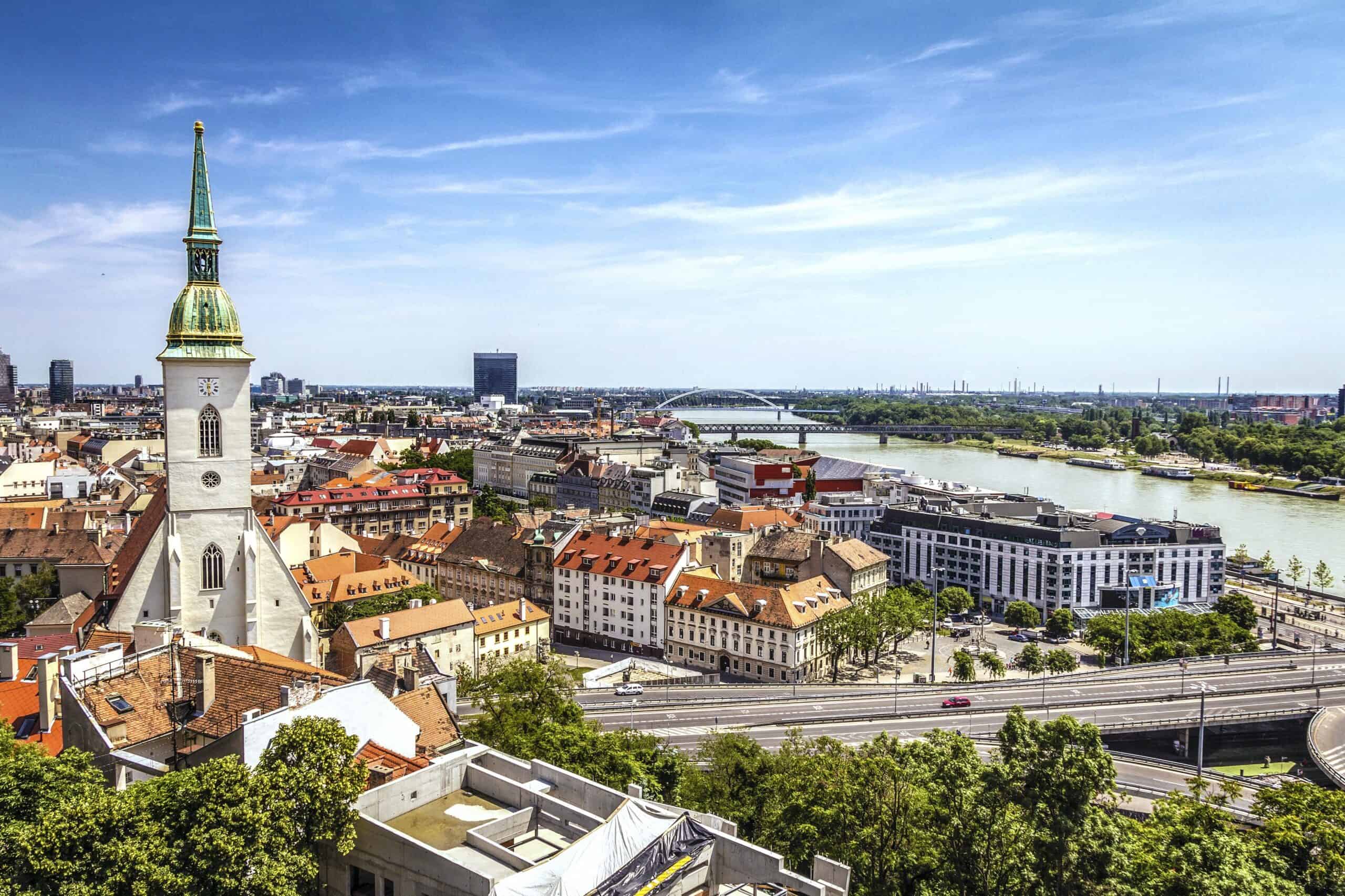
- Median age in 2024: 42.8 years
- Old-age dependency ratio: 25.2 people age 65+ per 100 working age people
- Fertility rate in 2021: Avg. of 1.6 children per woman over lifetime
- 1-yr. population change, 2021-2022: -0.3% (-15,495 people)
- 10-yr. population change, 2013-2022: +0.3% (+18,359 people)
- Total population in 2022: 5,431,752
- GDP in 2022: $115.5 billion ($21,257 per capita)
- Region: Europe
29. Poland

- Median age in 2024: 42.9 years
- Old-age dependency ratio: 28.0 people age 65+ per 100 working age people
- Fertility rate in 2021: Avg. of 1.3 children per woman over lifetime
- 1-yr. population change, 2021-2022: -2.5% (-925,375 people)
- 10-yr. population change, 2013-2022: -3.2% (-1,218,447 people)
- Total population in 2022: 36,821,749
- GDP in 2022: $688.1 billion ($18,688 per capita)
- Region: Europe
28. Finland

- Median age in 2024: 43.3 years
- Old-age dependency ratio: 37.8 people age 65+ per 100 working age people
- Fertility rate in 2021: Avg. of 1.5 children per woman over lifetime
- 1-yr. population change, 2021-2022: +0.3% (+15,089 people)
- 10-yr. population change, 2013-2022: +2.2% (+117,134 people)
- Total population in 2022: 5,556,106
- GDP in 2022: $282.6 billion ($50,872 per capita)
- Region: Europe
27. Malta

- Median age in 2024: 43.5 years
- Old-age dependency ratio: 28.2 people age 65+ per 100 working age people
- Fertility rate in 2021: Avg. of 1.1 children per woman over lifetime
- 1-yr. population change, 2021-2022: +2.4% (+12,577 people)
- 10-yr. population change, 2013-2022: +24.7% (+105,146 people)
- Total population in 2022: 531,113
- GDP in 2022: $18.1 billion ($34,128 per capita)
- Region: Europe
26. Serbia

- Median age in 2024: 43.9 years
- Old-age dependency ratio: 31.6 people age 65+ per 100 working age people
- Fertility rate in 2021: Avg. of 1.5 children per woman over lifetime
- 1-yr. population change, 2021-2022: -2.5% (-169,877 people)
- 10-yr. population change, 2013-2022: -7.0% (-499,683 people)
- Total population in 2022: 6,664,449
- GDP in 2022: $63.6 billion ($9,538 per capita)
- Region: Europe
25. Switzerland

- Median age in 2024: 44.2 years
- Old-age dependency ratio: 29.4 people age 65+ per 100 working age people
- Fertility rate in 2021: Avg. of 1.5 children per woman over lifetime
- 1-yr. population change, 2021-2022: +0.8% (+71,214 people)
- 10-yr. population change, 2013-2022: +8.5% (+686,414 people)
- Total population in 2022: 8,775,760
- GDP in 2022: $818.4 billion ($93,260 per capita)
- Region: Europe
24. Czechia

- Median age in 2024: 44.2 years
- Old-age dependency ratio: 32.6 people age 65+ per 100 working age people
- Fertility rate in 2021: Avg. of 1.8 children per woman over lifetime
- 1-yr. population change, 2021-2022: +1.6% (+166,346 people)
- 10-yr. population change, 2013-2022: +1.5% (+157,846 people)
- Total population in 2022: 10,672,118
- GDP in 2022: $290.6 billion ($27,227 per capita)
- Region: Europe
23. Liechtenstein

- Median age in 2024: 44.2 years
- Old-age dependency ratio: 29.3 people age 65+ per 100 working age people
- Fertility rate in 2021: Avg. of 1.5 children per woman over lifetime
- 1-yr. population change, 2021-2022: +0.7% (+288 people)
- 10-yr. population change, 2013-2022: +6.8% (+2,521 people)
- Total population in 2022: 39,327
- GDP in 2021: $7.7 billion ($197,505 per capita)
- Region: Europe
22. Taiwan

- Median age in 2024: 44.6 years
- Old-age dependency ratio: N/A
- Fertility rate in 2021: N/A
- 1-yr. population change, 2021-2022: N/A
- 10-yr. population change, 2013-2022: N/A
- Total population in 2022: N/A
- GDP: N/A
- Region: East and Southeast Asia
21. Bosnia and Herzegovina

- Median age in 2024: 44.8 years
- Old-age dependency ratio: 27.6 people age 65+ per 100 working age people
- Fertility rate in 2021: Avg. of 1.4 children per woman over lifetime
- 1-yr. population change, 2021-2022: -1.1% (-37,417 people)
- 10-yr. population change, 2013-2022: -10.6% (-384,033 people)
- Total population in 2022: 3,233,526
- GDP in 2022: $24.5 billion ($7,569 per capita)
- Region: Europe
20. Hungary

- Median age in 2024: 44.8 years
- Old-age dependency ratio: 30.5 people age 65+ per 100 working age people
- Fertility rate in 2021: Avg. of 1.6 children per woman over lifetime
- 1-yr. population change, 2021-2022: -0.7% (-66,843 people)
- 10-yr. population change, 2013-2022: -2.5% (-250,034 people)
- Total population in 2022: 9,643,048
- GDP in 2022: $177.3 billion ($18,390 per capita)
- Region: Europe
19. Ukraine

- Median age in 2024: 44.9 years
- Old-age dependency ratio: 28.6 people age 65+ per 100 working age people
- Fertility rate in 2021: Avg. of 1.2 children per woman over lifetime
- 1-yr. population change, 2021-2022: -13.3% (-5,822,901 people)
- 10-yr. population change, 2013-2022: -16.5% (-7,489,648 people)
- Total population in 2022: 38,000,000
- GDP in 2022: $160.5 billion ($4,534 per capita)
- Region: Europe
18. Austria

- Median age in 2024: 44.9 years
- Old-age dependency ratio: 30.1 people age 65+ per 100 working age people
- Fertility rate in 2021: Avg. of 1.5 children per woman over lifetime
- 1-yr. population change, 2021-2022: +1.0% (+86,054 people)
- 10-yr. population change, 2013-2022: +6.6% (+562,028 people)
- Total population in 2022: 9,041,851
- GDP in 2022: $470.9 billion ($52,085 per capita)
- Region: Europe
17. Estonia
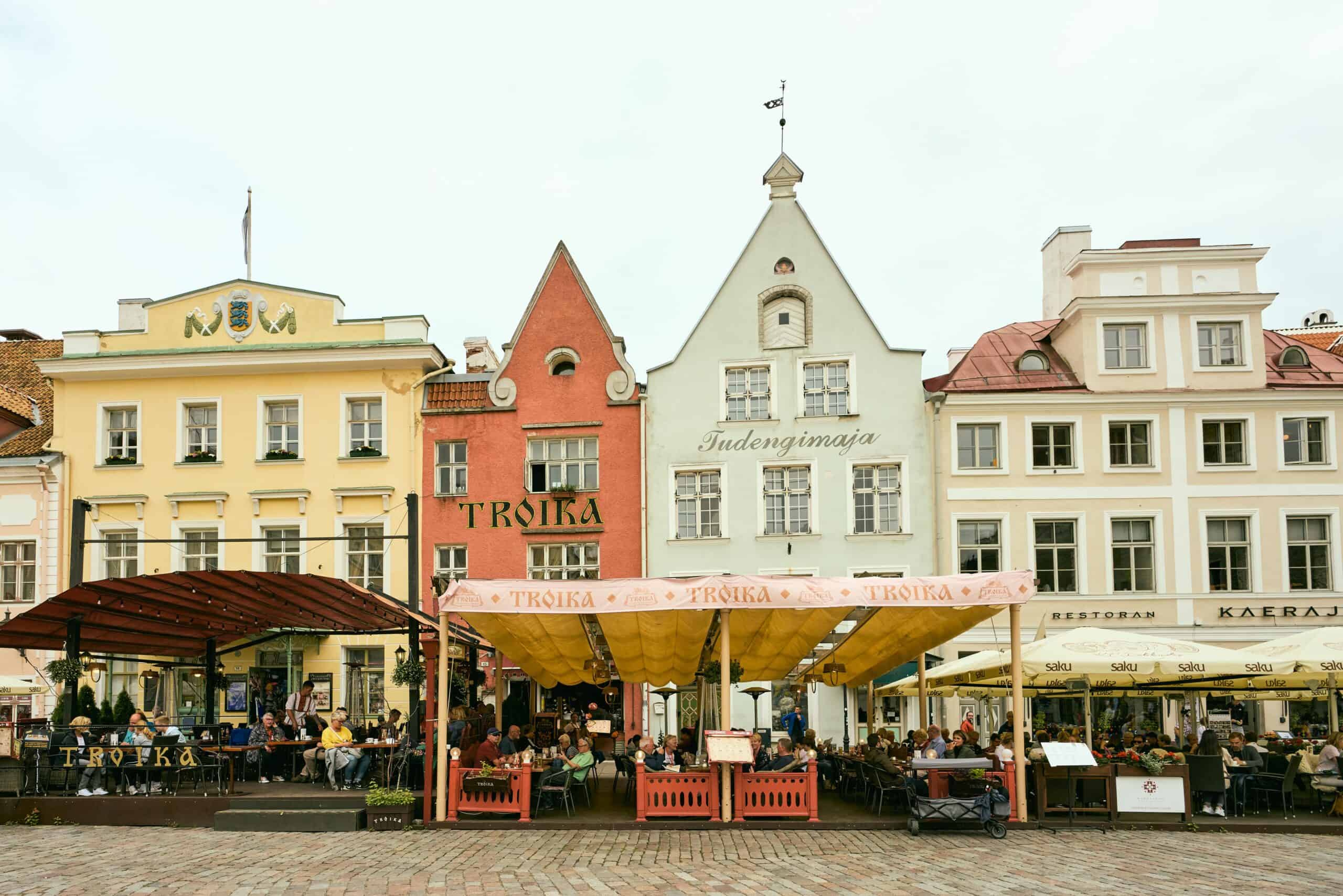
- Median age in 2024: 45.0 years
- Old-age dependency ratio: 32.7 people age 65+ per 100 working age people
- Fertility rate in 2021: Avg. of 1.6 children per woman over lifetime
- 1-yr. population change, 2021-2022: +1.3% (+17,908 people)
- 10-yr. population change, 2013-2022: +2.3% (+30,843 people)
- Total population in 2022: 1,348,840
- GDP in 2022: $38.1 billion ($28,247 per capita)
- Region: Europe
16. Croatia

- Median age in 2024: 45.1 years
- Old-age dependency ratio: 35.2 people age 65+ per 100 working age people
- Fertility rate in 2021: Avg. of 1.6 children per woman over lifetime
- 1-yr. population change, 2021-2022: -0.6% (-23,400 people)
- 10-yr. population change, 2013-2022: -9.4% (-400,089 people)
- Total population in 2022: 3,855,600
- GDP in 2022: $71.6 billion ($18,570 per capita)
- Region: Europe
15. Bulgaria

- Median age in 2024: 45.1 years
- Old-age dependency ratio: 35.2 people age 65+ per 100 working age people
- Fertility rate in 2021: Avg. of 1.6 children per woman over lifetime
- 1-yr. population change, 2021-2022: -6.0% (-412,646 people)
- 10-yr. population change, 2013-2022: -11.0% (-800,018 people)
- Total population in 2022: 6,465,097
- GDP in 2022: $90.3 billion ($13,974 per capita)
- Region: Europe
14. Lithuania
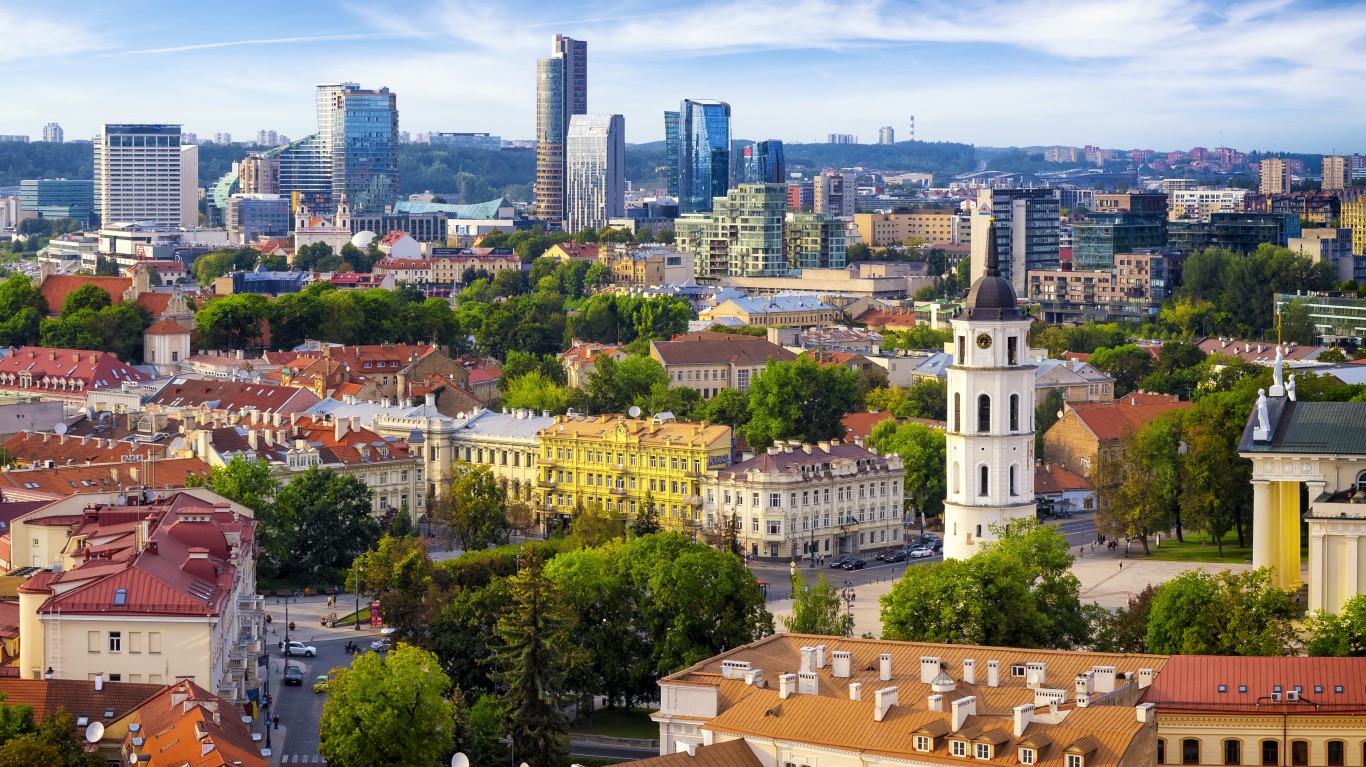
- Median age in 2024: 45.1 years
- Old-age dependency ratio: 32.6 people age 65+ per 100 working age people
- Fertility rate in 2021: Avg. of 1.3 children per woman over lifetime
- 1-yr. population change, 2021-2022: +1.1% (+30,800 people)
- 10-yr. population change, 2013-2022: -4.3% (-126,050 people)
- Total population in 2022: 2,831,639
- GDP in 2022: $71.0 billion ($25,065 per capita)
- Region: Europe
13. Latvia
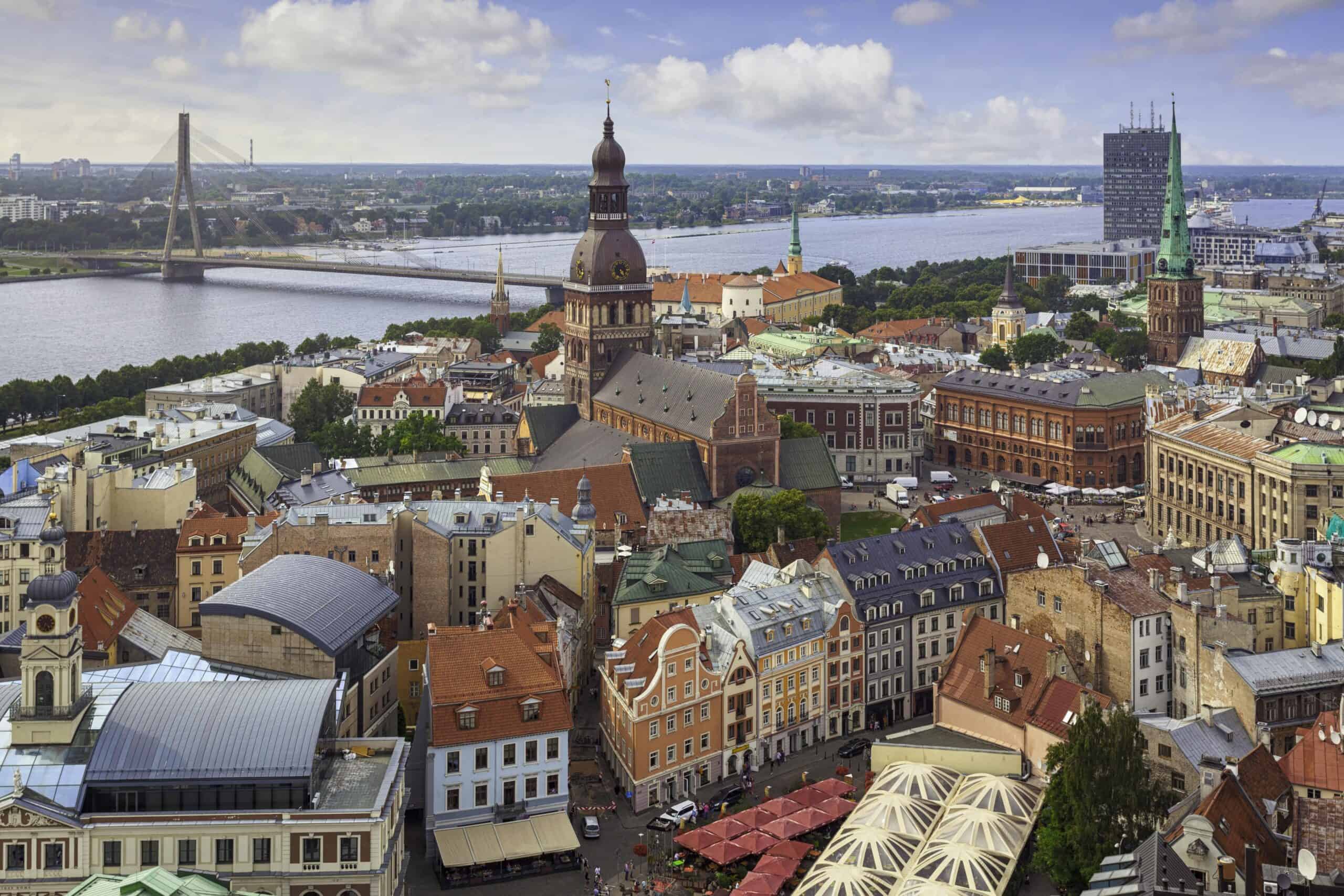
- Median age in 2024: 45.5 years
- Old-age dependency ratio: 34.9 people age 65+ per 100 working age people
- Fertility rate in 2021: Avg. of 1.6 children per woman over lifetime
- 1-yr. population change, 2021-2022: -0.3% (-5,107 people)
- 10-yr. population change, 2013-2022: -6.6% (-133,264 people)
- Total population in 2022: 1,879,383
- GDP in 2022: $40.9 billion ($21,780 per capita)
- Region: Europe
12. Romania

- Median age in 2024: 45.5 years
- Old-age dependency ratio: 28.5 people age 65+ per 100 working age people
- Fertility rate in 2021: Avg. of 1.8 children per woman over lifetime
- 1-yr. population change, 2021-2022: -0.4% (-75,050 people)
- 10-yr. population change, 2013-2022: -4.7% (-936,684 people)
- Total population in 2022: 19,047,009
- GDP in 2022: $300.7 billion ($15,787 per capita)
- Region: Europe
11. South Korea

- Median age in 2024: 45.5 years
- Old-age dependency ratio: 24.7 people age 65+ per 100 working age people
- Fertility rate in 2021: Avg. of 0.8 children per woman over lifetime
- 1-yr. population change, 2021-2022: -0.2% (-116,759 people)
- 10-yr. population change, 2013-2022: +2.4% (+1,199,224 people)
- Total population in 2022: 51,628,117
- GDP in 2022: $1.7 trillion ($32,423 per capita)
- Region: East and Southeast Asia
10. San Marino

- Median age in 2024: 46.1 years
- Old-age dependency ratio: 30.6 people age 65+ per 100 working age people
- Fertility rate in 2021: Avg. of 0.0 children per woman over lifetime
- 1-yr. population change, 2021-2022: -0.3% (-85 people)
- 10-yr. population change, 2013-2022: +1.1% (+375 people)
- Total population in 2022: 33,660
- GDP in 2021: $1.9 billion ($54,982 per capita)
- Region: Europe
9. Slovenia
- Median age in 2024: 46.3 years
- Old-age dependency ratio: 32.8 people age 65+ per 100 working age people
- Fertility rate in 2021: Avg. of 1.6 children per woman over lifetime
- 1-yr. population change, 2021-2022: +0.2% (+3,907 people)
- 10-yr. population change, 2013-2022: +2.5% (+52,033 people)
- Total population in 2022: 2,111,986
- GDP in 2022: $60.1 billion ($28,439 per capita)
- Region: Europe
8. Portugal

- Median age in 2024: 46.4 years
- Old-age dependency ratio: 35.8 people age 65+ per 100 working age people
- Fertility rate in 2021: Avg. of 1.4 children per woman over lifetime
- 1-yr. population change, 2021-2022: +0.5% (+47,873 people)
- 10-yr. population change, 2013-2022: -0.5% (-47,591 people)
- Total population in 2022: 10,409,704
- GDP in 2022: $255.2 billion ($24,515 per capita)
- Region: Europe
7. Greece

- Median age in 2024: 46.5 years
- Old-age dependency ratio: 36.0 people age 65+ per 100 working age people
- Fertility rate in 2021: Avg. of 1.4 children per woman over lifetime
- 1-yr. population change, 2021-2022: -1.3% (-142,288 people)
- 10-yr. population change, 2013-2022: -4.9% (-538,292 people)
- Total population in 2022: 10,426,919
- GDP in 2022: $217.6 billion ($20,867 per capita)
- Region: Europe
6. Germany

- Median age in 2024: 46.8 years
- Old-age dependency ratio: 35.2 people age 65+ per 100 working age people
- Fertility rate in 2021: Avg. of 1.6 children per woman over lifetime
- 1-yr. population change, 2021-2022: +0.7% (+601,907 people)
- 10-yr. population change, 2013-2022: +3.9% (+3,152,380 people)
- Total population in 2022: 83,797,985
- GDP in 2022: $4.1 trillion ($48,718 per capita)
- Region: Europe
5. Spain

- Median age in 2024: 46.8 years
- Old-age dependency ratio: 30.7 people age 65+ per 100 working age people
- Fertility rate in 2021: Avg. of 1.2 children per woman over lifetime
- 1-yr. population change, 2021-2022: +0.8% (+362,546 people)
- 10-yr. population change, 2013-2022: +2.5% (+1,158,295 people)
- Total population in 2022: 47,778,340
- GDP in 2022: $1.4 trillion ($29,675 per capita)
- Region: Europe
4. Italy

- Median age in 2024: 48.4 years
- Old-age dependency ratio: 37.9 people age 65+ per 100 working age people
- Fertility rate in 2021: Avg. of 1.3 children per woman over lifetime
- 1-yr. population change, 2021-2022: -0.3% (-192,748 people)
- 10-yr. population change, 2013-2022: -2.1% (-1,293,523 people)
- Total population in 2022: 58,940,425
- GDP in 2022: $2.0 trillion ($34,776 per capita)
- Region: Europe
3. Andorra

- Median age in 2024: 48.8 years
- Old-age dependency ratio: 20.7 people age 65+ per 100 working age people
- Fertility rate in 2021: Avg. of 0.0 children per woman over lifetime
- 1-yr. population change, 2021-2022: +1.0% (+790 people)
- 10-yr. population change, 2013-2022: +11.9% (+8,457 people)
- Total population in 2022: 79,824
- GDP in 2022: $3.4 billion ($41,993 per capita)
- Region: Europe
2. Japan

- Median age in 2024: 49.9 years
- Old-age dependency ratio: 51.2 people age 65+ per 100 working age people
- Fertility rate in 2021: Avg. of 1.3 children per woman over lifetime
- 1-yr. population change, 2021-2022: -0.4% (-556,604 people)
- 10-yr. population change, 2013-2022: -1.8% (-2,320,011 people)
- Total population in 2022: 125,124,989
- GDP in 2022: $4.3 trillion ($34,017 per capita)
- Region: East and Southeast Asia
1. Monaco

- Median age in 2024: 56.9 years
- Old-age dependency ratio: 70.4 people age 65+ per 100 working age people
- Fertility rate in 2021: N/A
- 1-yr. population change, 2021-2022: -0.6% (-217 people)
- 10-yr. population change, 2013-2022: +2.9% (+1,044 people)
- Total population in 2022: 36,469
- GDP in 2022: $8.8 billion ($240,862 per capita)
- Region: Europe














 Top Gaining Stocks
 Top Losing Stocks