


 Attention America’s obese children: Your parents made you fat. Ronald McDonald is probably not to blame.
That’s not the message that America’s food police — nutritional do-gooders — who want McDonald’s Corp. (NYSE:MCD) to retire its 48-year-old spokes-clown want the public to hear, but it’s true. The evidence that links advertising and obesity rates is far from overwhelming. Canada’s Quebec province banned food advertising to children in 1980. Sweden enacted a similar policy for more than a decade. According to the U.S. Department of Health and Human Services, neither place saw an improvement in childhood obesity. HHS argues, correctly, that the idea should be studied further.
Members of Corporate Accountability International, a non-profit that yesterday began a public relations campaign to “retire” Ronald, and the Center for Science and the Public Interest, which last year sued the home of the Golden Arches for its toy marketing practices, argue that McDonald’s should be held accountable for marketing unhealthy food to children. The group’s letter speaks of the “nag effect” of children demanding to eat at McDonald’s. The chain responds that parents bear the ultimate responsibility for what their sons and daughters eat. Of course, the company is right.
Speaking today at the company’s annual meeting today, Chief Executive Jim “B.F.” Skinner rejected calls to send Ronald McDonald packing. Shareholders resoundingly rejected a proposal to have McDonald’s prepare a report on childhood obesity.
“He does not advertise unhealthy food to children,” Skinner said, according to the Associated Press. “We provide many choices that fit with the balanced, active lifestyle. It is up to them to choose and their parents to choose, and it is their responsibility to do so.”
Parents, in fact, probably have a big role in determining whether their children are obese, bigger than any brand icon. Advertising’s influence, however, cannot be discounted entirely.
“If one parent is obese, there is a 50 percent chance that the children will also be obese,” according to American Academy of Child & Adolescent Psychiatry. “However, when both parents are obese, the children have an 80 percent chance of being obese.”
Ronald McDonald is a relic of a bygone era of advertising where characters were used by large multi-national companies to sell unhealthy food to children such as sugary cereal. Is it unfortunate? Yes, but it isn’t illegal. McDonald’s, though, is hardly alone in seeking young customers, as the Yale Rudd Center on Food Policy & Obesity notes:
The food industry spends over $1.6 billion per year in the U.S. to market their products directly to young people. The overwhelming majority of these ads are for unhealthy products, high in calories, sugar, fat, and/or sodium.
On television alone the average U.S. child sees 15 food commercials every day, or approximately 5,500 commercials a year. The food products advertised most extensively to children and teens include high-sugar breakfast cereals, fast food, soft drinks, candy, and snack foods. In comparison, children see fewer than 100 ads per year for healthy foods such as fruits, vegetables, and bottled water.
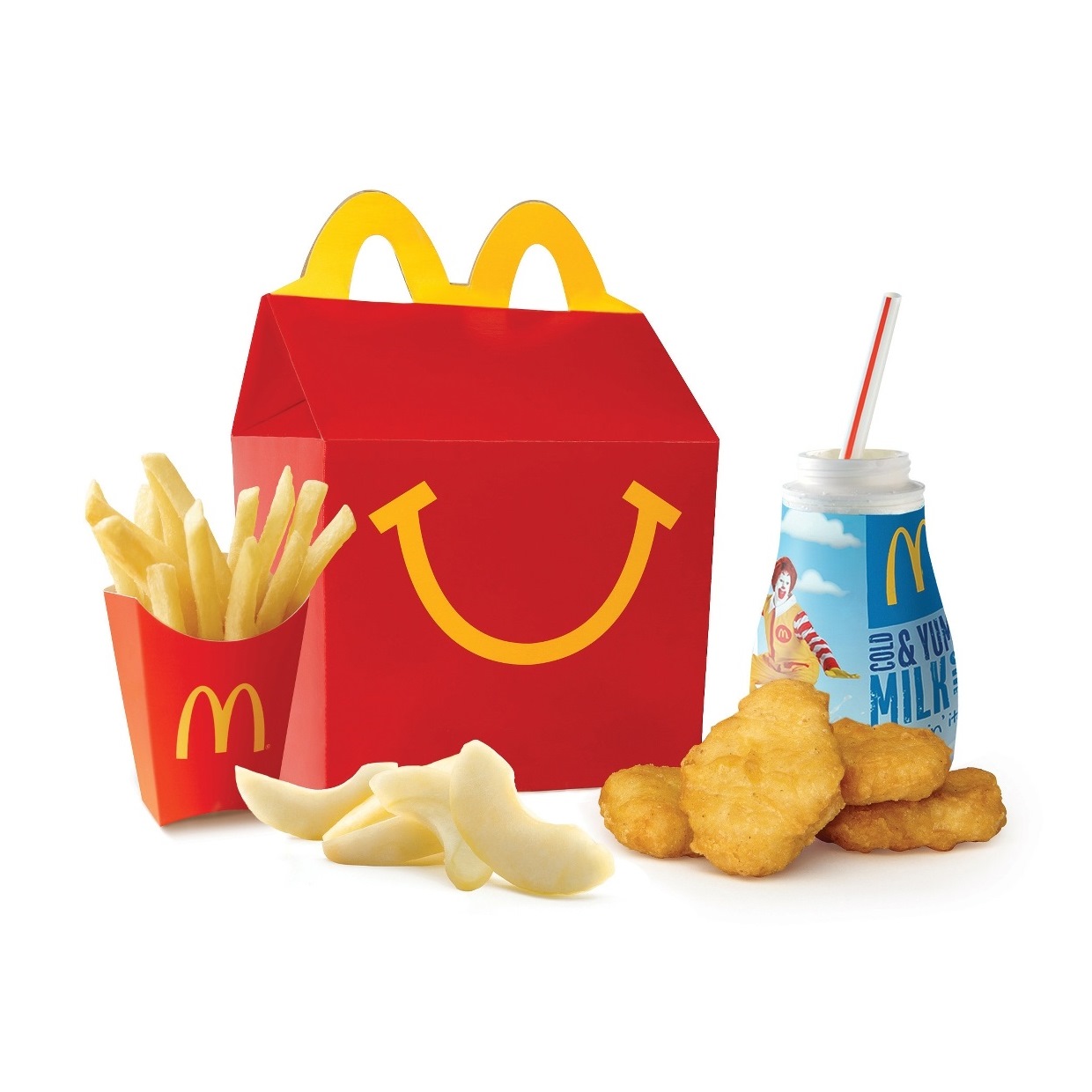
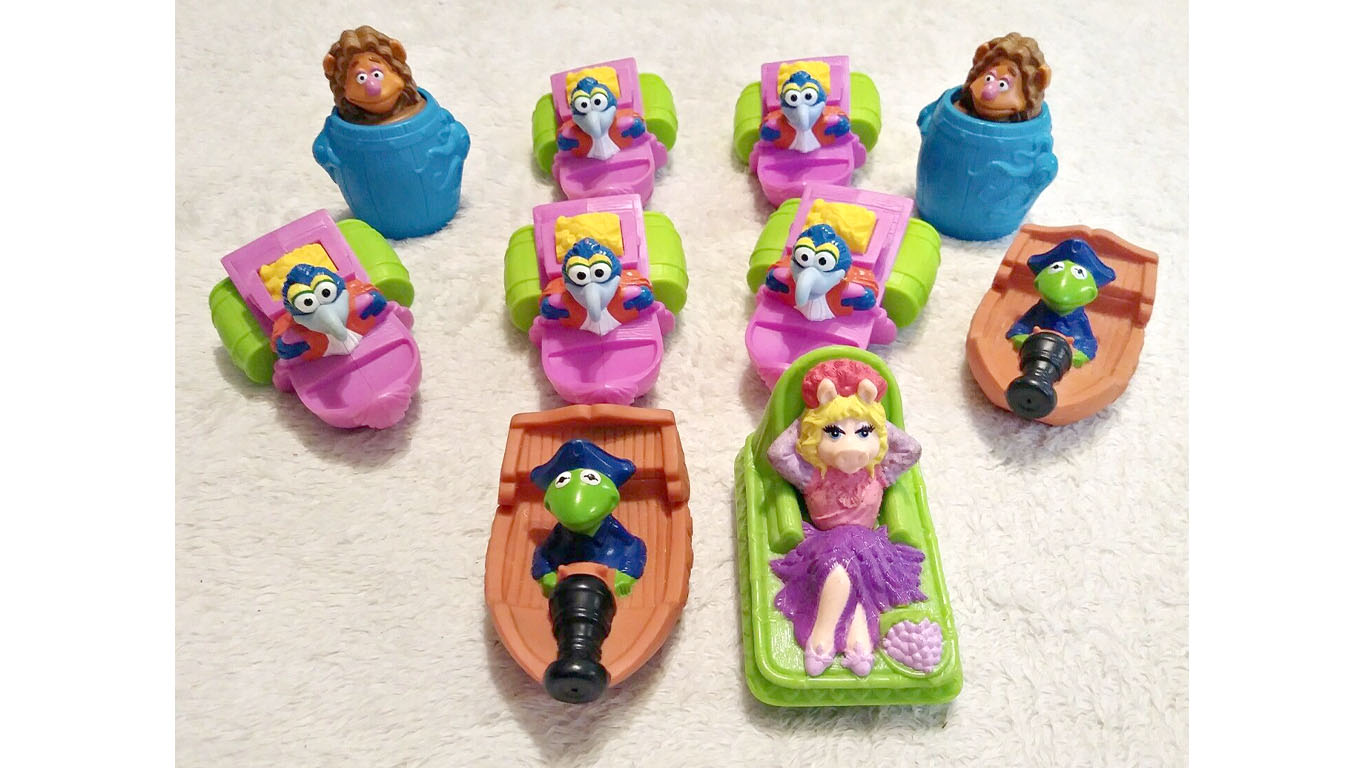
McDonald’s does do many positive things. The company, in fact, uses Ronald McDonald to promote healthy lifestyles through school assembly programs and through Happy Meal toys. Ronald’s website for children features educational games. Then there is the Ronald McDonald House, which provides a “home away from home” for families of sick children undergoing treatment. Children do have choices for healthier Happy Meals –such as apple slices and low-fat milk — though they apparently usually don’t choose them.
Childhood obesity is a huge problem in the United States. The rate of overweight adolescents have tripled since 1980 and doubled among younger children. This is a complicated problem that defies efforts at creating angels and demons, the causes of which are beyond the control of any one company such as McDonald’s.
Take the rise of single-parent households. Scientists have found that children of these families are more likely to be overweight and that the rise in obesity rates coincides with the rise in the number of women working outside the home. Race is a factor as well along with access to fresh fruits and vegetables, a big problem for the urban poor.
Activists could have saved themselves some time and done nothing. As Bloomberg News noted earlier this year, Ronald McDonald was headed for the brand scrap heap anyway because the Illinois company is trying to cultivate a healthier — that’s right — and more upscale image as the purveyor of salads and fancy caffeinated beverage. Ronald, who was originated by Willard Scott in the early 1960s, is less visible now than he has been in years. His official job title, by the way, is “Chief Happiness Officer.”
Jonathan Berr







 Top Gaining Stocks
 Top Losing Stocks