Gap Moves Into China

Photo of Douglas A. McIntyre
By Douglas A. McIntyre Published
This post may contain links from our sponsors and affiliates, and Flywheel Publishing may receive compensation for actions taken through them.

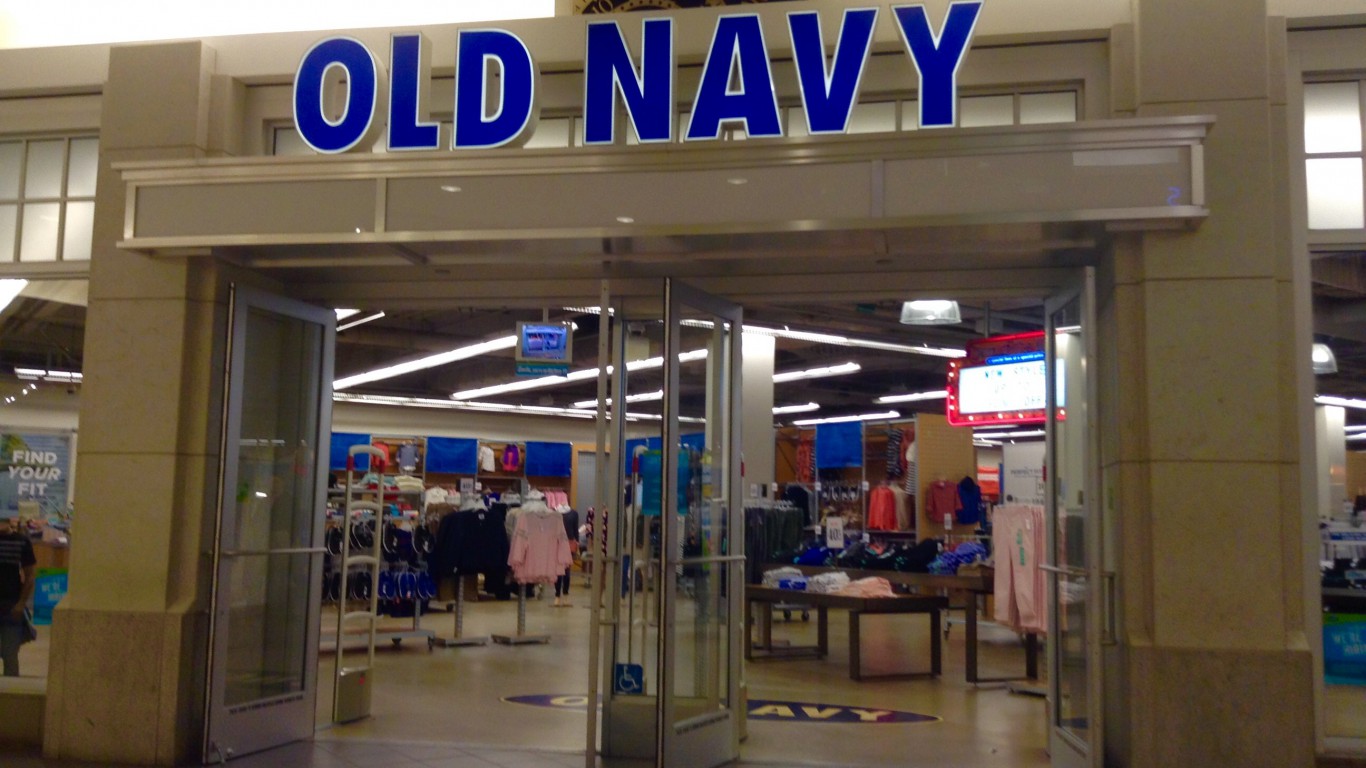
Gap’s (NYSE: GPS) earnings in the fourth quarter and for the 2013 fiscal year were good enough to get modest applause from Wall Street. However, unlike other large American retailers, its revenue outside the U.S. is small — a touch more than 20% of sales. Gap has started to change that. It will open five Old Navy brand stores in China this year.

Of Gap’s $4.58 billion in revenue posted in the last quarter, $3.5 billion came from the United States. Europe and Canada were other large contributors. As part of the plan to change this:

Continuing to grow its Old Navy brand globally, the company was scheduled to open its first Old Navy store in China on Saturday — a store in Shanghai. It will begin franchising Old Navy stores internationally, starting with the Philippines in March.

Gap will press for the same advantages as other major American companies which have moved into the world largest nation by population. The theory these firms adopt is simple. China’s middle class, created by industrial jobs, has grown into the hundreds of millions. The wages earned by these people have risen steadily. Perhaps, as has been true in the U.S. for decades, consumer spending will eventually become the largest contributor to GDP in the People’s Republic,

However, doing business in China has drawbacks. Among them is local competition, plus competition from the large numbers of American, European, and Japanese companies which already have put beachheads in the country, trying to tap into a potentially rich consumer market.

But U.S. companies, which include Walmart (NYSE: WMT) and Yum! Brands (NYSE: YUM), have faced challenges as they entered the market. China’s efforts to regulate the actions of these include protection of labor forces, which in many cases have a quasi-union status, and regulations which block companies from doing business as they do in the U.S. and Europe. Yum! recently found this out the hard way, as a small portion of the chicken its uses in its KFC franchises had food quality problems. The resulting hurricane of regulatory punishment and media attention nearly wrecked Yum!’s earnings.

The final problem Gap must overcome is if its Old Navy brand is the right one to enter China with. There is no guarantee that the Chinese consumer has American-like tastes. Starbucks (NASDAQ: SBUX) discovered this because it was not prepared to satisfy the consumer preference in China for tea over coffee. Whether Old Navy is like coffee is something Gap will find out soon enough.

Photo of Douglas A. McIntyre
About the Author Douglas A. McIntyre →

Douglas A. McIntyre is the co-founder, chief executive officer and editor in chief of 24/7 Wall St. and 24/7 Tempo. He has held these jobs since 2006.

McIntyre has written thousands of articles for 24/7 Wall St. He is an expert on corporate finance, the automotive industry, media companies and international finance. He has edited articles on national demographics, sports, personal income and travel.

His work has been quoted or mentioned in The New York Times, The Wall Street Journal, Los Angeles Times, The Washington Post, NBC News, Time, The New Yorker, HuffPost USA Today, Business Insider, Yahoo, AOL, MarketWatch, The Atlantic, Bloomberg, New York Post, Chicago Tribune, Forbes, The Guardian and many other major publications. McIntyre has been a guest on CNBC, the BBC and television and radio stations across the country.

A magna cum laude graduate of Harvard College, McIntyre also was president of The Harvard Advocate. Founded in 1866, the Advocate is the oldest college publication in the United States.

TheStreet.com, Comps.com and Edgar Online are some of the public companies for which McIntyre served on the board of directors. He was a Vicinity Corporation board member when the company was sold to Microsoft in 2002. He served on the audit committees of some of these companies.

McIntyre has been the CEO of FutureSource, a provider of trading terminals and news to commodities and futures traders. He was president of Switchboard, the online phone directory company. He served as chairman and CEO of On2 Technologies, the video compression company that provided video compression software for Adobe’s Flash. Google bought On2 in 2009.

Featured Reads

Our top personal finance-related articles today. Your wallet will thank you later.

Continue Reading

Top Gaining Stocks

CBOE Vol: 1,568,143
PSKY Vol: 12,285,993
STX Vol: 7,378,346
ORCL Vol: 26,317,675
DDOG Vol: 6,247,779

Top Losing Stocks

LKQ
LKQ Vol: 4,367,433
CLX Vol: 13,260,523
SYK Vol: 4,519,455
MHK Vol: 1,859,865
AMGN Vol: 3,818,618