


Wall Street has continued to lose confidence in the retailer. Its shares trade at $1.06, in the middle of extremely low 52-week range. Two years ago, they traded at $2.40.
Paula Schneider was named the new chief executive. Under her, American Apparel says it will look at “strategic options,” which usually means an attempted sale. Former CEO Dov Charney has threatened to sue the company, presumably for firing him.
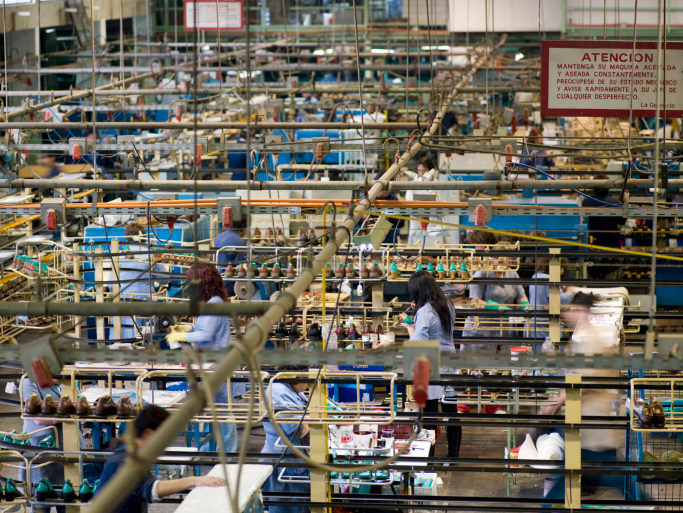
One of the reasons American Apparel has to slow factory activity is that it is “vertically integrated.” That means a few factories in one place make merchandise that is shipped all over the world. This includes stores as far-flung as South America and Asia. The problem with the solution is high shipping costs. The company is proud of its system, but it adds extra costs:
A garment worker in Bangladesh earns an average of $600 a year. An experienced American Apparel garment worker can earn $30,000+ and receive benefits such as comprehensive health care. American Apparel garments are created by motivated and fairly-paid employees who don’t just have jobs – they have careers. Our culture recognizes outstanding performance and promotes from within. Most importantly, our workers have a voice and influence the direction of the company. At American Apparel we call it Sweatshop-Free, a term we coined in 2002.
A court recently put the number of its stores at 249. Like many other failed retailers, it needs to close some of those.
ALSO READ: America’s Worst Run Companies
The details of the New York Post report indicate that American Apparel may have run out of options to remain viable:
The slowdown could result in “sharply reduced hours and weeks off” for thousands of the company’s garment workers in the coming weeks — and threatens a diminished supply of go-to fashions for the spring season, according to a source briefed on the situation.
Investors should worry that the next step is to close the factory completely.
Editor’s Note, comment from American Apparel law firm Weber Shandwick:
In light of the misinformation circulating in the media recently, American Apparel feels compelled to set the record straight before some of these inaccurate statements affect the morale of our 10,000 employees. American Apparel’s factory is operating in the ordinary course of business. Our stores are fully stocked Our employees have been working overtime to meet the holiday demand, and now that the holiday season is over, we plan to adjust shift schedules as we do every January. American Apparel remains committed to great fashion while staying true to its core principles of producing clothes made in the USA, sweatshop-free and with fair wages for employees and that commitment has not changed as the company positions itself for a turnaround.








 Top Gaining Stocks
 Top Losing Stocks