


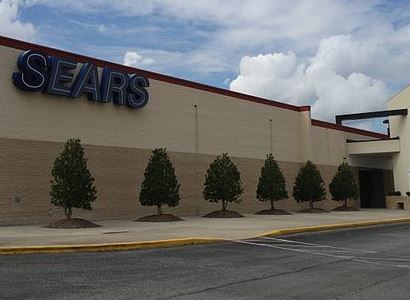
That is what we can infer from the company’s announcement Thursday morning that it is expecting to hive off 200 to 300 Sears and Kmart stores into a real estate investment trust (REIT) that could generate proceeds of more than $2 billion to the company. No word on what would happen to the other 1,400 to 1,500 stores that would be left under the Sears Holdings umbrella. The company also said it closed approximately 234 underperforming Sears and Kmart stores in 2014, leaving it with more than 1,700 stores. At least the company has plan for a few hundred of them.
ALSO READ: Companies Cutting the Most Jobs
In its announcement Sears had this to say about the proposed REIT:
The REIT itself would be funded by equity and debt with the equity raised through a rights offering. The subscription rights would be distributed pro rata to all stockholders of record of the Company, and every stockholder would have the right to participate, except that holders of the Company’s restricted stock that is unvested as of the record date would be expected to receive cash awards in lieu of subscription rights.
Back in November when Sears first said it was actively exploring the formation of a REIT, the company said it could be structured as a sale-and-leaseback transaction, in which case the REIT would own the real estate and Sears would continue to operate the (money-losing) stores.
Real estate is where the value is for Sears. And the retail business? In this latest earnings announcement, Sears said, “We are continuing our efforts to develop Sears Holdings as a membership company, without the significant asset intensity of its traditional retail business.”
So, because real estate is a liability to a retail business, Sears will dump it for cash that it can then lose on its strategy of developing the business as a membership company without the membership fees. As a retail strategy that has never made a lot of sense because it amounts to double discounting, first by offering Sears’s traditional promotional pricing and second by offering reward points. Margins will be compressed to the point of invisibility. How creating a REIT helps change this is a mystery.
ALSO READ: Wal-Mart, Sears Most ‘Liked’ Retailers
Investors appear to have the same questions, knocking more than 6% of the share price Thursday morning. The stock traded at $35.57 early Thursday, in a 52-week range of $22.45 to $48.25.






 Top Gaining Stocks
 Top Losing Stocks