


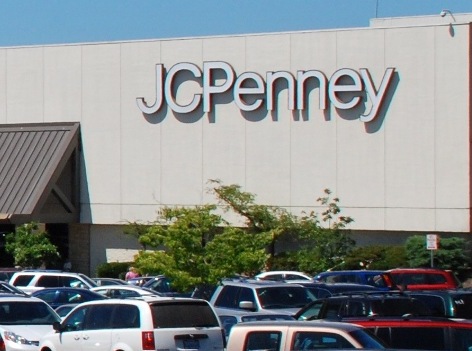
According to a statement from the company:
[A] senior official of the Company inadvertently sent an e-mail communication to a securities analyst that contained non-public information regarding the Company’s comparable store sales results for the fiscal first quarter of 2015 to date, which are approximately 6 percent. Based on results to date, and taking into account the shift of Easter into the fiscal month of March this year, the Company currently expects comparable store sales for the first quarter to be in the range of 3.5 to 4.5 percent.
Analysts had been expecting a same-store sales boost of 3.2% for the first quarter, so J.C. Penney’s forecast is better than analysts were looking for but clearly less than investors want. Since the beginning of 2015, the retailer’s shares had gained 45% through Monday’s close, and those gains have come as the company has beaten modest expectations. At some point, it will have to show some real growth, and the question is how much.
ALSO READ: The 5 Most Shorted Stocks Trading on the NYSE
It may be worthwhile to look at a bit of history. Between 2008 and 2011, revenues fell by $2.6 billion, from $19.86 billion to $17.26 billion. In 2012, revenues came in at $12.99 billion, and in 2013 revenues totaled $11.86 billion. Last year, revenues climbed back to $12.26 billion.
Gross profit in 2012 totaled $6.2 billion and dropped to $3.49 billion in 2013 before increasing to $4.26 billion last year. J.C. Penney posted an operating loss of $2 million in 2012, a loss of $1.42 billion in 2013 and a loss of $308 million in 2014.
Spending on sales, general and administrative expenses (SG&A) has fallen from $6.22 billion in 2012 to $4.57 billion in 2014, a savings of $1.65 billion. Other things equal (particularly gross margins) then, on the basis of reduced SG&A alone, J.C. Penney should have posted a profit of around $1.3 billion in 2014. But that analysis is flawed.
For the retailer to return to its 2012 revenue level of $17.26 billion — we’ll not even consider the $19.86 billion total in 2008 — it would have to post annual revenue growth of around 7% for five more years. And that is total revenue, not just same-store sales.
The company’s share price in mid-April of 2012 was around $33.50, nearly four times what the stock trades for today. In the late morning Tuesday, the shares traded at $9.07, down 3.5%, in a 52-week range of $5.90 to $11.30.







 Top Gaining Stocks
 Top Losing Stocks