


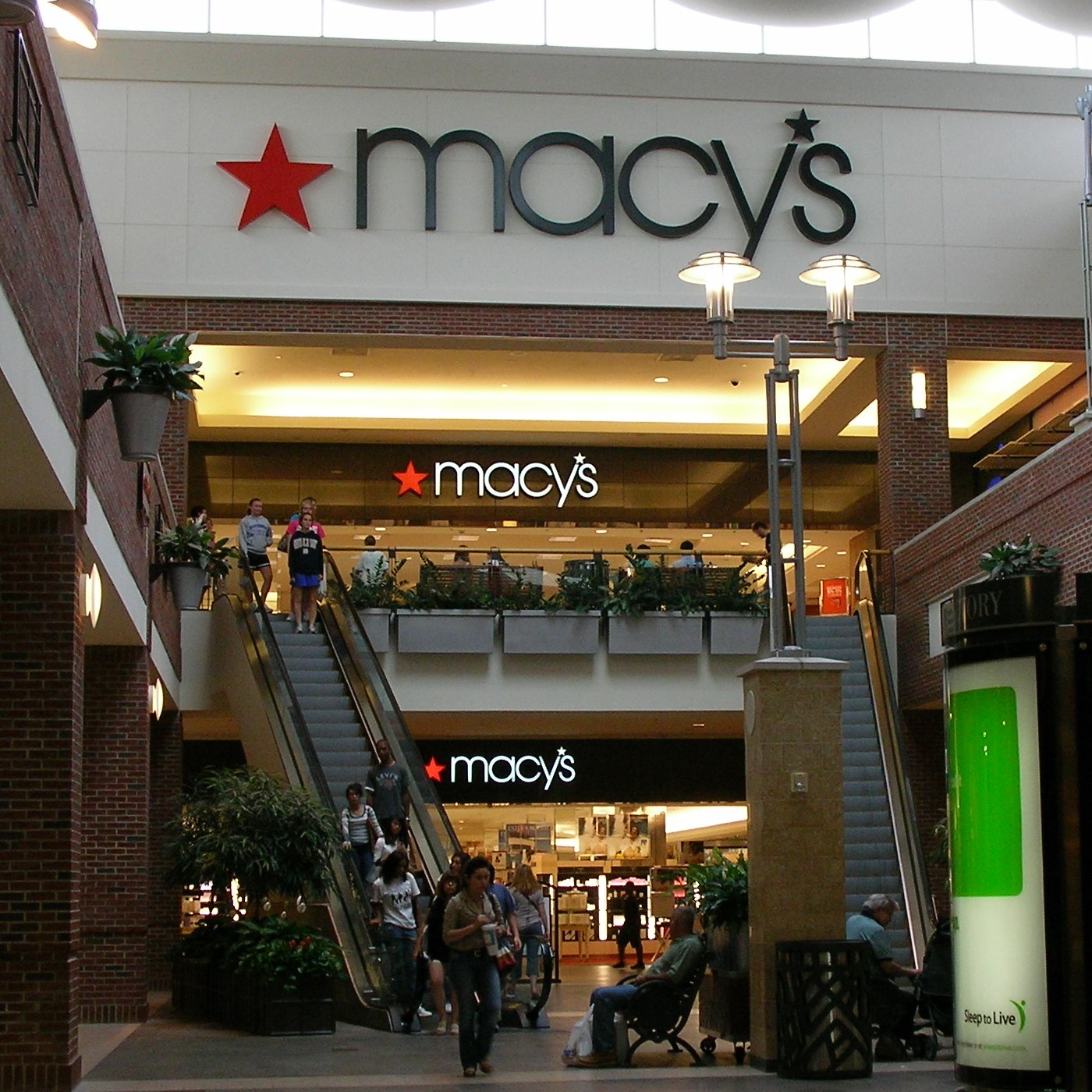
The travails of Macy’s Inc. (NYSE: M) are well known. The country’s largest department store and the second-largest apparel retailer suffers from declining sales and dwindling market share.
Most of the decline has been traced back to e-commerce and, specifically, Amazon.com Inc. (NASDAQ: AMZN). But a recent survey of consumers who say they now shop less frequently at Macy’s reveals a different story.
When it asked these consumers where they shop for apparel now that they no longer visit Macy’s as often, Coresight Research found that other brick-and-mortar stores, as a group, get a far bigger share than does Amazon. Note that respondents were allowed to select more than one store.
That’s not to say that Amazon doesn’t get a big chunk. Some 42% of respondents say they now shop for apparel at Amazon, making the e-commerce giant the largest single gainer among consumers who now shop not at all or less than they once did at Macy’s.
[nativounit]
But three discount stores are also winning former Macy’s customers: Nearly 25% say they now spend more on apparel at T.J. Maxx/Marshall stores, 12% spend more at Costco and 9% spend more at Ross.
Among mass merchandisers, 21% of shoppers spend more at Target and nearly 15% spend more at Walmart.
Even other department stores benefit: 21% shop at Kohl’s, nearly 12% shop a J.C. Penney, more than 11% shop at Nordstrom/Nordstrom Rack and 3% are even taking their dollars to Sears.
Respondents also noted shopping more at specialty stores like Old Navy (10%), H&M (5%), Forever 21 (nearly 5%) and Gap (nearly 3%).
Coresight notes a general pattern:
Fully 37.5% of the US consumers we surveyed said that they agreed with the statement “Compared to around three years ago, clothing is now less of a spending priority for me.” We think this deprioritization of apparel partly explains why so many consumers have switched away from shopping at midmarket department stores.
Regarding apparel shopping at Amazon, a Prime membership appears to be the reason the company gets so many former Macy’s shoppers. According to Coresight:
More than half with an Amazon Prime membership said that they have switched some or all of their apparel spending to Amazon.
Only about 22% of those with no access to Prime have switched some or all of their apparel spending to Amazon.
Those without a Prime membership have redirected their apparel spending to Walmart, Kohl’s and T.J. Maxx at either the same rate or a higher rate than they have switched that spending to Amazon.
While Amazon is a factor in Macy’s sales decline, it is not the most important factor. Americans’ choosing to spend less on apparel is a bigger factor. Biggest of all is Prime membership, which goes a long way toward explaining why Amazon pushes Prime so hard.
[recirclink id=430436]
[wallst_email_signup]












 Top Gaining Stocks
 Top Losing Stocks