


Amazon is about to have what the media has called a “Prime-like” day. Prime Day, usually in July, is a day-and-a-half celebration of how huge the Amazon inventory of everything is and how cheaply the company can sell everything to its most valued customers. People who pay $139 per year get discounts on a massive selection of items sold on Amazon and its Prime Video streaming service. This year, Amazon said Prime Day saved members over $1.7 billion, which is hard to prove. Amazon hopes to repeat that this month with another sale ahead of the traditional holiday season. Some people who could shop this new Prime Day may sit out the opportunity. They cannot afford to participate or are afraid to.
[in-text-ad]
The new Prime Day aims to take market share from rivals early in the holiday season. Reuters reports, “The two-day ‘Prime Early Access Sale’ shopping event for Amazon members, which starts Tuesday, is much like the Prime Day summer marketing blitz and will compete with early discounts from rival retailers.” If the consumer has little to spend this year, Amazon wants to ensure it gets that modest sum of money.
[nativounit]
Amazon management has decided the American consumer will feel poor this year. They have reason to believe this. Inflation has sucked up much of the buying power of most people. Worrying about a recession will make most consumers wary about what they open their wallets for. Forecasts for holiday spending continue to drop. Unbelievably, overall sales could be little more than they were last year. This would do tremendous damage to the retail industry. Amazon wants to get out ahead of what could be a retail disaster.
[wallst_email_signup]
The new Prime Day is also part of Amazon’s long game. It is the largest e-commerce company in the United States by far. Amazon does not need to keep physical stores open for longer hours to generate additional revenue. It has a balance sheet to offer discounts. It has millions of third-party sellers that use its network. These network members often compete for sales, which in turn can bring down prices even further.
[recirclink id=1174812]
The second Prime Day of the year may come too late. Consumers already are troubled by inflation. They understand an economic slowdown could cost jobs or, at least, rob people of raises. If people sit out the holiday season, Prime Day will be an early indicator. As the second Prime Day goes, so does the entire holiday retail season.
People May Buy Nothing on Amazon Prime Day

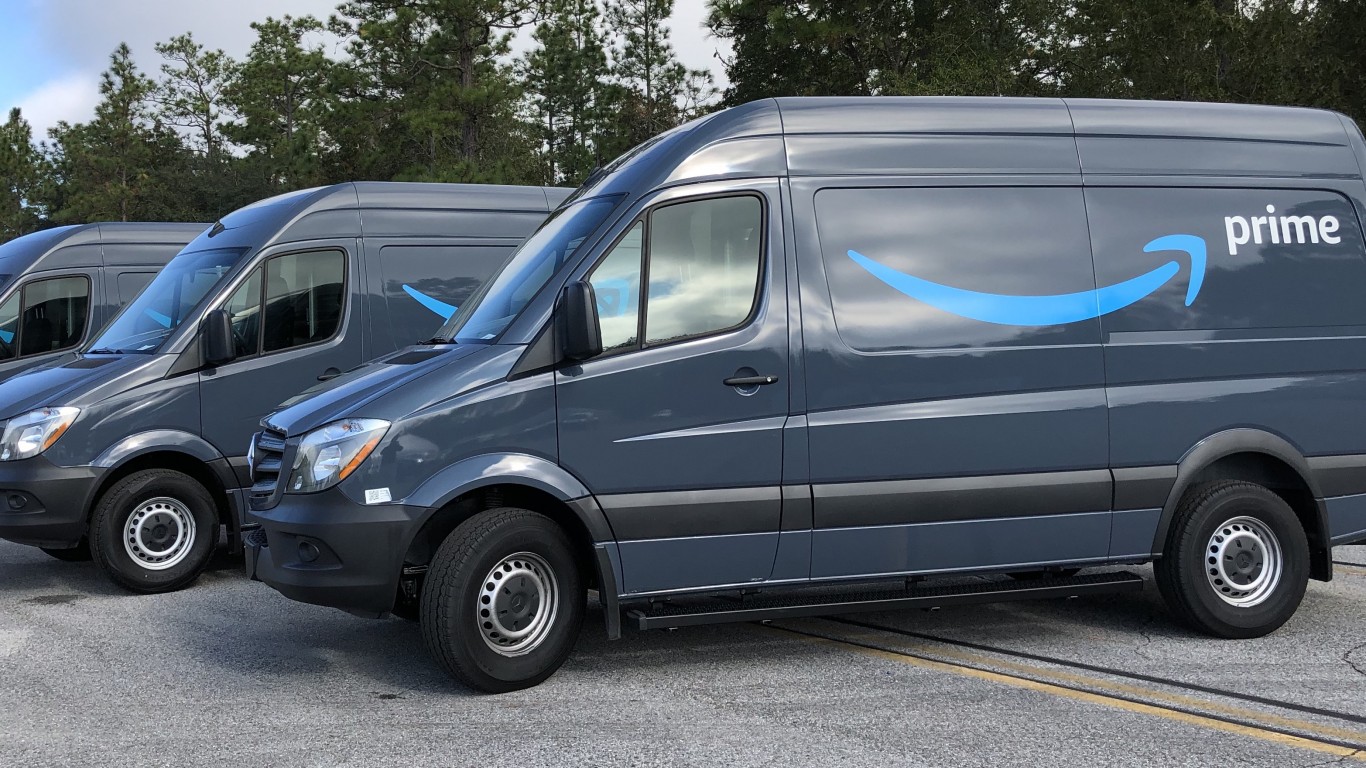
© Amazon Prime Delivery Trucks (CC BY-SA 2.0) by Todd Van Hoosear

Douglas A. McIntyre is the co-founder, chief executive officer and editor in chief of 24/7 Wall St. and 24/7 Tempo. He has held these jobs since 2006.
McIntyre has written thousands of articles for 24/7 Wall St. He is an expert on corporate finance, the automotive industry, media companies and international finance. He has edited articles on national demographics, sports, personal income and travel.
His work has been quoted or mentioned in The New York Times, The Wall Street Journal, Los Angeles Times, The Washington Post, NBC News, Time, The New Yorker, HuffPost USA Today, Business Insider, Yahoo, AOL, MarketWatch, The Atlantic, Bloomberg, New York Post, Chicago Tribune, Forbes, The Guardian and many other major publications. McIntyre has been a guest on CNBC, the BBC and television and radio stations across the country.
A magna cum laude graduate of Harvard College, McIntyre also was president of The Harvard Advocate. Founded in 1866, the Advocate is the oldest college publication in the United States.
TheStreet.com, Comps.com and Edgar Online are some of the public companies for which McIntyre served on the board of directors. He was a Vicinity Corporation board member when the company was sold to Microsoft in 2002. He served on the audit committees of some of these companies.
McIntyre has been the CEO of FutureSource, a provider of trading terminals and news to commodities and futures traders. He was president of Switchboard, the online phone directory company. He served as chairman and CEO of On2 Technologies, the video compression company that provided video compression software for Adobe’s Flash. Google bought On2 in 2009.











 Top Gaining Stocks
 Top Losing Stocks