JCPenney Makes a Comeback

Photo of Douglas A. McIntyre
By Douglas A. McIntyre Published
This post may contain links from our sponsors and affiliates, and Flywheel Publishing may receive compensation for actions taken through them.
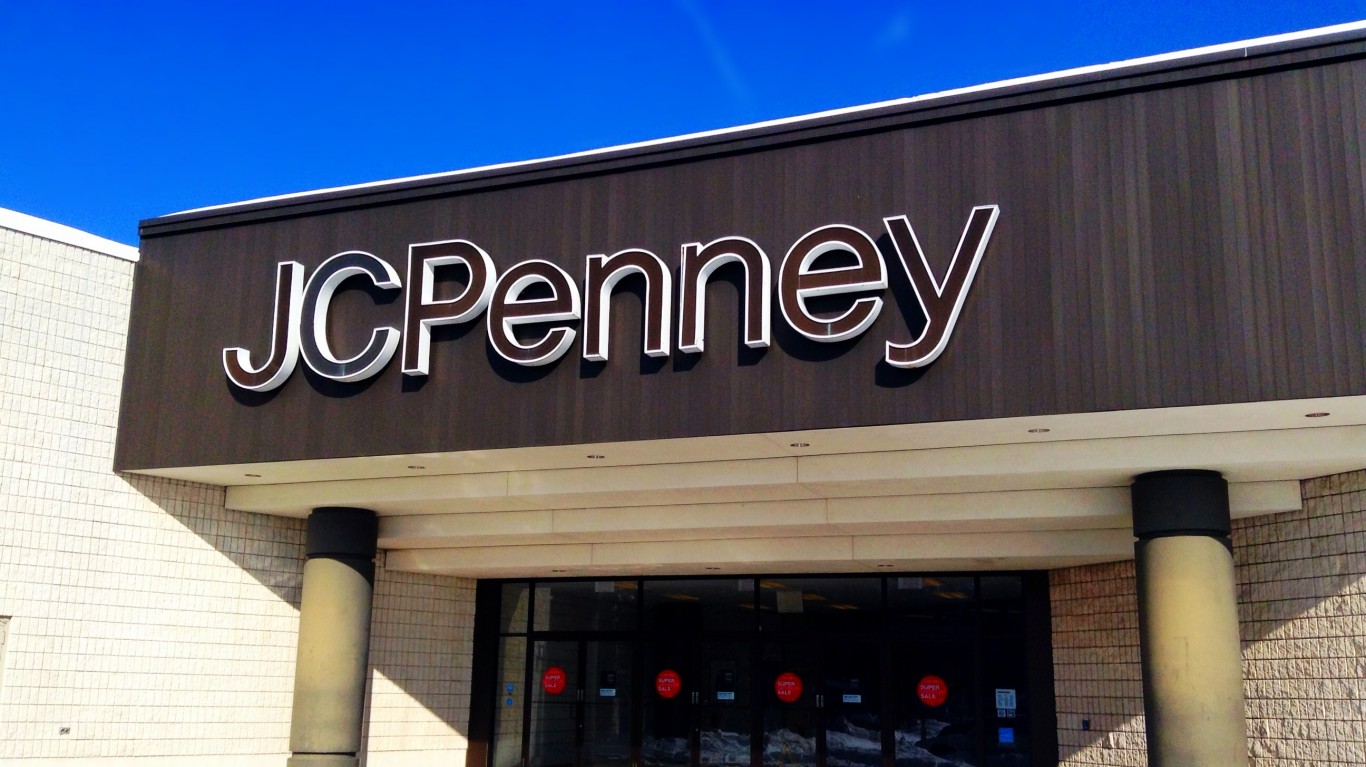
JCPenney Makes a Comeback

© southbeachcars / Flickr

Founded in 1902, and once among the largest retailers in America, JCPenney was supposedly driven into obscurity due to a sharp decline in same-store sales and a ripped-apart balance sheet.

That’s not so. It still has an online presence and more than 600 brick-and-mortar locations. Like Sears, it was never gone, but its footprint contracted to a tiny version of what it once was. (These companies have the worst reputations.)

In 1973, JCPenney had 2,053 locations, much fewer than Walmart has today. However, it was considered a worthy rival to Walmart, Sears and Kmart.

JCPenney really fell apart starting in 2011. The board made what it thought was an ingenious move by hiring the head of Apple’s store operation. Ron Johnson was considered among the most progressive retail executives in the country. Of course, he was. He had run the store operation of one of the most successful companies in the world.
[nativounit]
Johnson retooled JCPenney stores and changed how it priced its inventory. The result was one of the greatest catastrophes in the history of large retail companies. Same-store sales tumbled by over 20% year over year. Johnson lost his job just a few months after getting it.
[wallst_email_signup]
The COVID-19 pandemic kept people out of stores, and that was, most likely, what caused the final collapse of JCPenney. The company filed for bankruptcy and was taken over by real estate firm Simon and Brookfield.
[recirclink id=1186516]
What actually killed JCPenney? The usual excuse is the one given by many crippled retailers. Amazon, America’s second-largest company, crushed the retail competition with its huge e-commerce presence. Walmart, America’s largest brick-and-mortar retailer, finished them off with its huge store footprint and low prices.

JCPenney lives on with a website and a modest store count. The next few years will tell whether that is enough.

Photo of Douglas A. McIntyre
About the Author Douglas A. McIntyre →

Douglas A. McIntyre is the co-founder, chief executive officer and editor in chief of 24/7 Wall St. and 24/7 Tempo. He has held these jobs since 2006.

McIntyre has written thousands of articles for 24/7 Wall St. He is an expert on corporate finance, the automotive industry, media companies and international finance. He has edited articles on national demographics, sports, personal income and travel.

His work has been quoted or mentioned in The New York Times, The Wall Street Journal, Los Angeles Times, The Washington Post, NBC News, Time, The New Yorker, HuffPost USA Today, Business Insider, Yahoo, AOL, MarketWatch, The Atlantic, Bloomberg, New York Post, Chicago Tribune, Forbes, The Guardian and many other major publications. McIntyre has been a guest on CNBC, the BBC and television and radio stations across the country.

A magna cum laude graduate of Harvard College, McIntyre also was president of The Harvard Advocate. Founded in 1866, the Advocate is the oldest college publication in the United States.

TheStreet.com, Comps.com and Edgar Online are some of the public companies for which McIntyre served on the board of directors. He was a Vicinity Corporation board member when the company was sold to Microsoft in 2002. He served on the audit committees of some of these companies.

McIntyre has been the CEO of FutureSource, a provider of trading terminals and news to commodities and futures traders. He was president of Switchboard, the online phone directory company. He served as chairman and CEO of On2 Technologies, the video compression company that provided video compression software for Adobe’s Flash. Google bought On2 in 2009.

Featured Reads

Our top personal finance-related articles today. Your wallet will thank you later.

Continue Reading

Top Gaining Stocks

CBOE Vol: 1,568,143
PSKY Vol: 12,285,993
STX Vol: 7,378,346
ORCL Vol: 26,317,675
DDOG Vol: 6,247,779

Top Losing Stocks

LKQ
LKQ Vol: 4,367,433
CLX Vol: 13,260,523
SYK Vol: 4,519,455
MHK Vol: 1,859,865
AMGN Vol: 3,818,618