


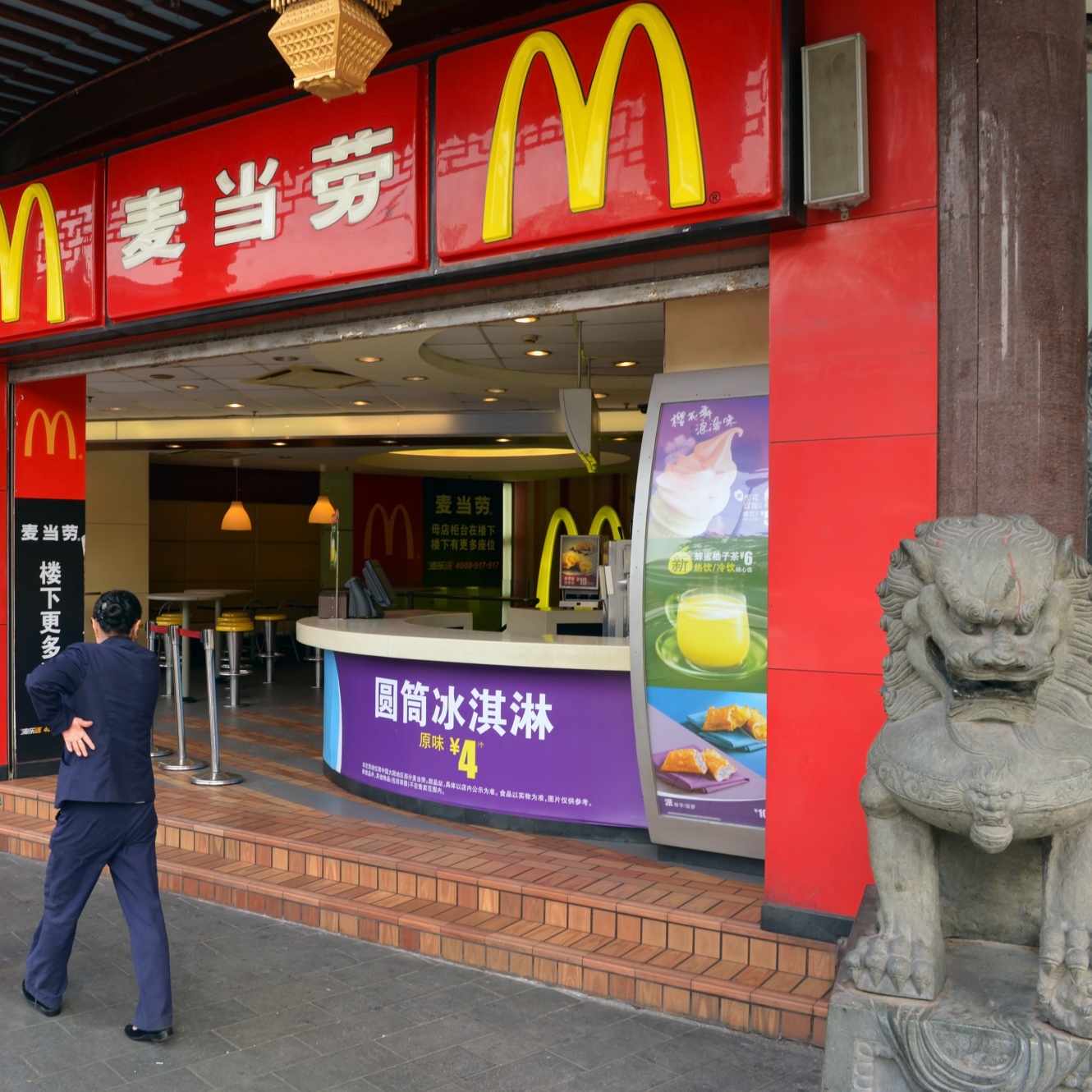
McDonald’s Corp. (NYSE: MCD) will chase companies like Yum! Brands Inc. (NYSE: YUM) and Wal-Mart Stores Inc. (NYSE: WMT) more deeply into Asian markets on the gamble that it can accelerate global growth bogged down by poor results in its home market of the United States. As other American companies have found, the decision is not without large risks.
China, Hong Kong and Korea collectively represent more than 2,800 restaurant locations, the majority of which are currently company-owned. Those countries are included within the company’s High-Growth Markets, a segment which includes countries with relatively higher restaurant expansion and franchising potential. The company intends to add more than 1,500 restaurants in China, Hong Kong and Korea over the next five years.
The company’s 10-K shows that $4.5 billion of McDonald’s $66.2 billion revenue in 2015 came from “high growth markets.” The largest countries included in the figures are Russia and China.
[recirclink id=322356]
Among McDonald’s plans is that very few of the new locations will be owned directly by the fast-food company:
Last year, McDonald’s committed to strategically evaluate ownership structures in markets around the world with the overall goal of reducing the number of restaurants that the company owns and operates. The result of this will be to place more restaurants under local ownership, in the hands of local franchisees, with a long-term goal of being 95% franchised. The identification of strategic partners in Asia is consistent with this strategy.
As many companies have discovered, regulations within China can cause big headaches. Yum Brands sales suffered in the People’s Republic after tainted food was discovered in some of its restaurants in late 2013. Same-store sales in the country dropped by double digits in 2014 and only recovered modestly last year. The company likely will spin out its Chinese operations to solve the issues of local ownership and governance of operations.
Wal-Mart ran into worker problems when China’s labor unions pressed it on wages. In China, it was difficult to seek the sort of resolution that would be part of most arbitration in the United States.
Any company that wishes to do more business in China faces both local consumer habits and a government that is not always friendly to U.S. corporate interests.








 Top Gaining Stocks
 Top Losing Stocks