1.3 Million Major League Baseball Seats to Go Empty Every Day

Photo of Douglas A. McIntyre
By Douglas A. McIntyre Updated Published
This post may contain links from our sponsors and affiliates, and Flywheel Publishing may receive compensation for actions taken through them.
1.3 Million Major League Baseball Seats to Go Empty Every Day

© Image Source / Getty Images

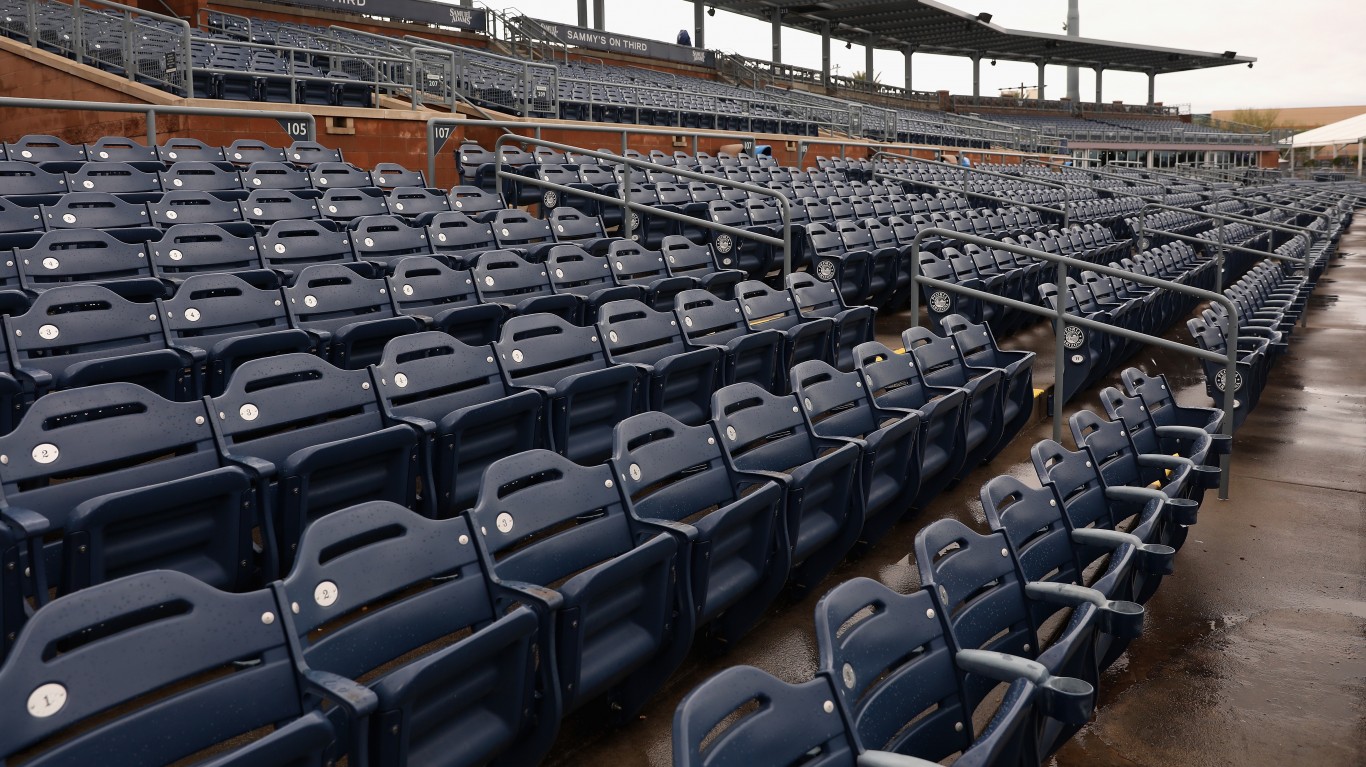
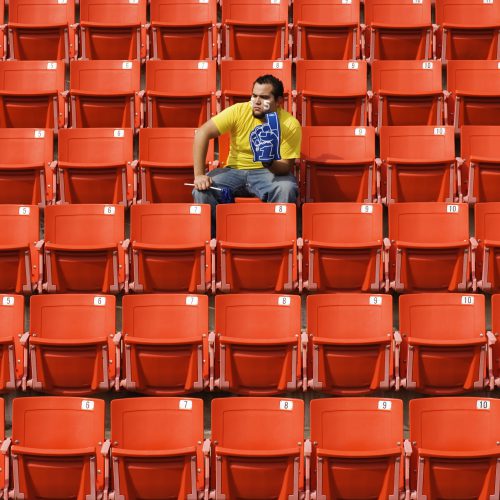
COVID-19 will cause Major League Baseball teams to play in empty parks. That means 1.3 million seats will be empty across the league on any given day that all 30 terms are playing. Each seat represents a ticket sale. Most ticket sales mean food and drink sales, and income from parking.

The 1.3 million seats grow much larger across the entire season. Not every seat is occupied every game. During the 2019 season, total attendance across all games was 68.5 million. This is 70% more than the number of people who live in California.

Ticket sales are about 30% of the total revenue of MLB. That, in turn, represents total sales of $9.4 billion. The figures show how badly baseball revenue will be damaged if the season has to be played in empty seats across the whole season. That will not happen. The “entry seat” model could, however, last through the 4th of July. The All-Star Game, in the middle of the season, will be played on July 14. That means that almost half of the season’s gate receipts will be gone.

Of course, when the ban for baseball attendance is lifted, many people will be anxious enough about COVID-19, that they will not return to stadiums for months. That will erode gate receipts further.

Two factors will influence how much each team will be affected financially. The first is the stadium capacity. The largest stadium by seats is Dodger Stadium at 56,000 followed by Yankee Stadium at 53.200. The smallest is Tropicana Field, home of the Tampa Devil Rays, at 42,700. The next factor is how many seats are full. Attendance compared to seats is as high as 80% in some and as low as 30% in others.

Fortunately for some teams is that they have billionaire owners who can last out period of low attendance. This includes John W. Henry, a hedge fund manager, who is wildly rich. He owns The Boston Red Sox. Christopher Ilitch, another billionaire owns The Detroit Tigers. Other teams face financial difficulty because they rely on annual revenue to support their teams financially.

There will be 1.3 million available seats which are empty on opening day. No one knows how long that will continue.

[nativounit][recirclink id=679564][wallst_email_signup]

Photo of Douglas A. McIntyre
About the Author Douglas A. McIntyre →

Douglas A. McIntyre is the co-founder, chief executive officer and editor in chief of 24/7 Wall St. and 24/7 Tempo. He has held these jobs since 2006.

McIntyre has written thousands of articles for 24/7 Wall St. He is an expert on corporate finance, the automotive industry, media companies and international finance. He has edited articles on national demographics, sports, personal income and travel.

His work has been quoted or mentioned in The New York Times, The Wall Street Journal, Los Angeles Times, The Washington Post, NBC News, Time, The New Yorker, HuffPost USA Today, Business Insider, Yahoo, AOL, MarketWatch, The Atlantic, Bloomberg, New York Post, Chicago Tribune, Forbes, The Guardian and many other major publications. McIntyre has been a guest on CNBC, the BBC and television and radio stations across the country.

A magna cum laude graduate of Harvard College, McIntyre also was president of The Harvard Advocate. Founded in 1866, the Advocate is the oldest college publication in the United States.

TheStreet.com, Comps.com and Edgar Online are some of the public companies for which McIntyre served on the board of directors. He was a Vicinity Corporation board member when the company was sold to Microsoft in 2002. He served on the audit committees of some of these companies.

McIntyre has been the CEO of FutureSource, a provider of trading terminals and news to commodities and futures traders. He was president of Switchboard, the online phone directory company. He served as chairman and CEO of On2 Technologies, the video compression company that provided video compression software for Adobe’s Flash. Google bought On2 in 2009.

Featured Reads

Our top personal finance-related articles today. Your wallet will thank you later.

Continue Reading

Top Gaining Stocks

CBOE Vol: 1,568,143
PSKY Vol: 12,285,993
STX Vol: 7,378,346
ORCL Vol: 26,317,675
DDOG Vol: 6,247,779

Top Losing Stocks

LKQ
LKQ Vol: 4,367,433
CLX Vol: 13,260,523
SYK Vol: 4,519,455
MHK Vol: 1,859,865
AMGN Vol: 3,818,618