


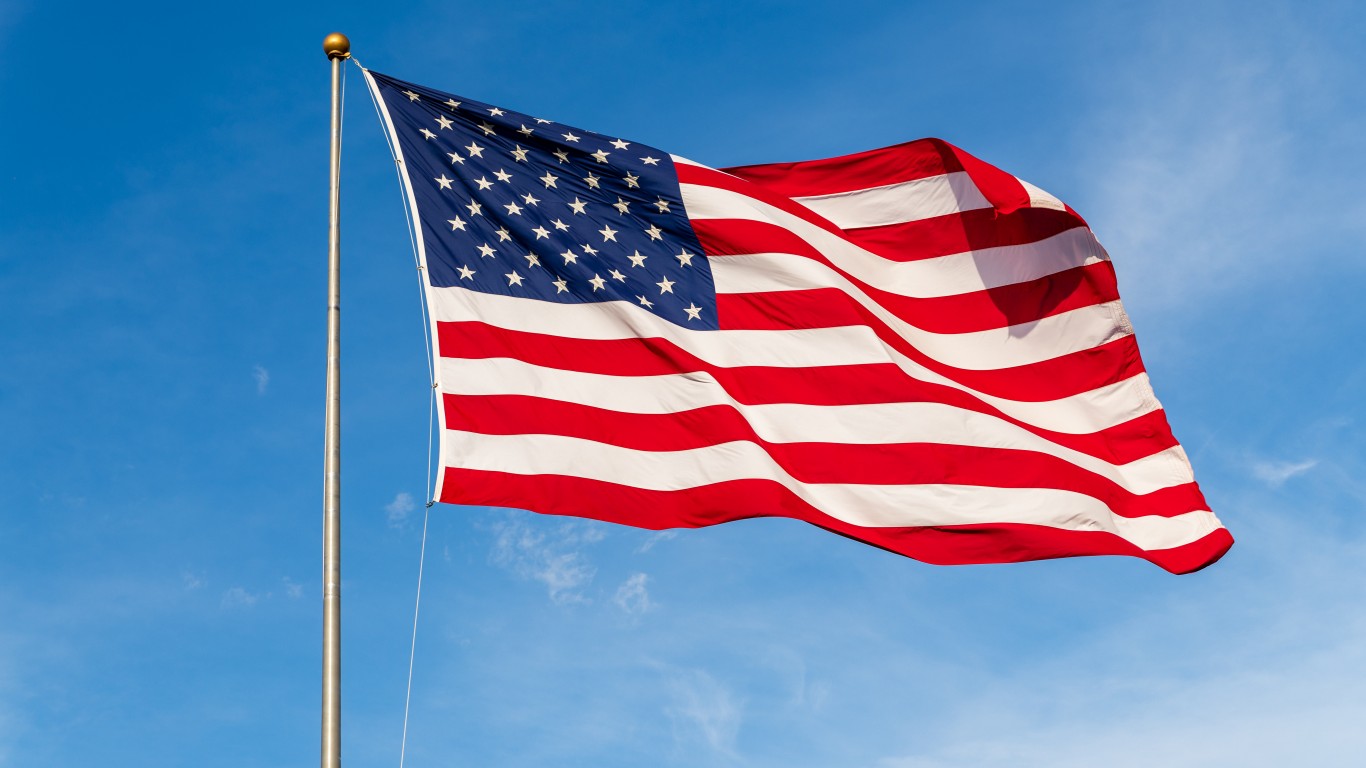
On March 3, 1931, President Herbert Hoover signed a congressional act making “The Star-Spangled Banner” the official national anthem of the United States. It had been the de facto national anthem for at least a century before it became the official national anthem of America. “The Star-Spangled Banner” was written to celebrate the survival of our country’s flag flying atop Fort McHenry in Baltimore, despite the withering bombardment by the British Navy during the War of 1812, and stands as a symbol of American resilience.
As much as Americans respect “The Star-Spangled Banner” — despite the daunting challenge it poses for those who try to sing it — other patriotic songs have risen to the pantheon of songs that are considered unofficial national anthems. Some, in fact, were even under consideration for our national anthem. Those songs include “The Stars and Stripes Forever,” “My Country ‘Tis of Thee,” “America the Beautiful,” and “God Bless America.”
“The Stars and Stripes Forever” is a show-stopping rouser written by John Philip Sousa. He wrote the music on his return from a European vacation in 1896 and it was an immediate hit. The song was so popular at his concerts that Sousa performed it multiple times in the same event, with the audience standing and roaring its approval each time. Many people regarded it as something like a national anthem.
The words and sentiment of “My Country ‘Tis of Thee,” invoking liberty, freedom, patriotism, and the legacy of the Pilgrims, place it among a handful of songs that some have considered as a national anthem. Martin Luther King Jr. quoted the song’s line, “Let freedom ring,” many times in his “I Have a Dream Speech” in 1963. What disqualifies the song as a national anthem is that its melody is indistinguishable from the British anthem “God Save the Queen.”
[nativounit]
Few songs more eloquently evoke the physical beauty of the United States as “America the Beautiful.” Katharine Lee Bates, an English literature professor at Wellesley College, captured the grandeur of the American landscape as she viewed the wide expanse before her during a hike up Pikes Peak in Colorado in 1893. Americans were taken by Bates’ words describing the scene, and the song was considered by Congress as the national anthem. When people talk about replacing the “The Star-Spangled Banner” as the national anthem, “America the Beautiful” is almost always on the short list.
“God Bless America” is sometimes thought of as the second national anthem. Little wonder why. Popularized by the prodigiously voiced Kate Smith and written by Irving Berlin, the song is patriotic without being triumphal, invoking God and the natural beauty of America. We associate “The Star-Spangled Banner” with sports events, but some teams such as the Chicago White Sox played “God Bless America” during the 1966 season because it was easier to sing. “God Bless America” was sung often at public events following the terrorist attacks on Sept. 11, 2001. Smith’s version is still played during every New York Yankee home game, with the lyrics posted on the scoreboard. “God Bless America” is held in such high regard that Congress sang it after the 9/11 attacks.
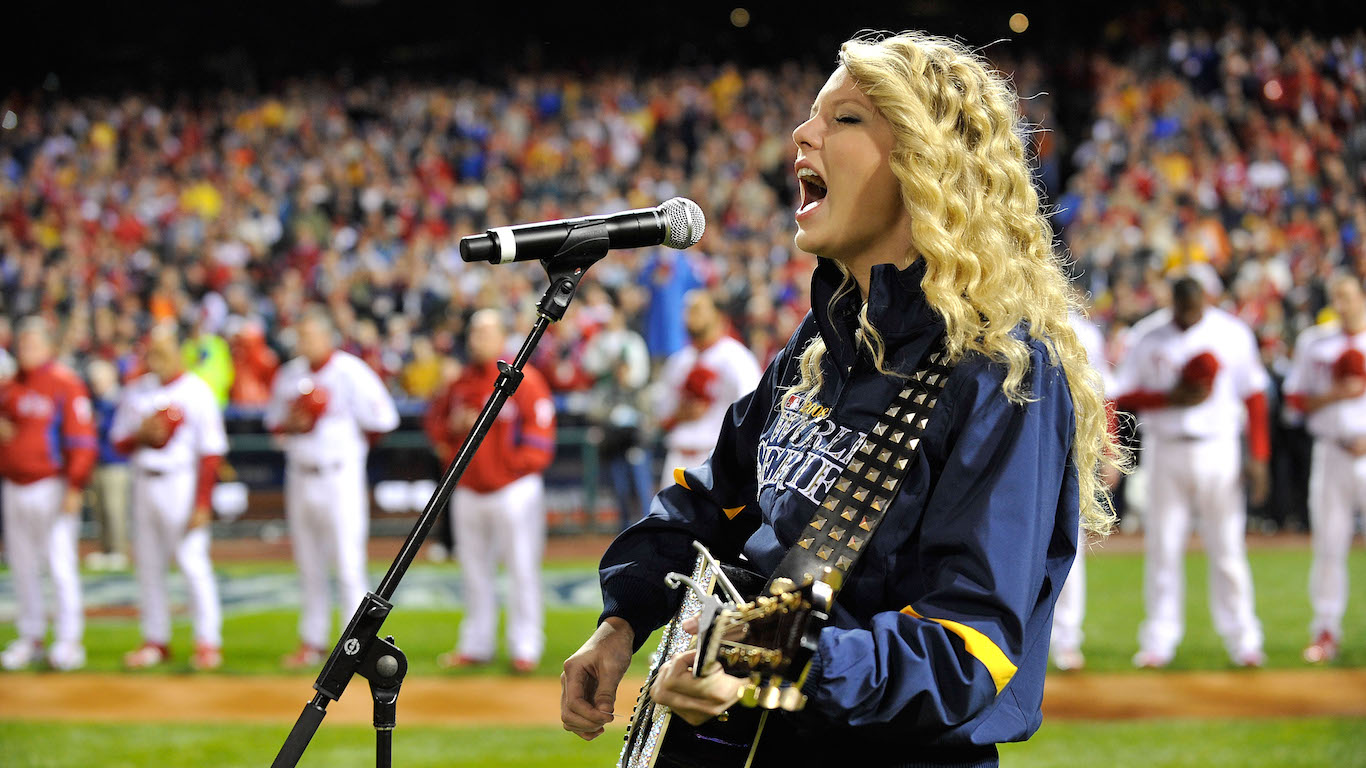
“The Star-Spangled Banner” had been the unofficial national anthem for about 100 years. Then, in 1917, the song was played during the World Series in recognition of Americans fighting in World War I. The response was so strong that “The Star-Spangled Banner” began to be played in baseball stadiums, permanently entwining the national pastime with what would become the official national anthem in 1931.
[wallst_email_signup]






 Top Gaining Stocks
 Top Losing Stocks