


Renowned as the pioneers of aviation, the Wright brothers, Orville and Wilbur, successfully achieved the first powered, controlled, and sustained flight in 1903. This early aeronautical success caught the attention of the U.S. military, propelling them to develop the first military plane in the world, the 1909 Wright Military Flyer. This plane was sold to the U.S. Army Corp, the precursor to the Air Force, and marked the birth of aviation, laying the foundation for the development of military aircraft in the early 20th century.
One of the first nations to field aircraft for military purposes, a tradition that has continued over the past century, the United States has paved the way for the development of more advanced and sophisticated warplanes, culminating in arguably the premier air force on the planet. (And these are the largest air forces in the world.)
24/7 Wall St. reviewed former U.S. military aircraft from Military Factory to determine America’s first military war plane and other notable early American military aircraft. Planes are in order according to the year they entered military service, from the very early planes to 1936, around the time jet propulsion was invented. We included supplemental information from Military Factory regarding types of aircraft, maximum speed, crew size, and what roles each aircraft played in the service.
The Curtiss JN-4 “Jenny” was one of the earliest warplanes employed by the U.S. military. Introduced in 1915, the Jenny became a workhorse for the Army Signal Corps during World War I. Its open cockpit design and wooden frame reflected the early engineering capabilities of the time. The plane played an important role in training aviators and conducting reconnaissance missions during WWI and the Mexican Revolution.
The T-6 Texan is another iconic warplane on this list. This plane was a primary trainer for countless aviators during World War II and beyond. Known for its distinctive appearance, with its characteristic inverted gull wings and sleek lines, the T-6 has been used not only for training but also in various roles, including ground attack and reconnaissance. Even today, modernized versions of the T-6 Texan continue to serve as trainers in air forces around the world, carrying forward its legacy as a key part of aviation history.
Although many of the early planes were nowhere near as fast as the modern jets and aircraft in the Air Force today, they still played a significant role in wars of the early 20th century. Most of these early aircraft were not used as fighters or interceptors like many of today’s military aircraft. Due to a lack of technology at the time, these early planes were used for scouting or reconnaissance to understand enemy positions better.
Part of the huge differential in speed in planes of today is jet-propulsion technology, which was not tested in flight until late in 1939, well after most of these planes entered service. The advancement in various technologies was instrumental in creating newer planes that are more advanced in speed, and maneuverability. (Here are the 20 fastest American planes of World War II.)
Here are the first planes in the United States Air Force.
1. Burgess-Wright Model F Flyer

- Year entered service: 1911
- Type: Biplane aircraft
- Maximum speed: 42 mph
- Crew size: 1
- Role: Surveillance, reconnaissance, trainer
2. Curtiss JN-4

- Year entered service: 1915
- Type: Biplane aircraft
- Maximum speed: 75 mph
- Crew size: 2
- Role: Trainer
3. Thomas-Morse S-4

- Year entered service: 1917
- Type: Advanced flight trainer biplane
- Maximum speed: 96 mph
- Crew size: 1
- Role: Trainer
4. Standard J

- Year entered service: 1917
- Type: Biplane aircraft
- Maximum speed: 68 mph
- Crew size: 2
- Role: Surveillance, reconnaissance, trainer
5. Curtiss H-16
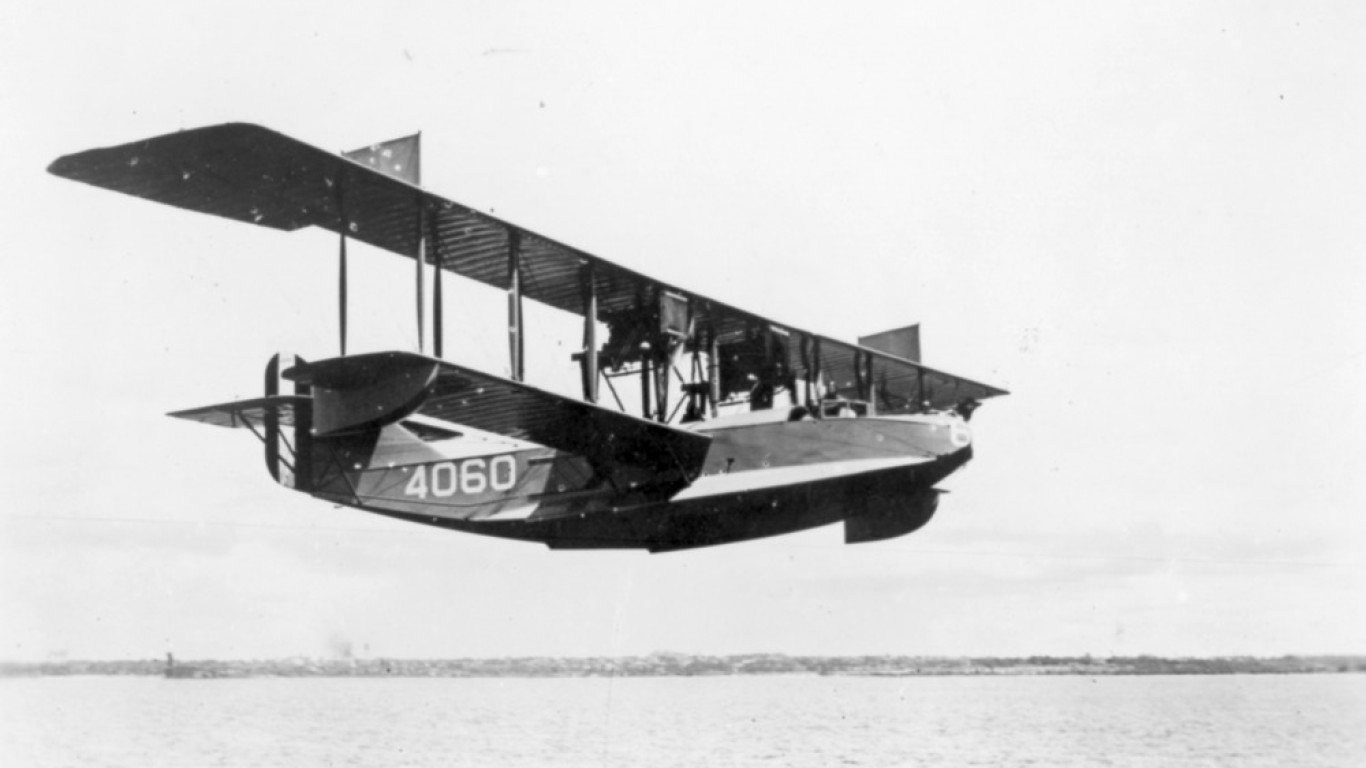
- Year entered service: 1917
- Type: Seaplane
- Maximum speed: 95 mph
- Crew size: 4
- Role: Surveillance & reconnaissance
6. Aeromarine 39
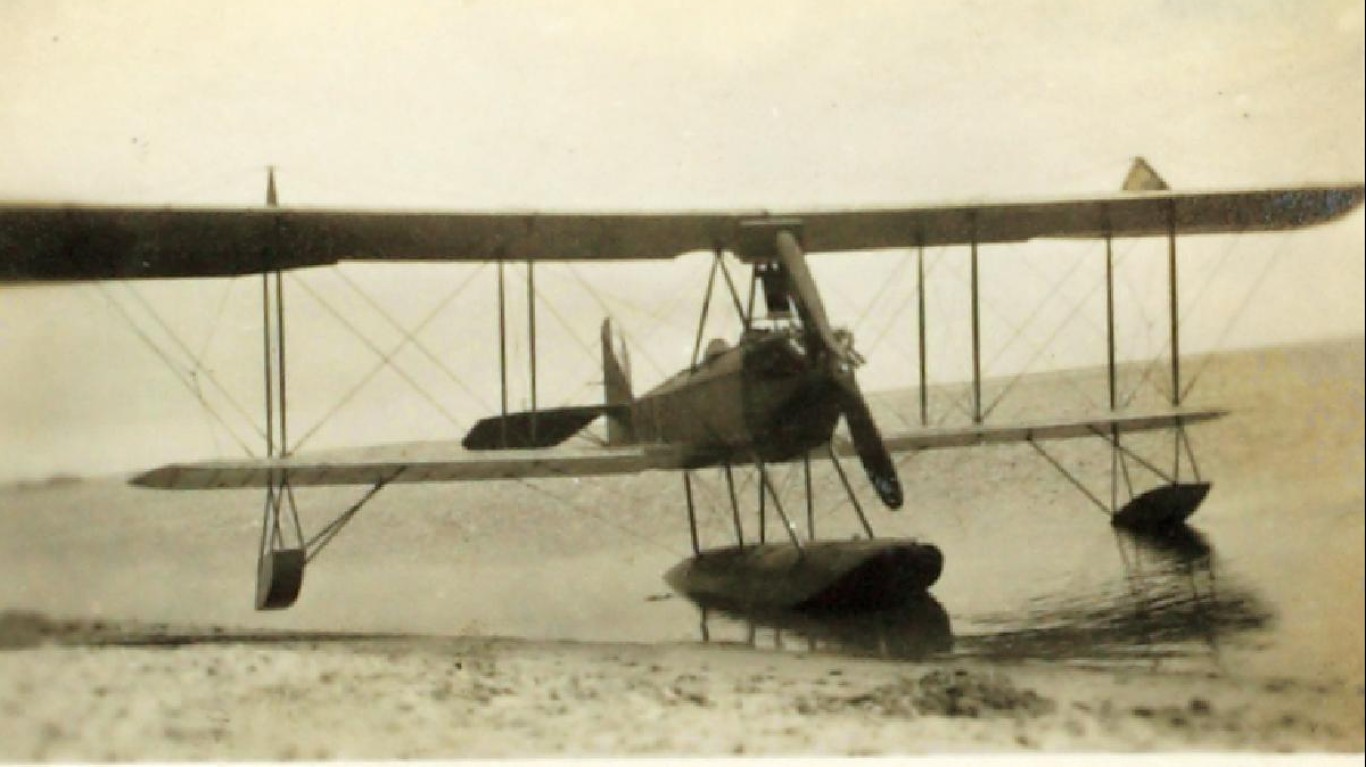
- Year entered service: 1917
- Type: Naval biplane aircraft
- Maximum speed: 73 mph
- Crew size: 2
- Role: Trainer
7. Vought VE-7 Bluebird
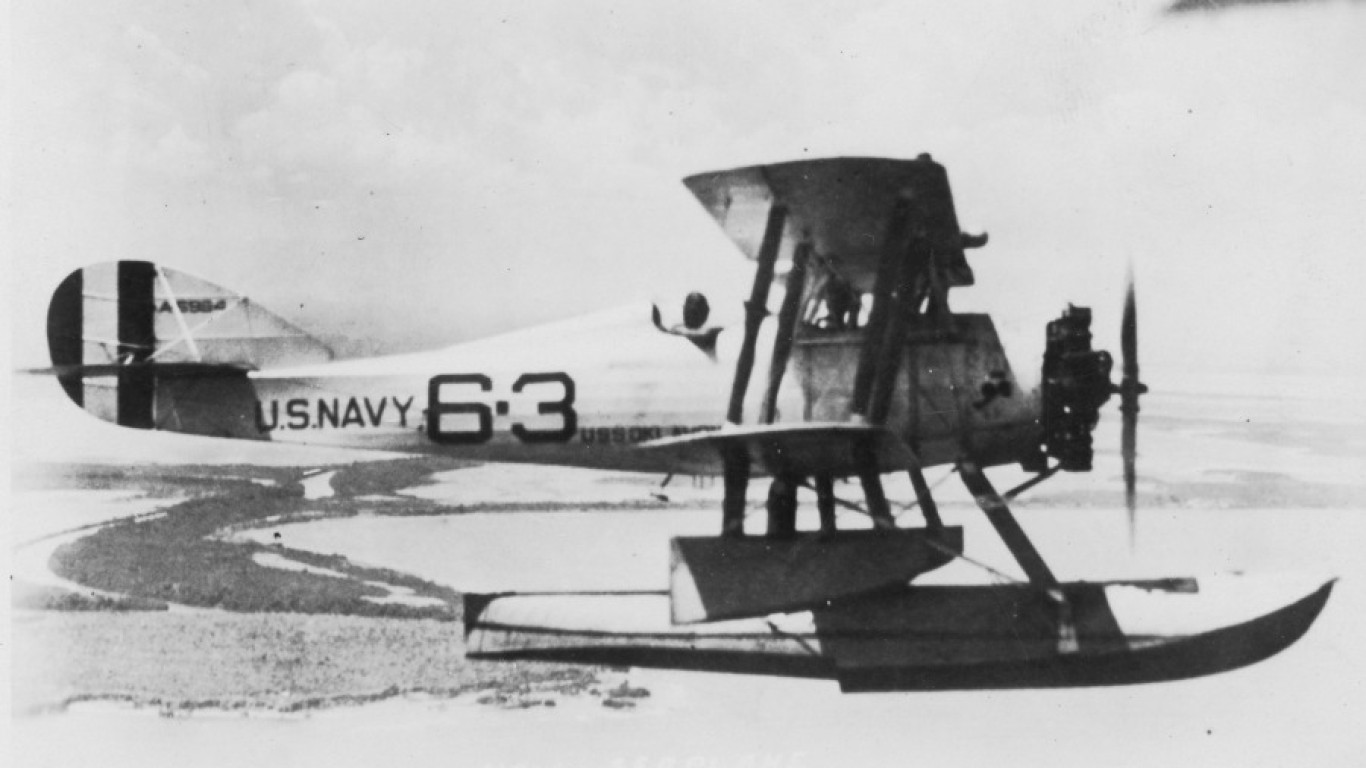
- Year entered service: 1918
- Type: Biplane fighter aircraft
- Maximum speed: 106 mph
- Crew size: 2
- Role: Fighter, trainer
8. Packard-Le Pere LUSAC-11
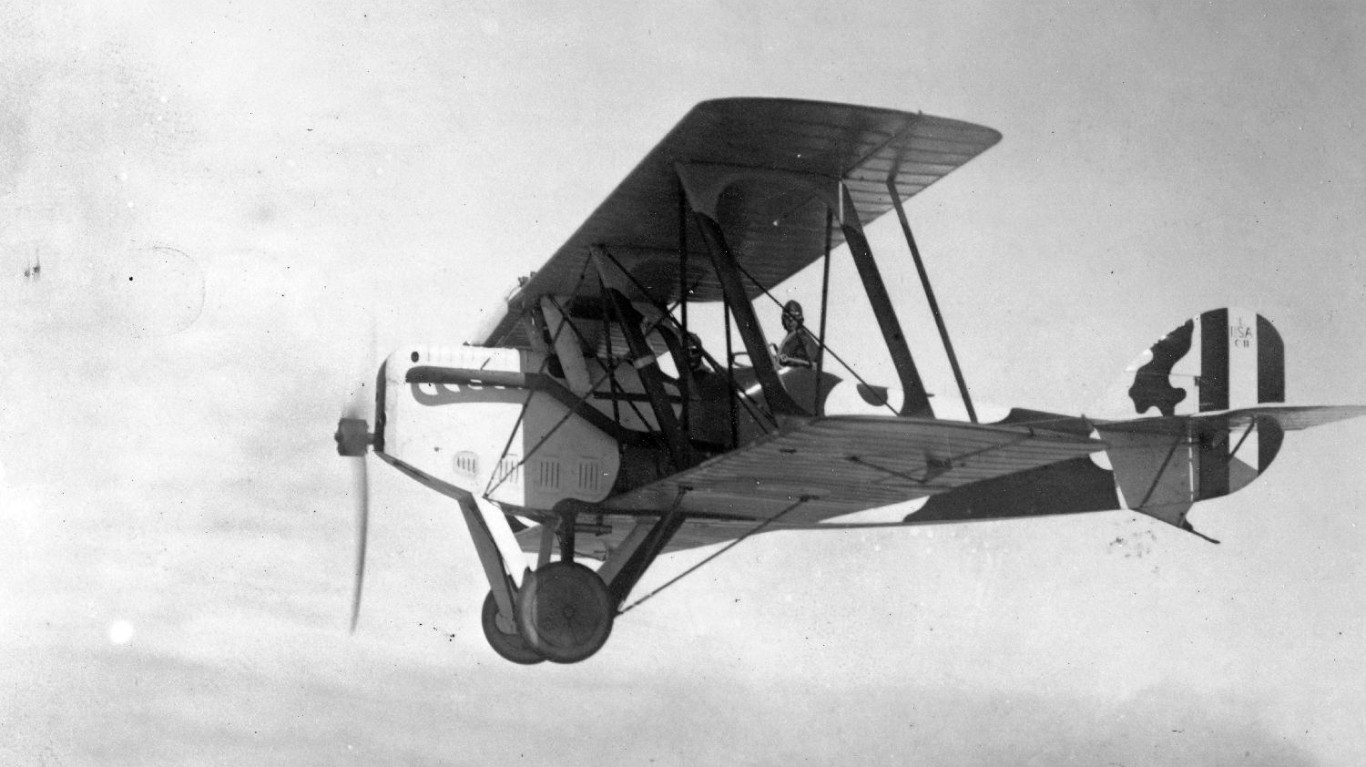
- Year entered service: 1918
- Type: Biplane fighter aircraft
- Maximum speed: 134 mph
- Crew size: 2
- Role: Fighter, bomber, trainer
9. Martin MB-1 (Glenn Martin Bomber)

- Year entered service: 1918
- Type: Biplane bomber aircraft
- Maximum speed: 104 mph
- Crew size: 4
- Role: Bomber, surveillance, reconnaissance
10. Aeromarine 40
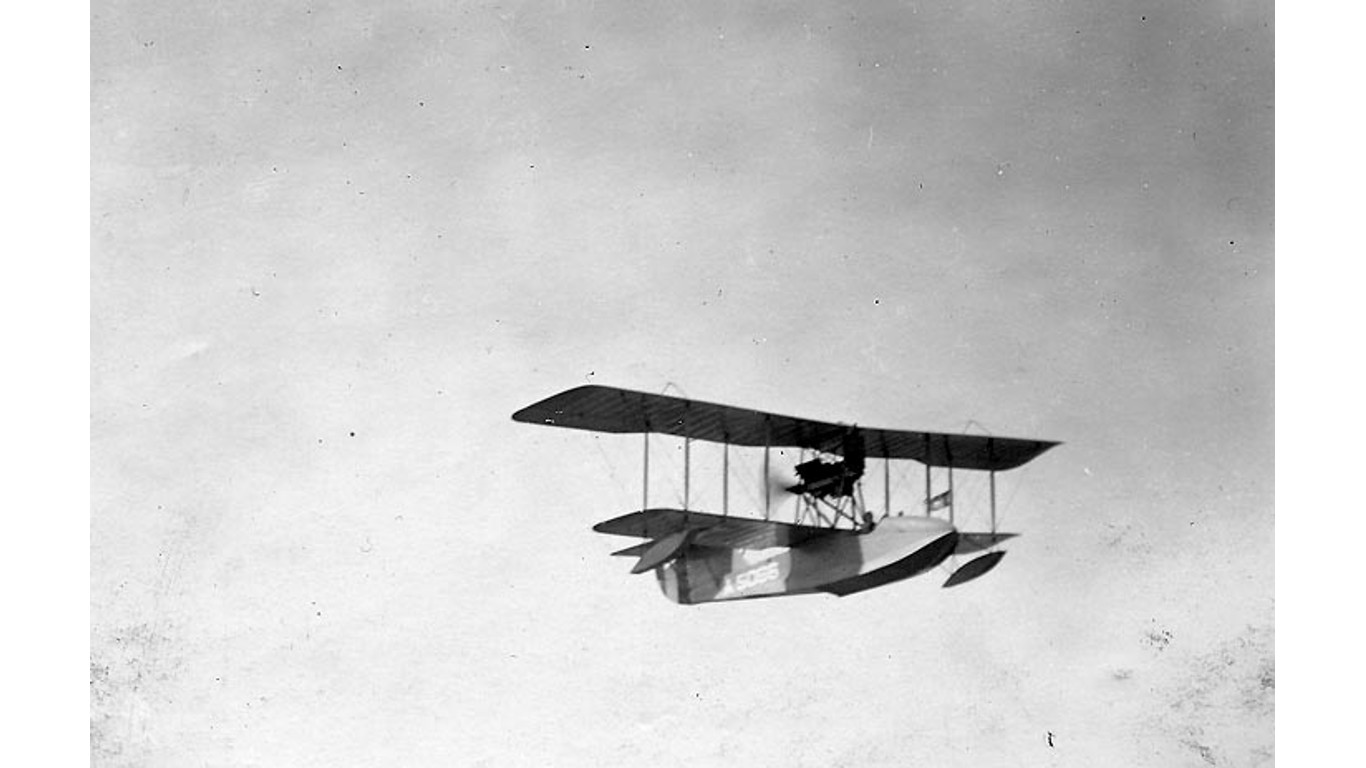
- Year entered service: 1918
- Type: Naval biplane aircraft
- Maximum speed: 71 mph
- Crew size: 2
- Role: Trainer
11. Martin MB-2 / NBS-1

- Year entered service: 1920
- Type: Night bomber aircraft
- Maximum speed: 99 mph
- Crew size: 4
- Role: Bomber
12. Curtiss F6C Hawk

- Year entered service: 1924
- Type: Naval carrier-borne fighter aircraft
- Maximum speed: 154 mph
- Crew size: 1
- Role: Fighter
13. Consolidated PT-1 Trusty
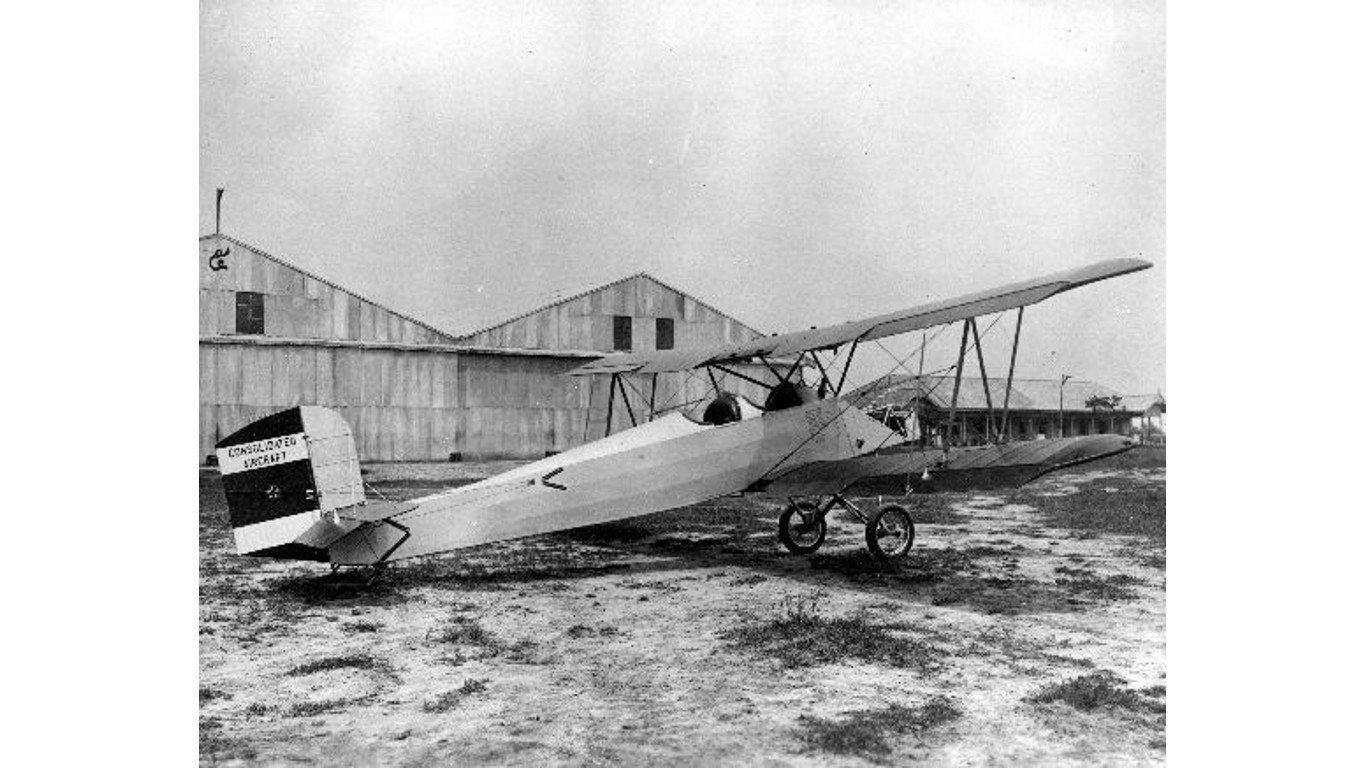
- Year entered service: 1924
- Type: Biplane aircraft
- Maximum speed: 92 mph
- Crew size: 2
- Role: Trainer
14. Boeing PW-9 (FB-5 / Model 15)
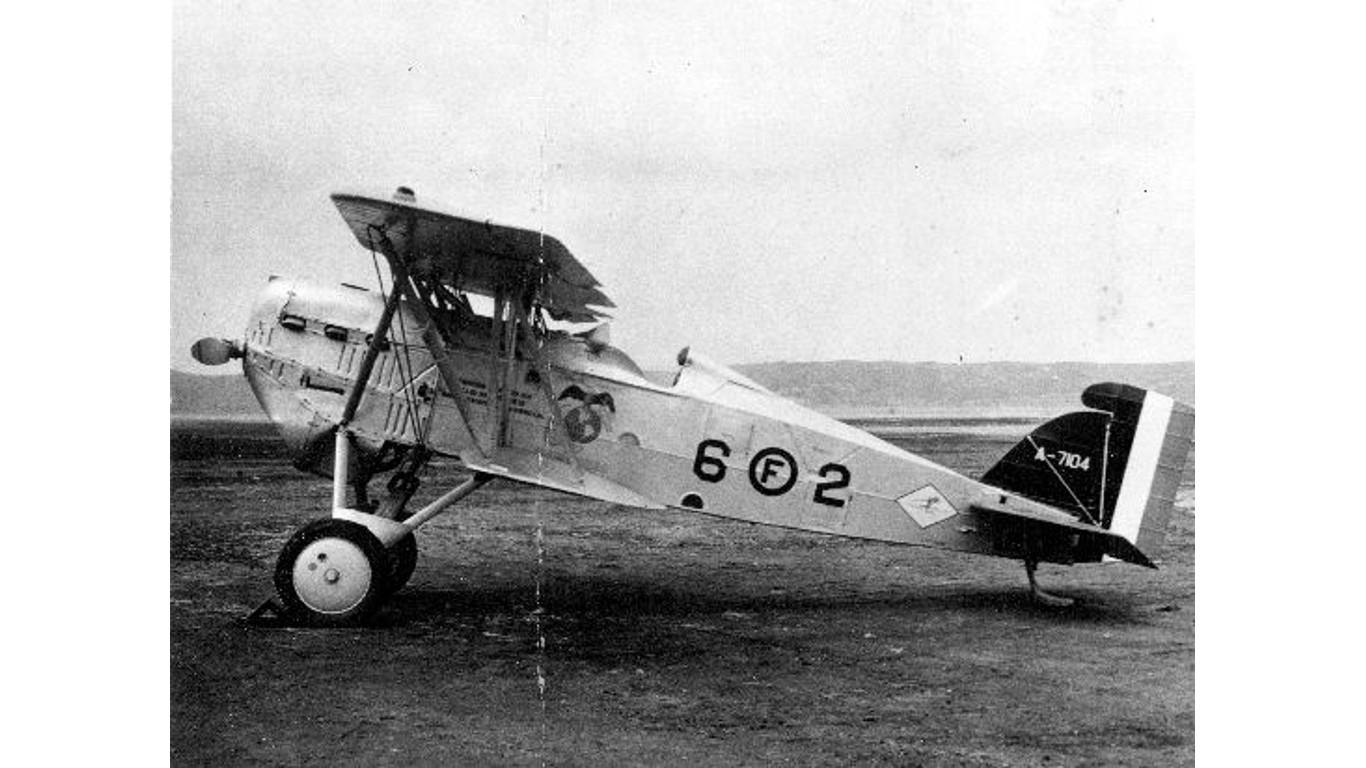
- Year entered service: 1924
- Type: Biplane fighter aircraft
- Maximum speed: 159 mph
- Crew size: 1
- Role: Fighter, interceptor
15. Ford Trimotor
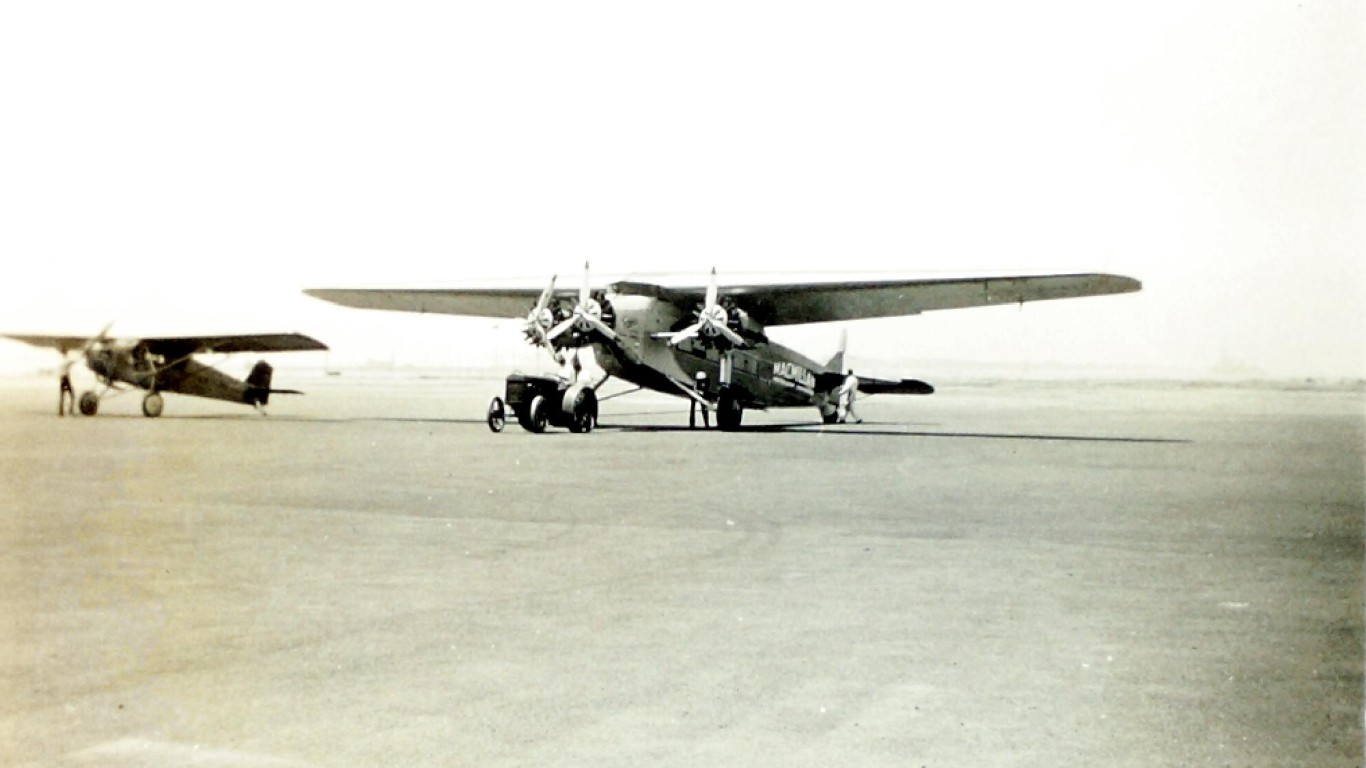
- Year entered service: 1926
- Type: Transport aircraft
- Maximum speed: 149 mph
- Crew size: 2
- Role: Transport
16. Curtiss P-6 Hawk
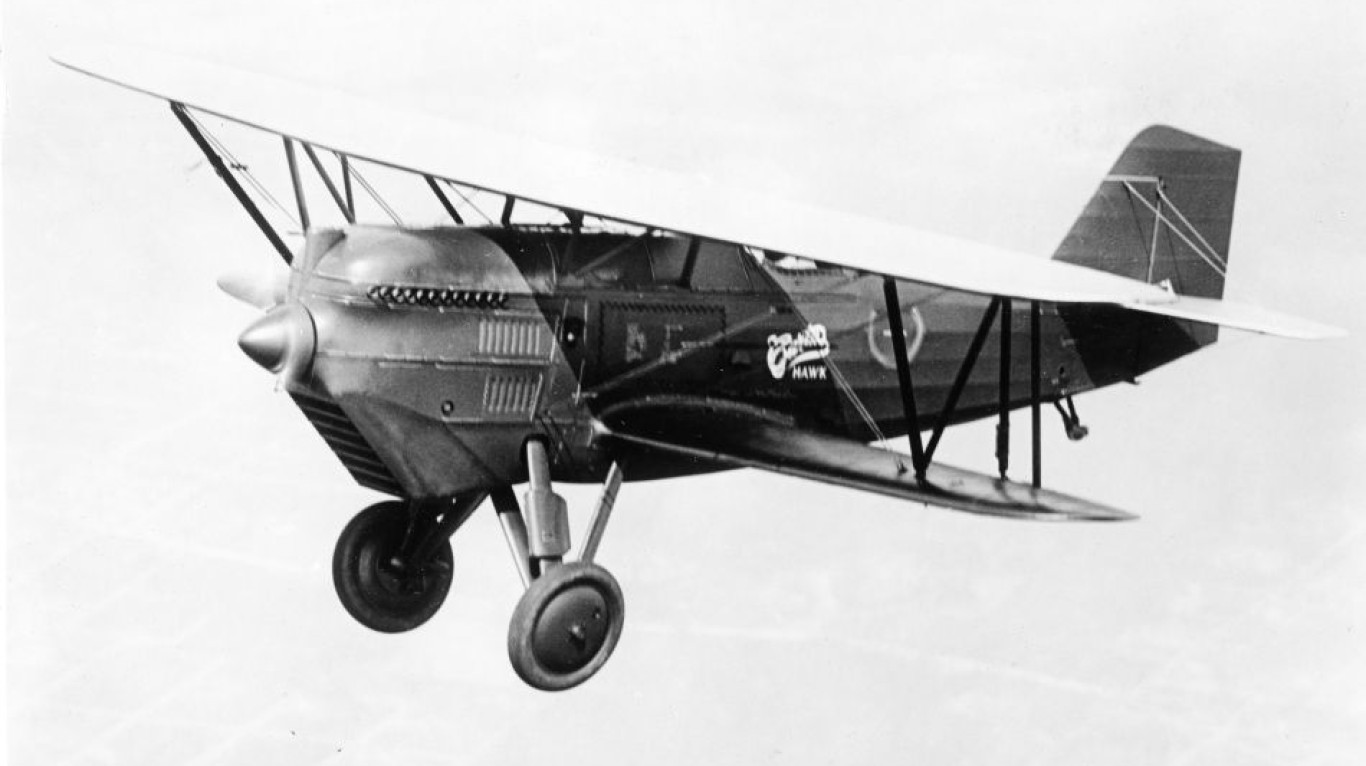
- Year entered service: 1929
- Type: Biplane fighter aircraft
- Maximum speed: 204 mph
- Crew size: 1
- Role: Fighter
17. Boeing F4B / P-12

- Year entered service: 1929
- Type: Carrierborne biplane fighter aircraft
- Maximum speed: 189 mph
- Crew size: 1
- Role: Fighter, bomber
18. Northrop Gamma
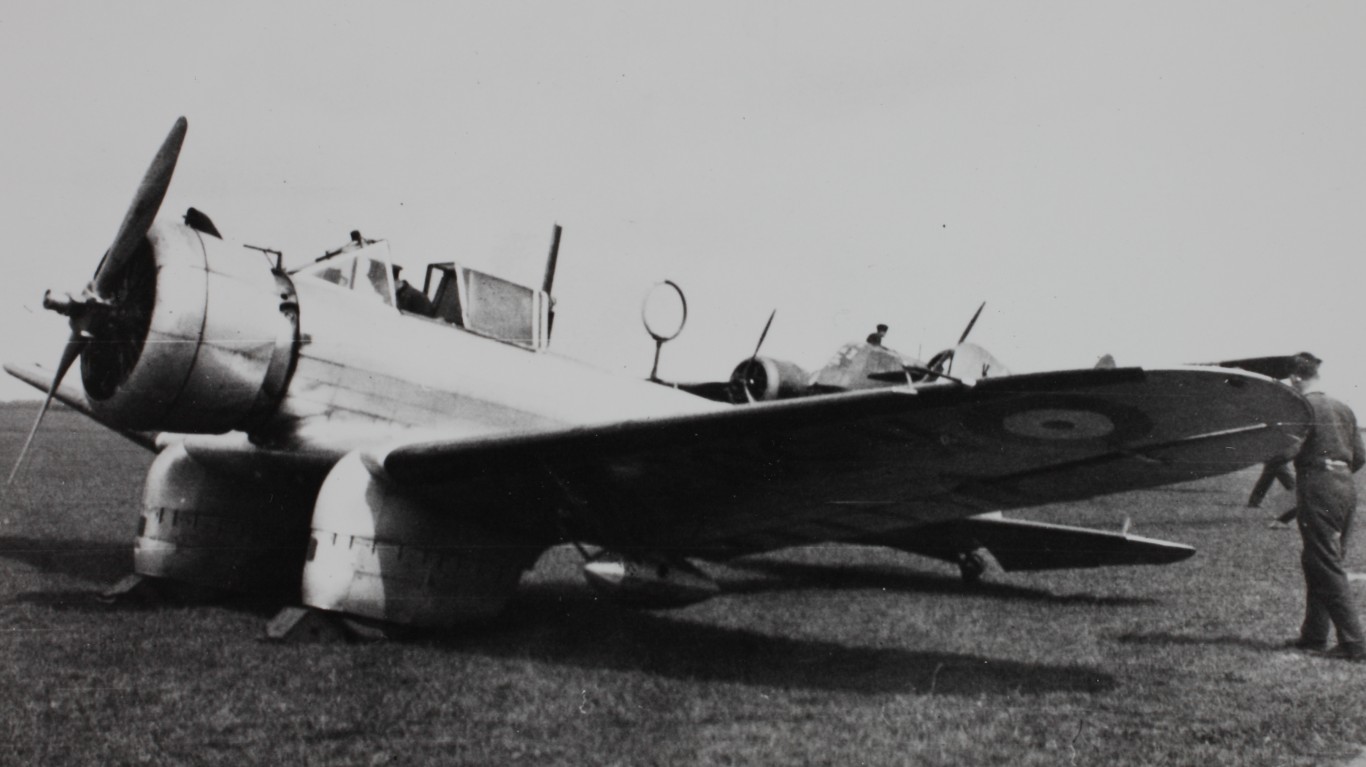
- Year entered service: 1932
- Type: Monoplane aircraft
- Maximum speed: 224 mph
- Crew size: 1
- Role: Fighter, transport
19. Martin B-10
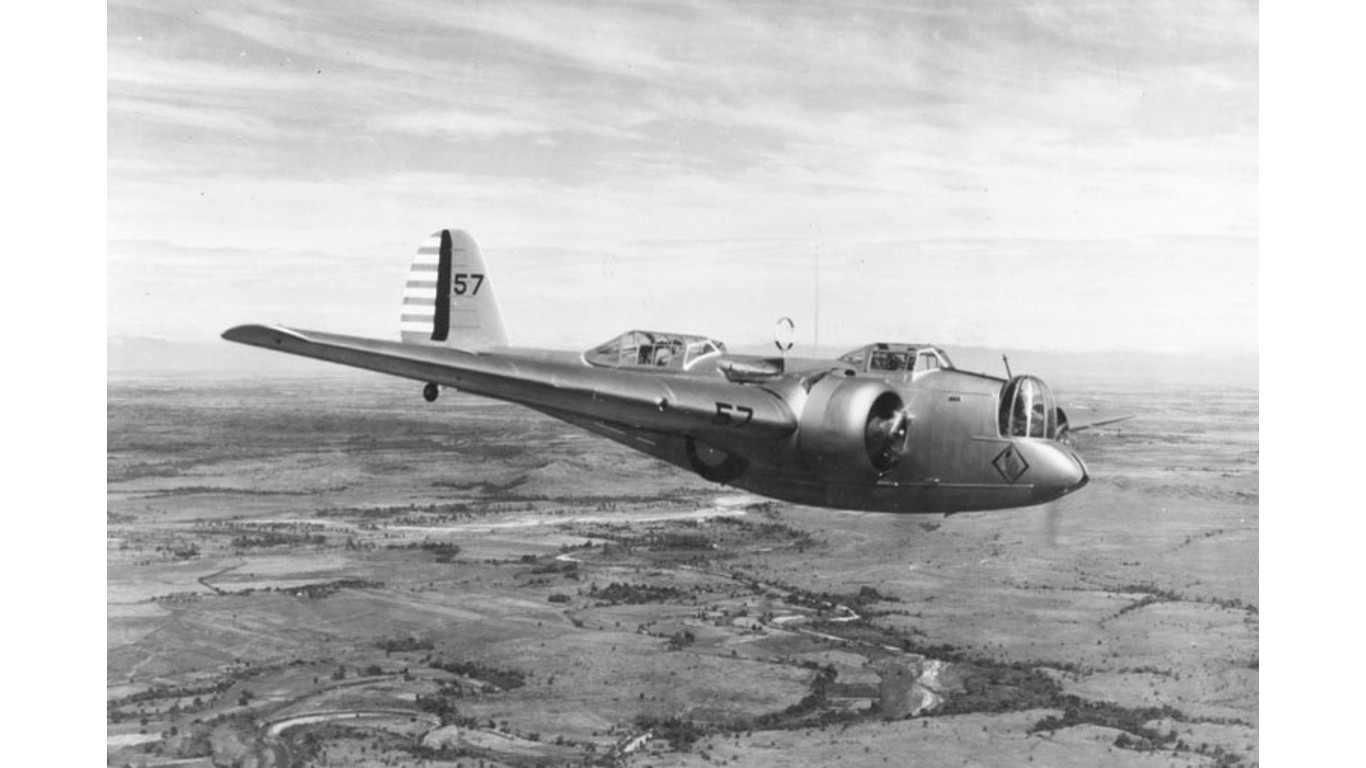
- Year entered service: 1932
- Type: Medium bomber
- Maximum speed: 214 mph
- Crew size: 4
- Role: Bomber
20. Boeing P-26 Peashooter
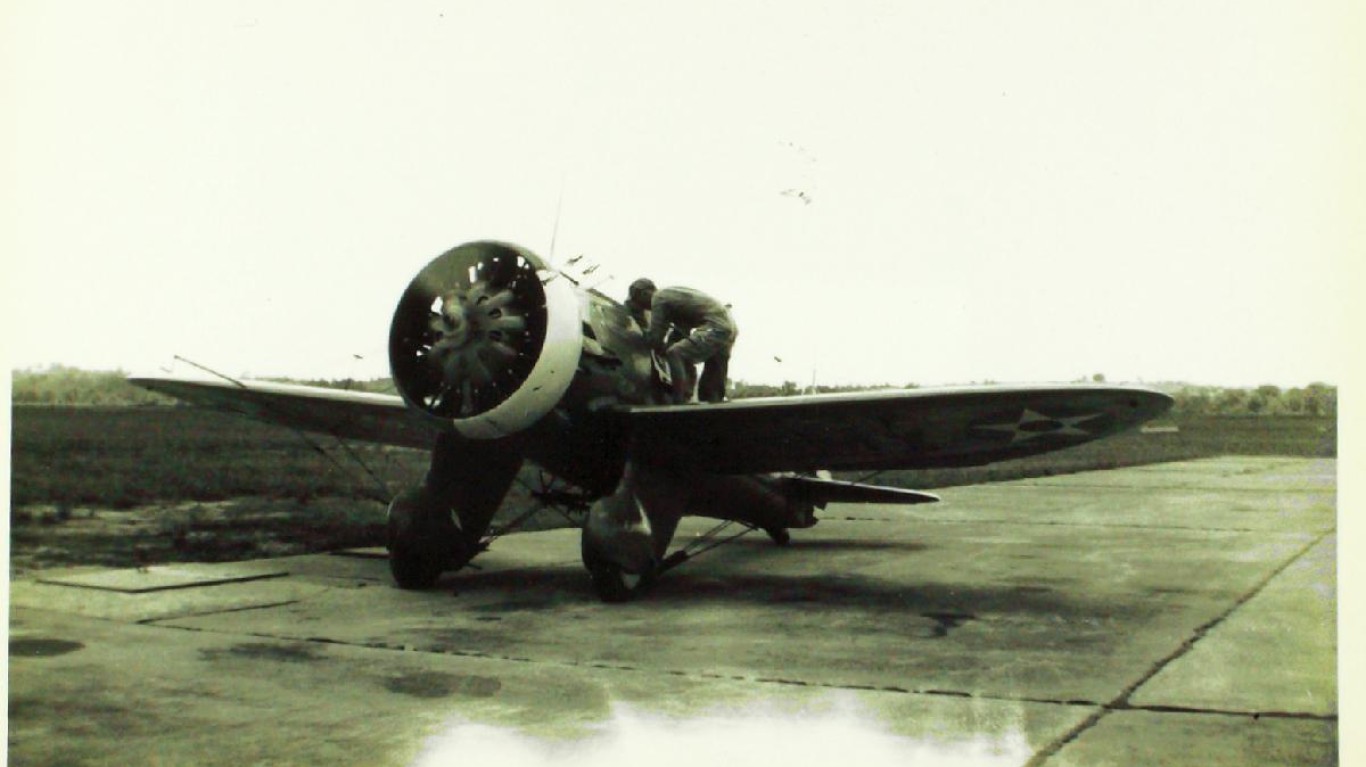
- Year entered service: 1932
- Type: Monoplane fighter aircraft
- Maximum speed: 227 mph
- Crew size: 1
- Role: Fighter
21. Stinson Reliant
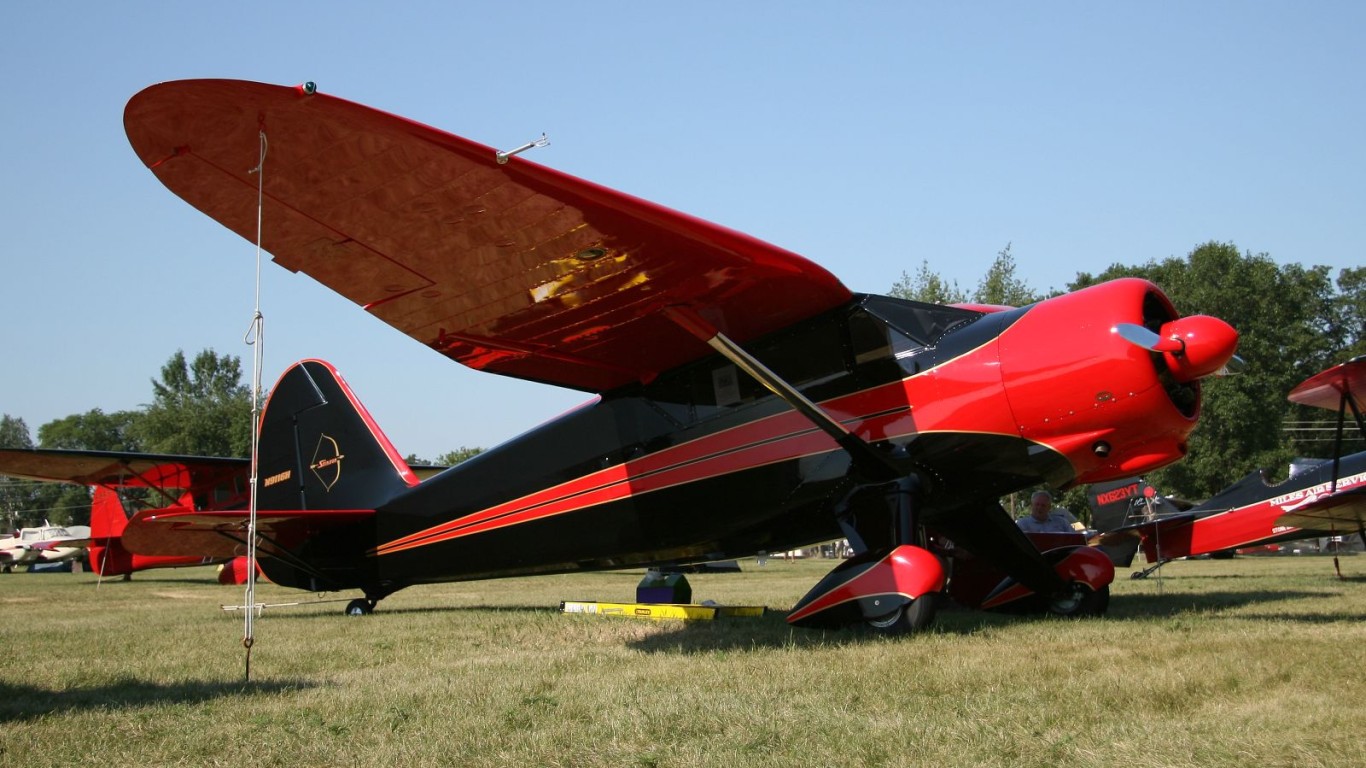
- Year entered service: 1933
- Type: Lightweight liason aircraft
- Maximum speed: 177 mph
- Crew size: 1
- Role: Surveillance, reconnaissance, trainer
22. Grumman FF

- Year entered service: 1933
- Type: Carrierborne biplane fighter aircraft
- Maximum speed: 207 mph
- Crew size: 2
- Role: Fighter
23. Northrop A-17 (Nomad)

- Year entered service: 1935
- Type: Monoplane aircraft
- Maximum speed: 208 mph
- Crew size: 2
- Role: Bomber, surveillance, reconnaissance
24. Grumman F2F

- Year entered service: 1935
- Type: Carrierborne biplane fighter aircraft
- Maximum speed: 238 mph
- Crew size: 1
- Role: Fighter
25. Curtiss SOC Seagull

- Year entered service: 1935
- Type: Naval biplane aircraft
- Maximum speed: 165 mph
- Crew size: 2
- Role: Surveillance, reconnaissance, trainer
26. T-6 Texan
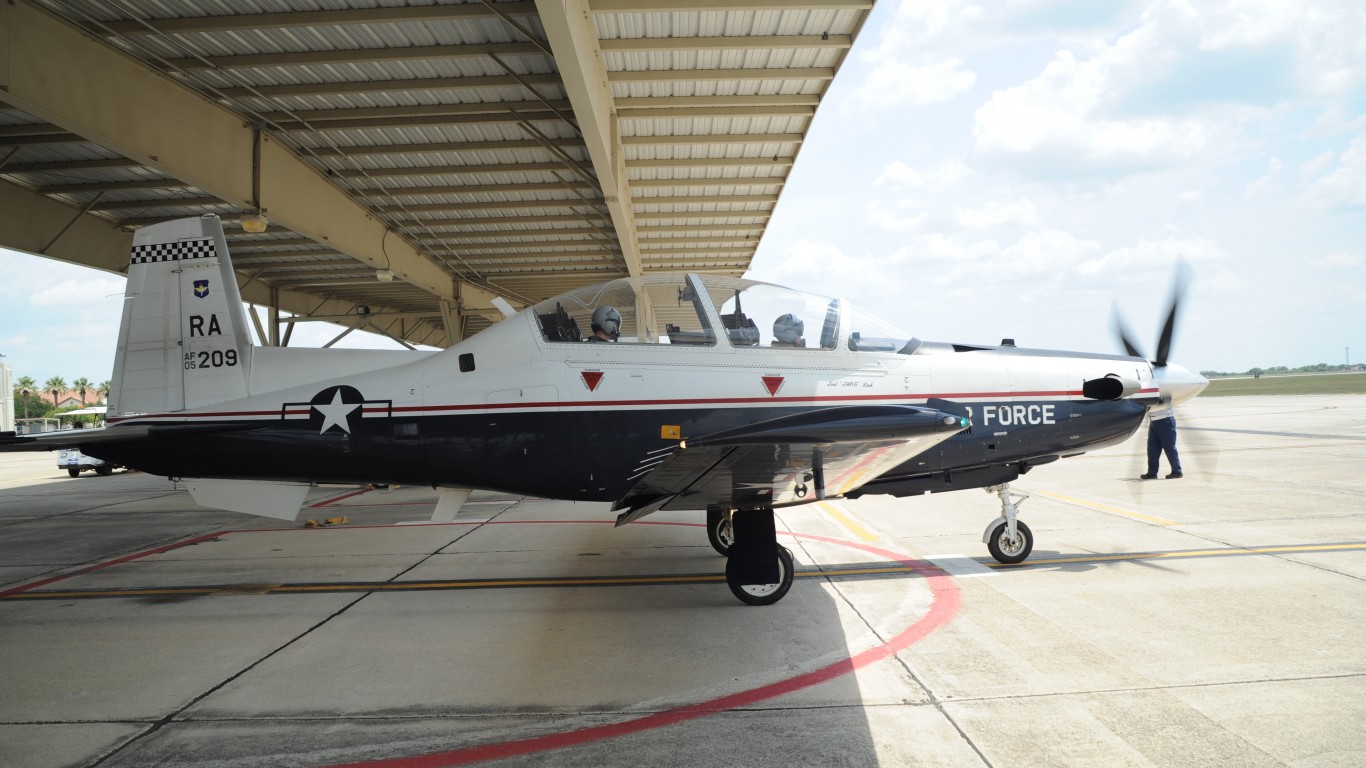
- Year entered service: 1936
- Type: Single-engine fighter aircraft
- Maximum speed: 209 mph
- Crew size: 2
- Role: Fighter, close-air-support, trainer
27. Naval Aircraft Factory N3N (Yellow Peril)
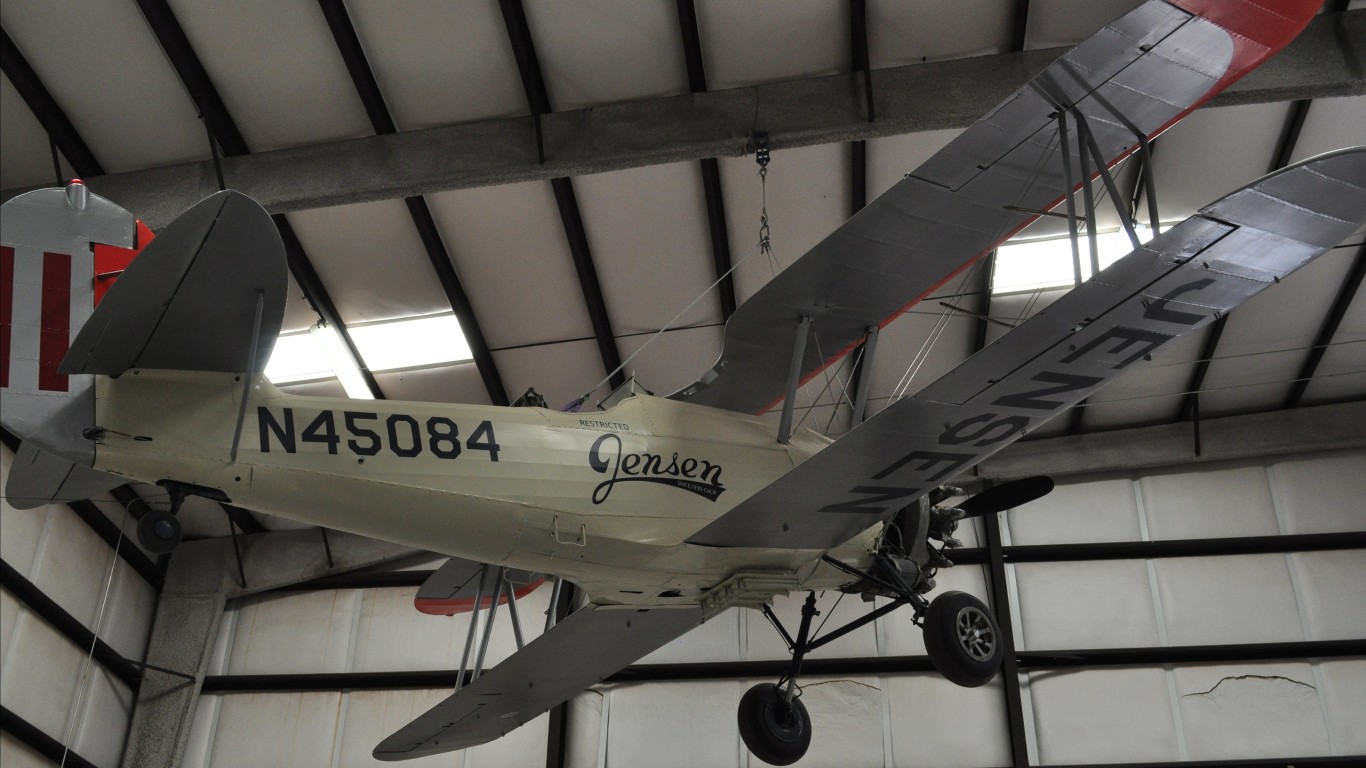
- Year entered service: 1936
- Type: Biplane trainer aircraft
- Maximum speed: 127 mph
- Crew size: 2
- Role: Trainer
28. Grumman F3F

- Year entered service: 1936
- Type: Carrierborne biplane fighter aircraft
- Maximum speed: 264 mph
- Crew size: 1
- Role: Fighter
29. Douglas B-18 Bolo
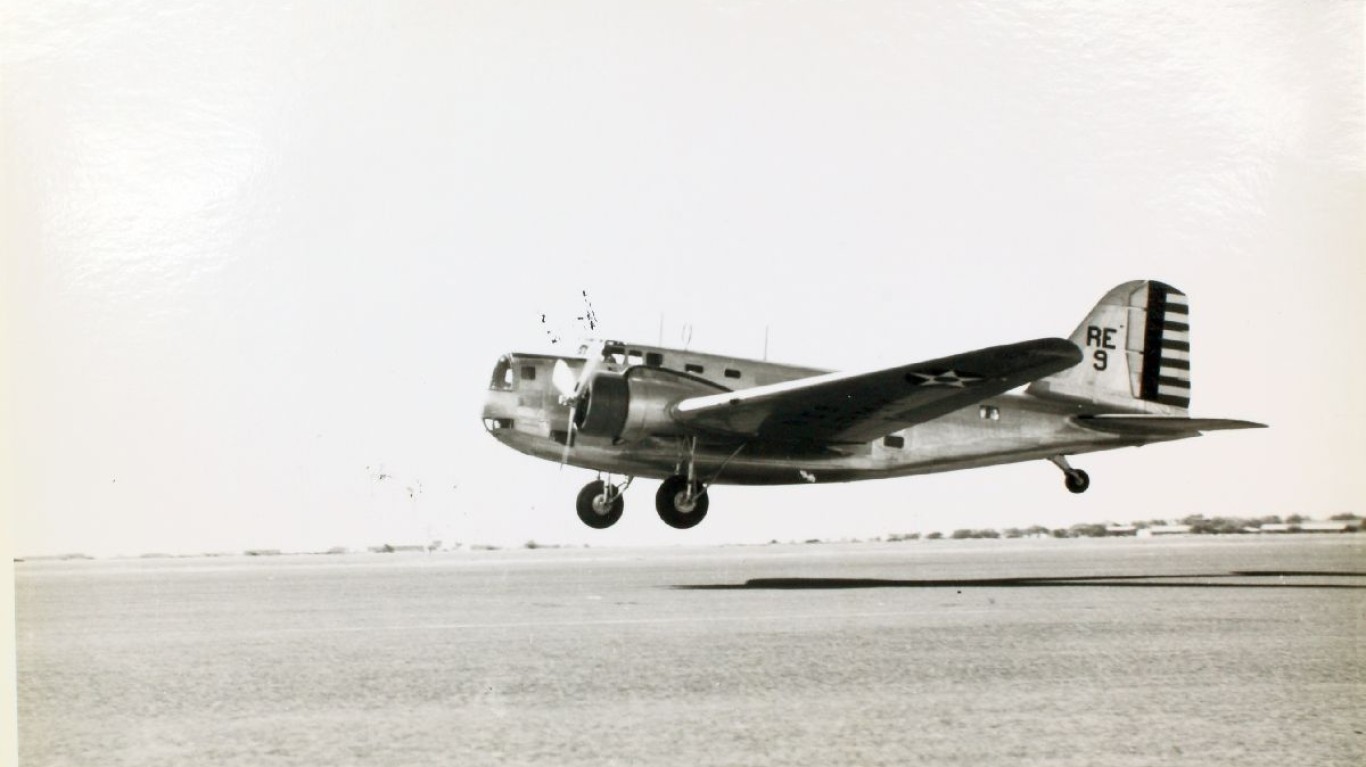
- Year entered service: 1936
- Type: Medium bomber
- Maximum speed: 215 mph
- Crew size: 6
- Role: Bomber, surveillance, reconnaissance, transport
30. Douglas DC-3

- Year entered service: 1936
- Type: Military transport
- Maximum speed: 237 mph
- Crew size: 5
- Role: Transport



 Top Gaining Stocks
 Top Losing Stocks