


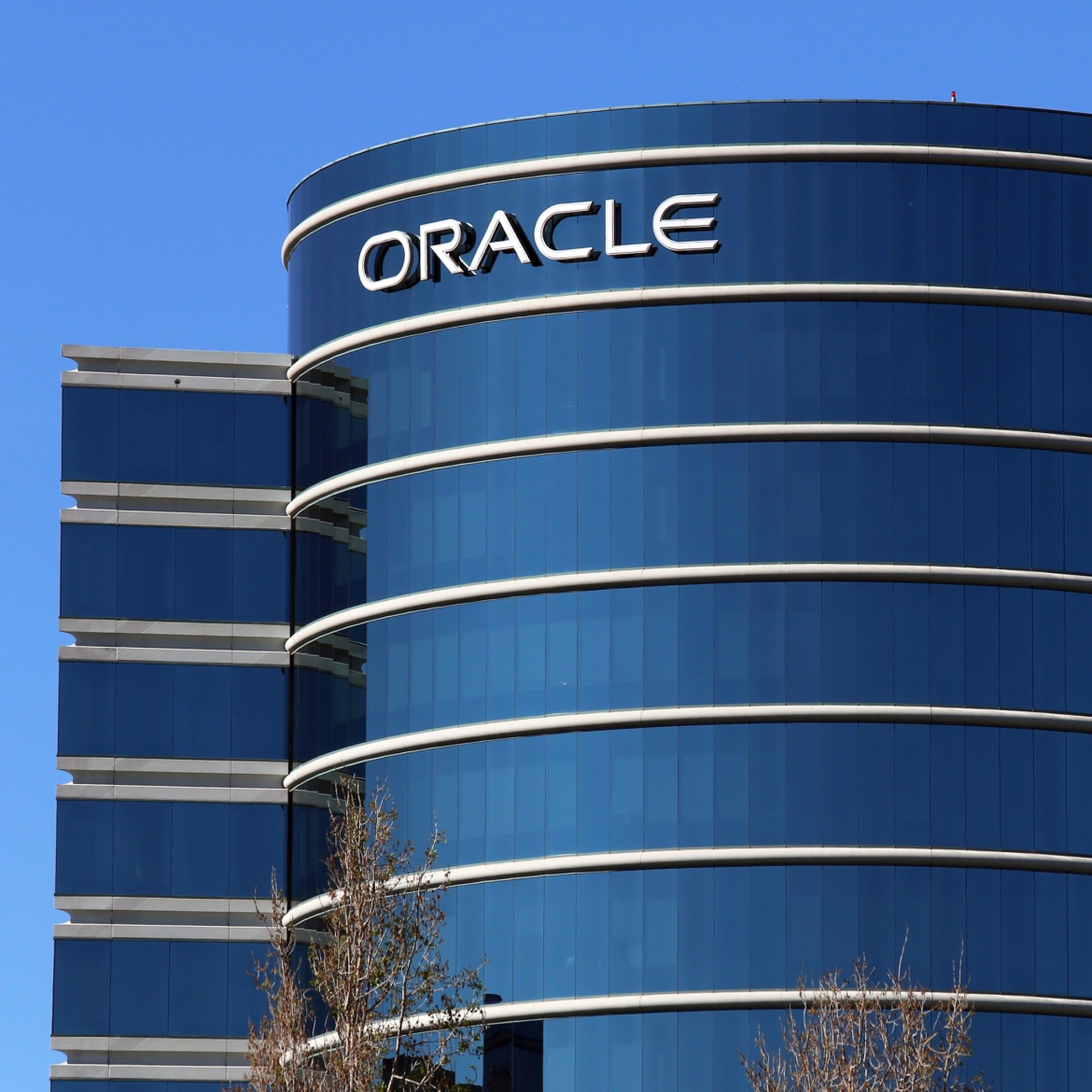
When Oracle Corp. (NYSE: ORCL) reported its most recent quarterly results this past week, it absolutely shocked analysts and investors alike. Its shares hit an all-time high and closed out the week up 13%. 24/7 Wall St. has included some brief highlights from the earnings report, as well as what analysts said afterward.
The company posted $0.89 in earnings per share (EPS) and $10.94 billion in revenue, which compared with consensus estimates from Thomson Reuters of $0.78 in EPS and revenue of $10.45 billion. The same period of last year reportedly had EPS of $0.81 and $10.6 billion in revenue.
Short-term deferred revenues were up 8% to $8.2 billion compared with a year ago. The company sold $855 million of new annually recurring cloud revenue (ARR) in this quarter, putting Oracle over its $2 billion ARR bookings goal for the 2017 fiscal year.
Merrill Lynch reiterated its Buy rating for Oracle but raised its price target to $62 from $54. That compared with the previous closing price of $46.33, implying an upside of 34%. The brokerage firm basically believes that the license decline of 10% to 15% in the past several quarters is a self-induced near-term phenomenon in light of the cloud transition, which is inflecting higher year over year for the first time in two years. The firm thinks the risk is to the upside if the company can deliver on lowered EPS expectations in the future.
[nativounit]
Merrill Lynch detailed in its report:
Oracle’s business is poised for an inflection point to potentially deliver mid-single digit software revenue growth and operating income (OI) going forward is being validated by a stronger than expected May Q on multiple fronts: 1) license -5% versus our -17%; 2) third consecutive Q of OI growth which accelerated to 5% (7%CC) versus 3% (4% CC) in Feb Q and 2% in Nov Q; 3) Cloud ARR bookings up 42% with cumulative FY cloud ARR +46%; 4) Cloud Gross Margins, while flat at 60% sequentially, are poised to exit F19 at ~75%, which is about the only aggressive forward-looking metric; 5) Database business across license, maintenance and subscriptions grew 8%, which should put to bed fears of long term potential decline; 6) pfEPS of $0.89, up 11% CC.
The brokerage firm added:
A key issue had been a plethora of reported metrics from legacy/cloud businesses which carried inherent risks of not being able to satisfy all constituents. Our belief that simplification into distinct businesses would be a positive — Apps and Platform – was validated by Oracle’s decision to re-segment. We believe Oracle, by transitioning its ~15K ERP customers @ 2-3 Cloud modules @$300K annual contract value + current run-rate of $4bn and assuming 50% conversion of its pipeline of 8K customers could potentially drive towards a $15bn SaaS revenue stream. As a result of GM/OM improvement, ORCL is poised to grow pfEPS/FCF high single digits in F18, reversing 3 years of declines.
A few other firms weighed in on Oracle as well:
- RBC has an Outperform rating and raised its price target to $53 from $47.
- Merrill Lynch reiterated a Buy rating and raised its price objective to a street-high $62 from $54.
- Canaccord Genuity has a Buy rating and raised its price target from $49 to $56.
- Wedbush has an Outperform rating and raised its price target to $56 from $44.
- BMO Capital Markets has an Outperform rating and raised its price target from $48 to $57.
- Rosenblatt Securities reiterated a Buy rating with a $55 price target.
Shares of Oracle closed Friday at $50.95, with a consensus analyst price target of $53.46 and a 52-week range of $37.62 to $51.85.
[wallst_email_signup]










 Top Gaining Stocks
 Top Losing Stocks