


A growing number of politicians, and now apparently some officials of the federal government, believe some of America’s largest tech companies are illegal monopolies that prevent competition in the parts of tech they dominate. A precedent for such actions was set over a century ago, in 1911, with the breakup of John D. Rockefeller’s Standard Oil Trust. It had a lock on the production, transportation, and refining of oil in the United States. AT&T, which virtually controlled the American telecom market, was broken into pieces at the start of 1984. The government threatened to do the same with Microsoft, but the two parties reached an agreement in 1994 that limited the way Microsoft operated some of its businesses.
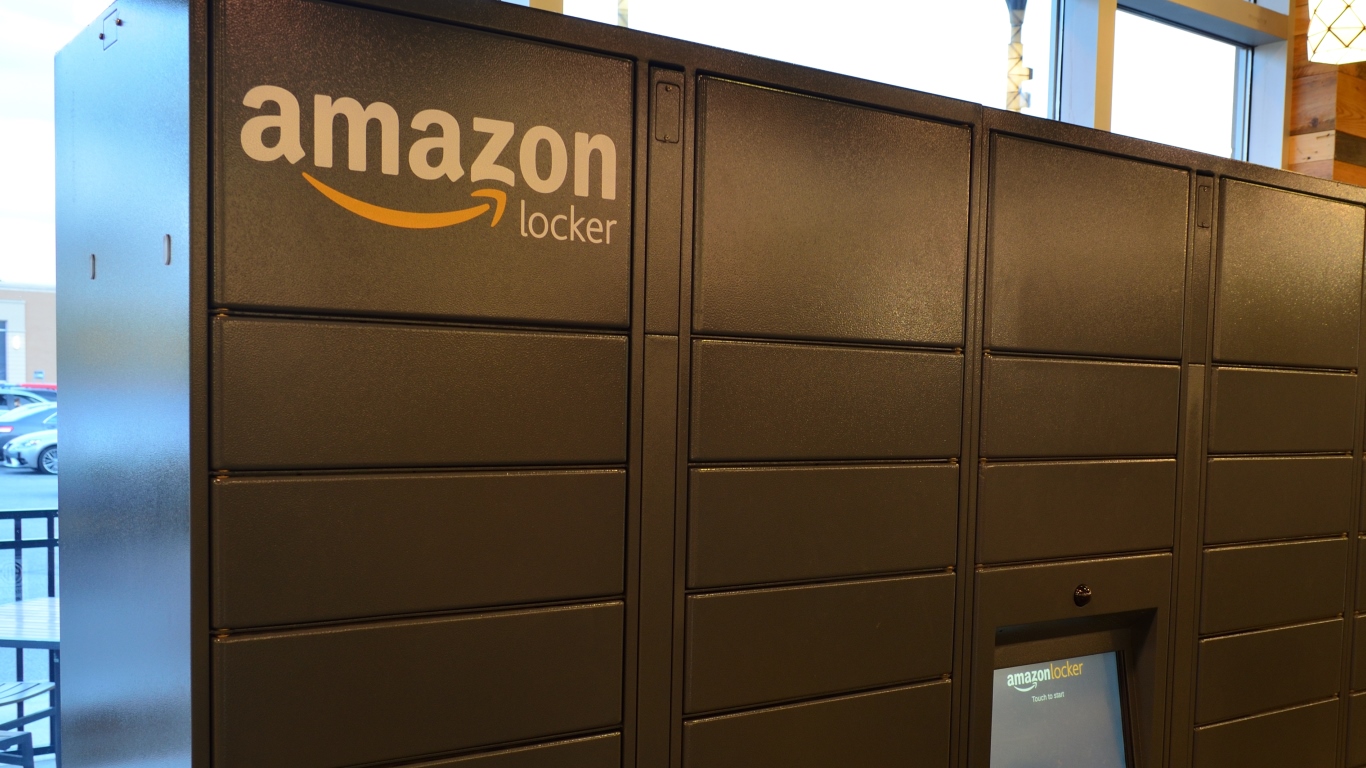
Amazon is at the top of the list of huge tech companies viewed as having a monopoly position, and perhaps in more than one industry.
The problem has become such a potential threat to the future of some of America’s largest companies that Google CEO Sundar Pichai tried to put the issue into context. Last week he told CNN Business, “We have gone through similar situations in Europe, so it’s not a surprise to us. For some of the other companies, maybe the scrutiny is newer.”
[nativounit]
Whatever the government’s opinion may be about its business practices, Amazon continues to be one of the American companies with the best reputation. Amazon’s original business was e-commerce. It dominates that industry in the United States and has contributed to the decline of the brick-and-mortar segment of retail. That, in turn, has triggered the loss of tens of thousands of American jobs, a large number of industry analysts and economist say. E-commerce continues to be its largest operation. Amazon posted total revenue of $233 billion in 2018. Of that, its North American e-commerce business contributed $141 billion, while its international business added $66 billion. Much of these domestic and international revenues are driven by Prime, a set of paid subscription services that has well over 100 million members. Among Prime’s most significant benefits are a free video streaming service, which is one of America’s most dominant, and a free shipping program.
E-commerce is the first of the three parts that make up Amazon. The company also is the world’s leader by far in cloud computing, one of the fastest growing segments of the tech industry. Its share of the public cloud business was recently put at 62%, followed by Microsoft at 20% and Google at 12%. The cloud division of Amazon is called Amazon Web Services (AWS). It had revenue of almost $26 billion last year and made just more than $7 billion, for an impressive 27% operating profit margin. This is the second part of Amazon that could be spun out into a separate company.
The revenue for Amazon’s third large and dominant business is rolled into its e-commerce operations, so financially, it’s hard to identify. Amazon has a strong consumer electronics business that, among other things, dominates the market for artificial intelligence products that consumers use in their homes. Amazon also sells computers, e-readers and streaming media hardware. Amazon’s Alexa software can control home entertainment, communications, shopping and smart home services, including temperature control, lights and cameras that are voice-activated. It is estimated that Amazon has 75% of the global smart-speaker market. It is almost certain to move these products into the business sector.
[recirclink id=542711]
A review of these three parts of Amazon shows that each holds a massive lead in its particular business. Each could operate independently from the other two as well.
Former U.S. Secretary of Labor Robert Reich argues that the three companies could be regulated. He further explains, “A better alternative is to break them up. That way, the information would be distributed through a large number of independent channels without a centralized platform giving all content apparent legitimacy and extraordinary reach. And more startups could flourish.” Geography may have something to do with it, given a look at the cities attracting the most startups.
One part of the debate about Amazon that is often left out is its effect on the overall U.S. economy. Like other mammoth tech corporations, Amazon is one of America’s highest paying companies.
[wallst_email_signup]









 Top Gaining Stocks
 Top Losing Stocks