


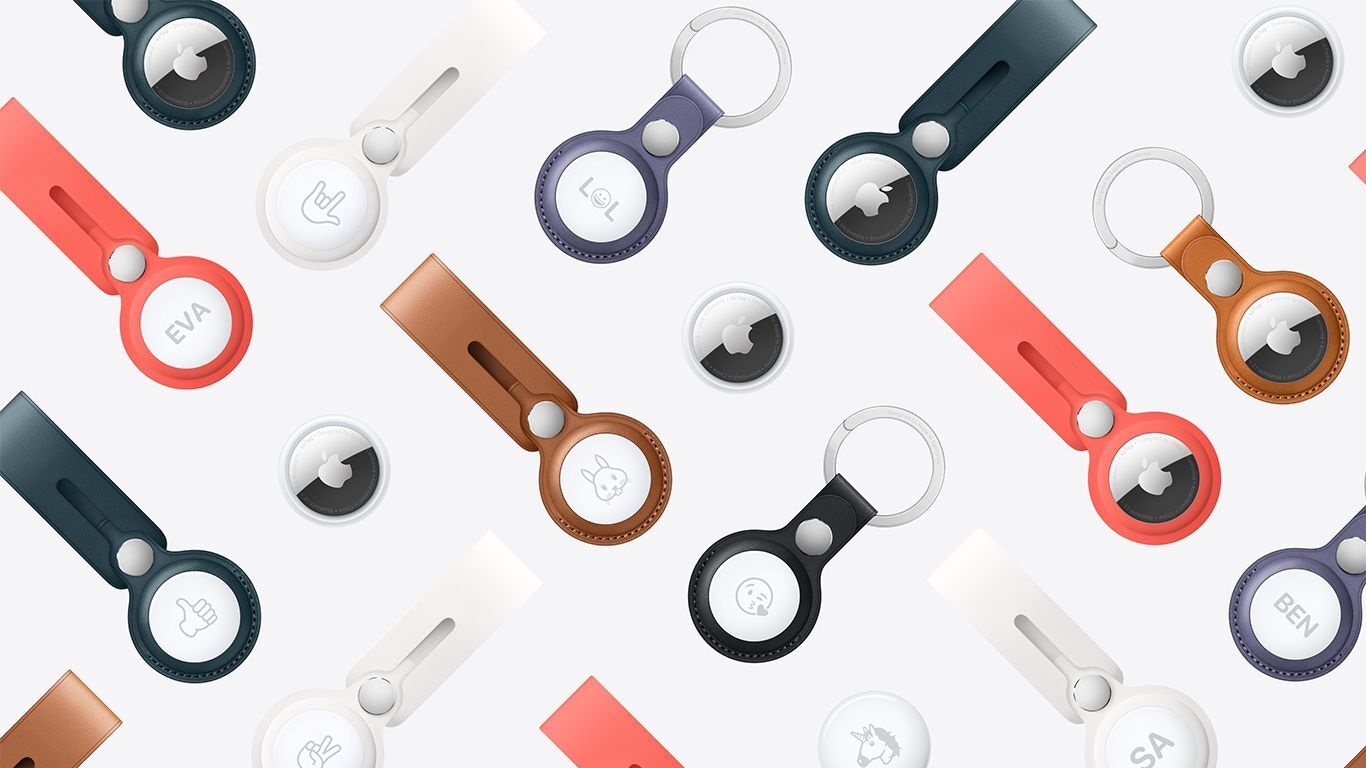
Maybe Apple Inc. (NASDAQ: AAPL | AAPL Price Prediction) expected this and figured it would cause a kerfuffle for a day or two before disappearing: The company’s new AirTags location devices are not just useful for finding your lost car keys, but they also can easily be slipped into a purse or car and used to track you, wherever you are and wherever you’re going.
A Washington Post reporter wanted to see how this could be done so he asked a co-worker to pretend to stalk him. His conclusion: “Apple’s efforts to stop the misuse of its trackers just aren’t sufficient.” Apple has built-in technology to warn potential stalking victims, but the warnings are not completely effective.
Apple’s vice president of iPhone marketing, Kaiann Drance, told the paper, “It’s a smart and tunable system, and we can continue improving the logic and timing so that we can improve the set of deterrents.” In other words, Apple probably knew about this, knew that its countermeasures were insufficient and figured it could get the AirTags out the door and fix the problems in the next release.
Meanwhile, in the Oakland, California, courtroom where Apple is defending itself against charges of anticompetitiveness, documents were introduced Wednesday showing steps Apple considered to prevent Netflix from testing whether the streaming service should drop in-app purchases from the Netflix app downloaded from the App Store. The emails are dated between February and April of 2018. In December of that year, Netflix removed from the app the capability to subscribe to Netflix from within the app.
[nativounit]
In the documents, available from 9to5Mac, an email thread traces the concerns Netflix had with in-app purchases, which mostly revolved around the basic issue of “voluntary churn.” People who subscribed to Netflix through the in-app route were canceling their subscriptions at a faster rate than other subscribers. Apple suggested a number of possible reasons for this. Netflix already knew none of these was the issue.
Then Apple discussed how to punish Netflix if the streaming company went ahead with its plan: “‘Do we want to take any punitive measures in response to the test (for example, pulling all global featuring during the test period)? … If so, how should those punitive measures be communicated to Netflix?'”
At stake for Apple were monthly fees that totaled up to a record $87 million from Netflix in November 2018. Apple’s cut of in-app purchases is 30%, or 15% for recurring subscriptions. For subscribers, Netflix’s change saved them the additional in-app purchase fee that Netflix charged for the convenience.
Another dissatisfied developer, game maker Zynga, found a way around Apple’s new tracking transparency feature. In its first-quarter earnings announcement Wednesday, the company said it would acquire advertising technology firm Chartboost for $250 million in cash.
The acquisition skirts Apple’s requirement that apps seeking to track people and share the data with third parties must first get permission from the people the app is tracking. Zynga has now become a first-party collector of people’s data, so it doesn’t need to buy data as a third party, nor does it need to post Apple’s new warning to iPhone users.
Another app developer, Applovin, earlier this year acquired ad-tech company Adjust for the same reason. However, Adjust’s solution tracked the mobile device–not the user–with a technology known as “device fingerprinting.” Apple was not amused and began rejecting apps that used device fingerprinting last month.
[recirclink id=875913][wallst_email_signup]










 Top Gaining Stocks
 Top Losing Stocks