



Long skeptical of cryptocurrency, Apple Inc. (NASDAQ: AAPL | AAPL Price Prediction) apparently has decided to get on the bus. In a job posting dated Tuesday, Apple is seeking a business development manager for alternative payments who would have at least five years of experience “working in or with alternative payment providers, such as digital wallets, BNPL [buy now, pay later], Fast Payments, cryptocurrency and etc.”
[in-text-ad]
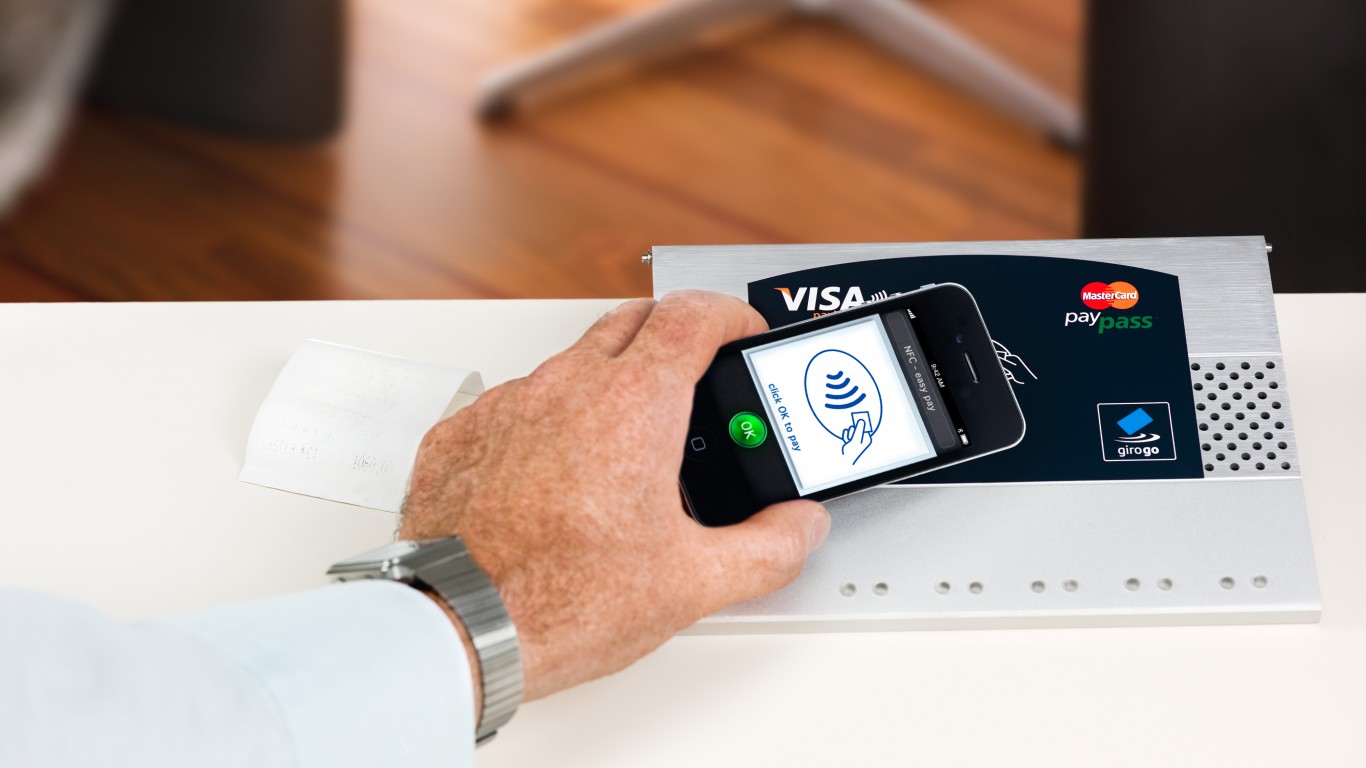
That’s the only time the word “cryptocurrency” is used in the posting, but that’s enough to rekindle speculation that Apple Pay will add support for cryptocurrency. According to the Financial Times, Coinbase says it “does not currently support Apple Pay, but we hope to bring a faster, safer way to spend cryptocurrency to iOS users soon.” The Coinbase apps for iOS and macOS already claim to support Apple Wallet but details are scarce.
Is Apple changing its tune on cryptocurrencies? In 2013, Apple removed the Coinbase app from the App Store but restored it less than a month later. Earlier this month, the app was the most downloaded app at the App Store.
[nativounit]
Perhaps Goldman Sachs’s recent report on saying that demand for cryptocurrency support from institutional and corporate clients has caused the bank to rethink its support for digital currencies. According to the Financial Times, Matthew McDermott, Goldman Sachs’s head of digital assets, wrote that the bank saw “investor interest in crypto enduring” and that “there is much greater value in the space than there was three or four years ago.”
The New York Times has a report on the relatively limited usefulness of the coronavirus contact-tracing apps developed by Apple and Google last year. The apps received a lot of attention when they were announced in April of 2020 and, combined, the apps were downloaded more than 90 million times. There was a catch, however:
[S]ome researchers say the companies’ product and policy choices limited the system’s usefulness, raising questions about the power of Big Tech to set global standards for public health tools.
There were “accuracy problems” with using Bluetooth to determine proximity to other smartphones and notifications to some users failed. Worse, perhaps, is this:
[T]here is little rigorous research to date on whether the apps’ potential to accurately alert people of virus exposures outweighs potential drawbacks — like falsely warning unexposed people, over-testing or failing to detect users exposed to the virus.
On the plus side, the newspaper cites Dr. Christopher Longhurst, the chief information officer of UC San Diego Health, which manages California’s app:
Exposure notification technology has shown success. Whether it’s hundreds of lives saved or dozens or a handful, if we save lives, that’s a big deal.
[recirclink id=887391][wallst_email_signup]













 Top Gaining Stocks
 Top Losing Stocks