


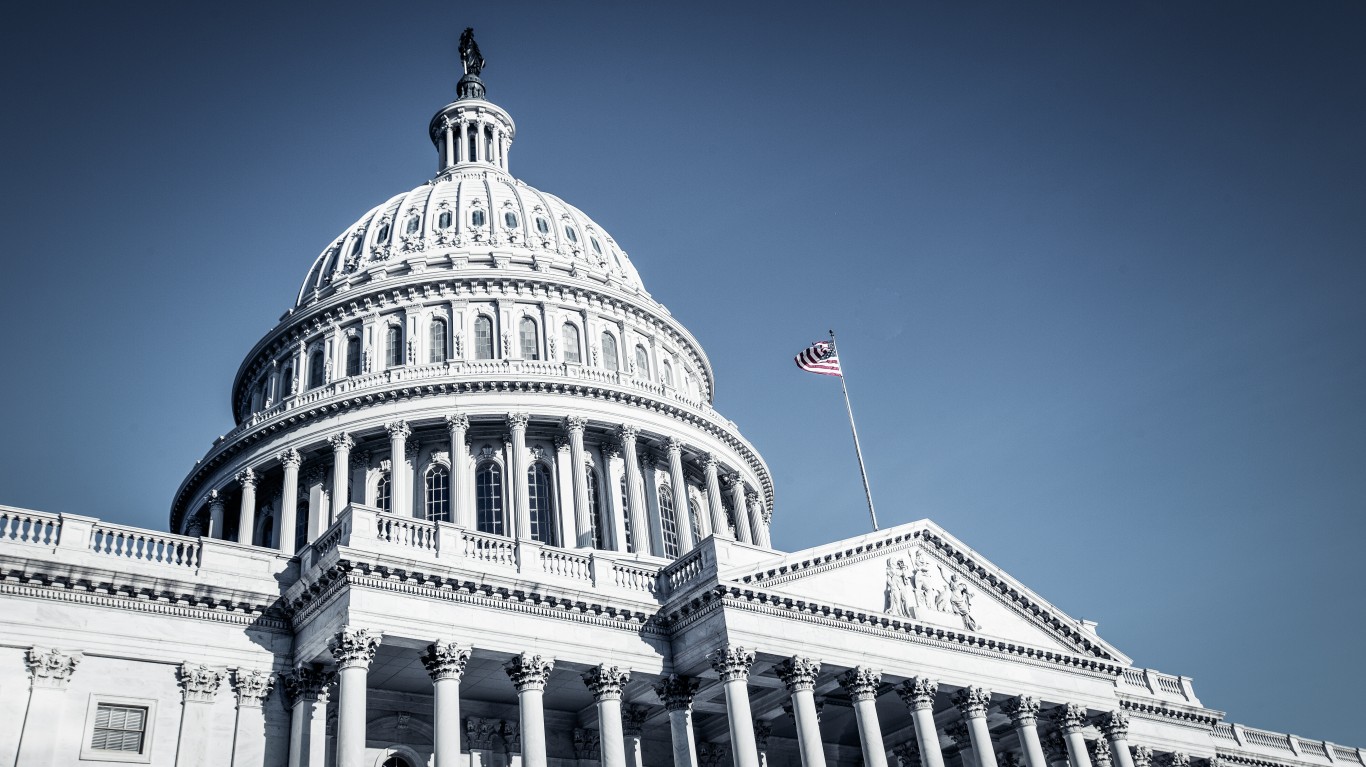
Last Friday, U.S. House of Representatives members introduced five bills that, if enacted, would rewrite U.S. antitrust laws by making it easier for the federal government to break up the four of the nation’s biggest tech firms, including Apple Inc. (NASDAQ: AAPL | AAPL Price Prediction). Also in lawmakers’ sights are Amazon, Facebook and Google. Combined, the four companies are valued at more than $6 trillion.
Each piece of legislation focuses on a different aspect of the tech firms’ alleged misuse of their market power. The first would prevent companies from using their platforms to promote their own products and would require major changes in the way Amazon uses data it collects on customers of its third-party resellers. The second would prevent these companies from buying up potential competitors (Facebook’s acquisition of WhatsApp, for example). The third would forbid using the companies’ platforms to highlight other products they own (e.g., Google search results that push customers toward Google Shopping). The fourth would make it easier for people to switch to another provider, and the fifth would make it more costly for companies to file for some kinds of mergers.
Both House Democrats and Republicans sponsored or co-sponsored the five bills. Rhode Island Democrat David Cicilline said, “Right now, unregulated tech monopolies have too much power over our economy.” Colorado Republican Ken Buck also commented, “Apple, Amazon, Facebook, and Google have prioritized power over innovation and harmed American businesses and consumers in the process.”
The U.S. Senate is expected to push back on the proposed legislation, and many U.S. business groups have already expressed their positions. The U.S. Chamber of Commerce, for example: “Bills that target specific companies, instead of focusing on business practices, are simply bad policy and are fundamentally unfair and could be ruled unconstitutional.”
[nativounit]
One of the effects of Apple’s AppTracking Transparency feature is that some direct-to-consumer brands have seen half their return on Facebook advertising evaporate, according to a report in The Wall Street Journal. More interesting, perhaps, is that Facebook’s ad pricing has increased. The company expects ad revenue growth “to be primarily driven by price for the remainder of the year.”
Another side effect of Apple’s new policy, though perhaps less expected, is a change at the top of Facebook’s advertising staff. The company’s chief revenue officer responsible for Facebook’s ad business, David Fischer, is leaving the company later this year, and last week, Carolyn Everson, head of global ad sales, announced her departure.
Finally, Apple’s much-hyped Spatial Audio feature, due out with iOS 15 later this year, is getting some blowback from music industry experts. Bob Lefsetz, an industry veteran who has been producing a free weekly newsletter since 2005, recently commented on a remixed version of the Marvin Gaye classic, What’s Going On:
In the stereo mix Marvin Gaye is up front, the band is backing him, in the Spatial Audio version, the band is surrounding him, on the fringe, background vocals popping up way up to the right, Marvin is just an element, not the essence, it’s a cornucopia of music, but it’s not the legendary track, it’s absolutely different, a sacrilege.
Lefsetz has also posted reader reactions, both pro and con, to his comments on Spatial Audio.
[recirclink id=895342][wallst_email_signup]












 Top Gaining Stocks
 Top Losing Stocks