


24/7 Wall St. Insights
- Many grain crops and some species of livestock have been genetically modified to improve their disease resistance and profitability.
- GloFish are the first pets available for sale that have been genetically modified for aesthetic reasons.
- Also: Discover “The Next Nvidia”
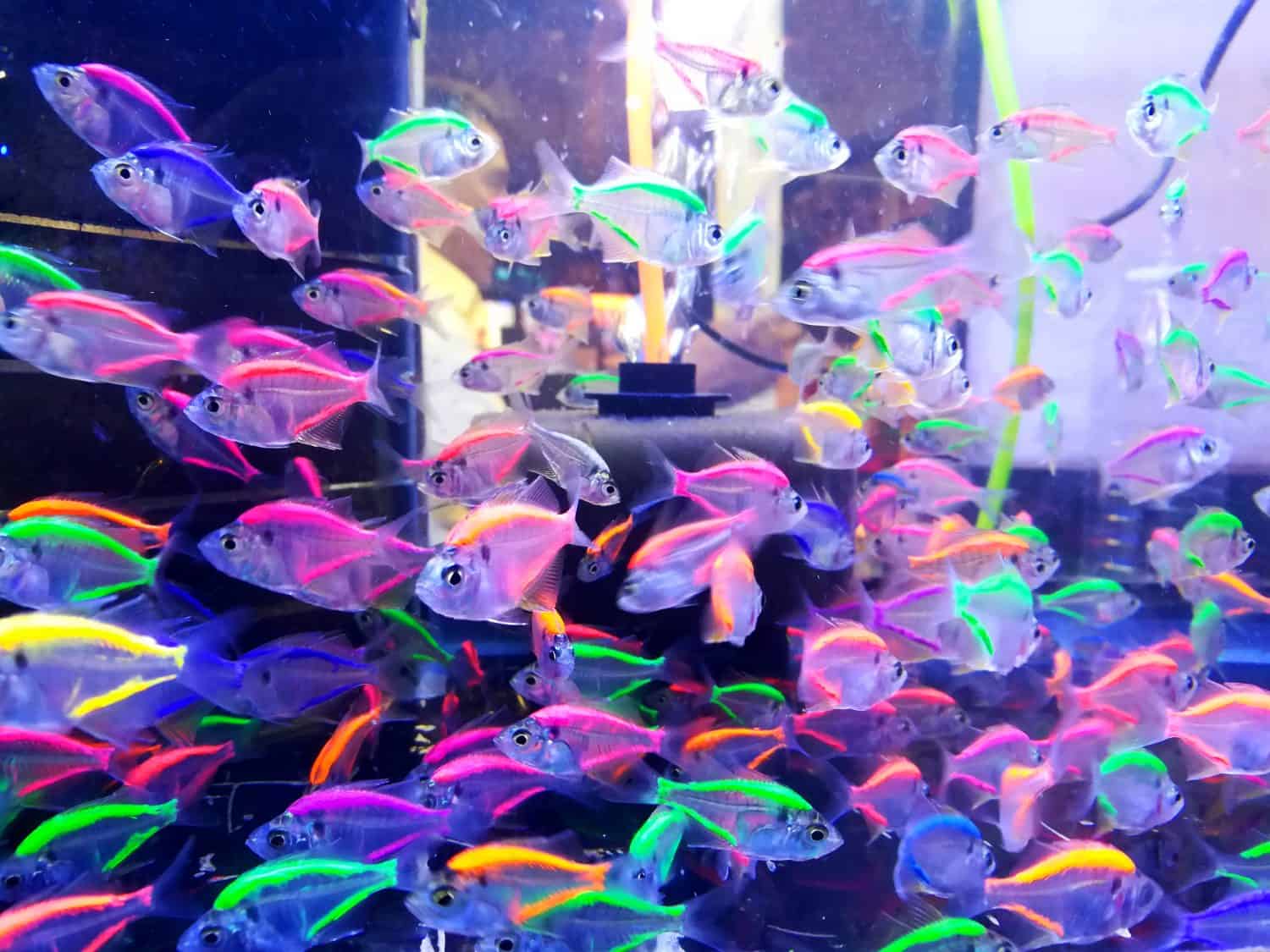
Have you ever wondered whether you’d be able to own a genetically-engineered pet, maybe one in wild colors that are not found in nature? The answer is yes, and you can have one today for as little as $7. These are GloFish: ornamental aquarium fish genetically modified to express fluorescent proteins, making them glow under blue or ultraviolet light. How were these modern marvels created, and what may follow them in the pet trade in the future?
This post was updated on October 12, 2025 to clarify the name/cost of Glofish, the origin of the first line Glofish and how it evolved, the salmon–tomato hybrid, the achievement of lighter coat cows, patenting of genetic constructs vs. species, Glofish fertility, glowing dogs achieved for medical purposes, and the speculative nature of future genetic engineering technologies.
How Does Genetic Engineering Work?

In the simplest terms for a complex process, genetic engineering involves using technology to change an organism’s DNA. This can mean just changing a single base pair of the DNA, deleting a region of it, or adding in a new DNA segment. Genes from one organism can be spliced into the DNA of another organism. In the 1990s, researchers experimented with adding a fish antifreeze gene to tomatoes to increase frost resistance, but no such product was ever commercialized.
What Plant and Animal Species are GMOs?

A great many plant species are now genetically modified organisms (GMOs), including soybeans, alfalfa, apples, corn, canola, cotton, sugar beets, zucchini, potatoes, yellow squash, papayas, and pink pineapples. Modifications to these crops increase productivity, hardiness, and resistance to diseases, pests and herbicides. Farmers can spray herbicides over some GMO crops and kill only the weeds, not the crop. The FDA has approved two genetically modified animals for limited use: the AquAdvantage salmon (for food) and the GalSafe pig (primarily for medical use). Researchers have developed CRISPR-edited cattle with lighter coats to reflect heat better, though these are still in trial stages, not commercial use.
Pros and Cons of GMOs

Genetically modified organisms can be more profitable for farmers and produce a better-quality product for consumers. They can make farmland more productive so that it can support more people without deforesting areas for crops and livestock. Decades of research show no evidence that approved GMO foods pose health risks, though long-term environmental impacts continue to be studied.
On the other hand, GMOs raise fears of contamination of the biosphere and the food supply in ways that might arise unpredictably in the future. For example, a GMO crop could be so widely raised that it decreases biodiversity and the survival of a species, if a disease or pest emerges that they are not resistant to. Some people oppose GMOs because they support large-scale agribusiness that is a major contributor to climate change. Some critics also object to companies patenting genetically engineered traits or DNA sequences, arguing this gives excessive control over seed markets.
How GloFish Were Developed
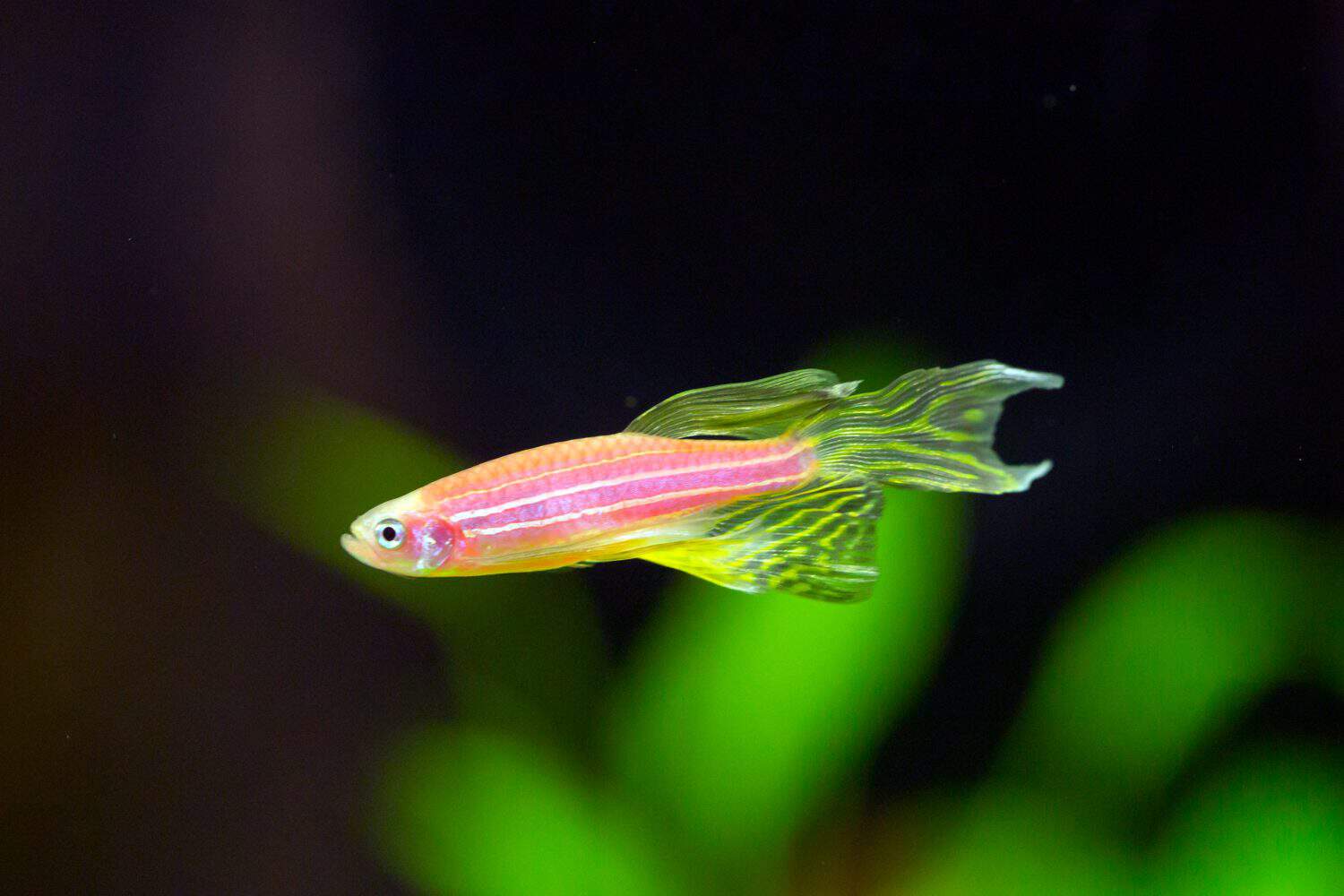
This zebrafish is a Glofish GMO.
GloFish were first developed from zebrafish (Danio rerio), a small gold and blue striped fish native to India and Bangladesh. The first GloFish line in 1999 contained a gene from a jellyfish species to give it a bright green fluorescence, but later variants use fluorescent protein genes from coral and anemones. The intent was to make a fish that could detect pollution by glowing when it interacted with toxins in the water, but they were never deployed for that purpose. Later, the process was repeated to create a red fluorescent fish from sea coral DNA, and an orange-yellow one from another type of jellyfish gene. Since these early developments, more GloFish species have become available, including cory, pristella, tetras, long fin tetras, barbs, and sharks. The currently available colors are marketed as Starfire Red, Electric Green, Sunburst Orange, Cosmic Blue, Galactic Purple, and Moonrise Pink.
How Do You Care for GloFish?

According to the GloFish website care requirements for these fish are no different than for their conventional species counterparts. They are all freshwater schooling fish that do best if kept in communities of five or more. An exception is the shark, which can be aggressive to others of its own species but content in a school of compatible freshwater species.
Where Can You Buy GloFish?

GloFish are marketed by GloFish LLC. They are not available in California due to a 2003 law that was intended to prevent the spread of biotech salmon. GloFish are not approved for import or sale in the European Union due to GMO restrictions. In Canada and 49 U.S. states, they are available from major retailers like Petsmart, Petco, Amazon, and Chewy. GloFish typically sell for around $7–$15 each, with specialty species costing up to $40. Breeding GloFish to sell is illegal, as the company holds intellectual property rights to them.
Could GloFish Become Invasive?

Although there are many species of fluorescent fish and other marine life in the wild, mostly they are found in the oceans, not in the warm freshwater environments that are the indigenous habitats of the various GloFish species. GloFish reproduce like their wild counterparts; however, their bright coloration makes survival in the wild unlikely. Their color compromises their ability to camouflage themselves from predators. If the species were to escape into the wild, they would be expected to disappear relatively quickly due to natural selection.
Other Possible Near-Future GMO Pets
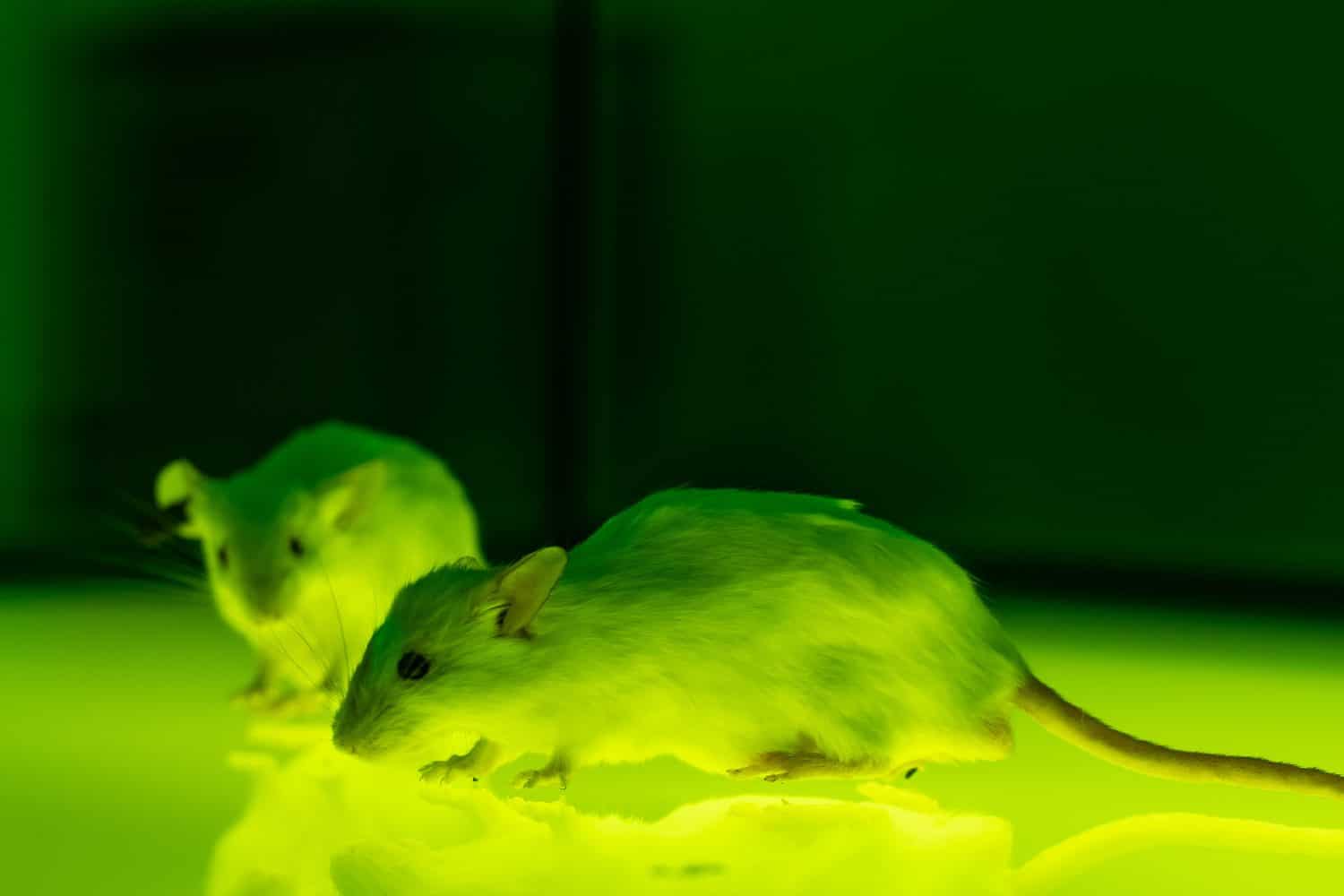
In this photo, shown for conceptual purposes only, normal white lab rats are sitting on a luminous green surface. The color approximates the kind of glowing fur and skin researchers have achieved with other lab mammals, however.
It’s possible you might be able to buy other kinds of fluorescent pets in the future. Mice and rabbits that eerily glow green in the dark like fireflies have already been achieved for the purposes of medical research, such as identifying cancer cells more easily. Scientists have already created fluorescent dogs for medical research, but they are not available for sale or use as pets. Other kinds of genetic modifications could be useful, such as developing pets that are non-allergenic, flea-resistant, or longer-lived. While gene editing could theoretically alter traits like allergy-related proteins or lifespan, such applications remain speculative and face ethical and regulatory barriers. Many pet-lovers would be interested in technology to clone a beloved pet. Others would like to customize their animal’s eye color and the color and pattern of its coat. More sinister, a much more aggressive dog might be developed as a guard animal or for military purposes. And we’ve all seen that movie before . . . no thanks!
Distant Future GMO Pets

On the more distant horizon there may be a possibility of adjusting the DNA of wild animals to make them smaller and more docile, bringing back extinct species, or even creating true chimeras, resulting in creatures that dramatically combine features of two or more organisms. While theoretically possible, editing wild species for behavior or size remains speculative and raises significant ecological and ethical concerns. Combining human and animal or plant DNA is technically feasible (inserting individual human genes into animal models is routine for research) but will likely remain an ethical taboo for many years to come. The more extreme the modifications to living organisms, the greater the practical and ethical concerns. But for now, if it makes you happy to have a tank of pretty little glowing Frankenstein fish, you can easily obtain it.











 Top Gaining Stocks
 Top Losing Stocks