


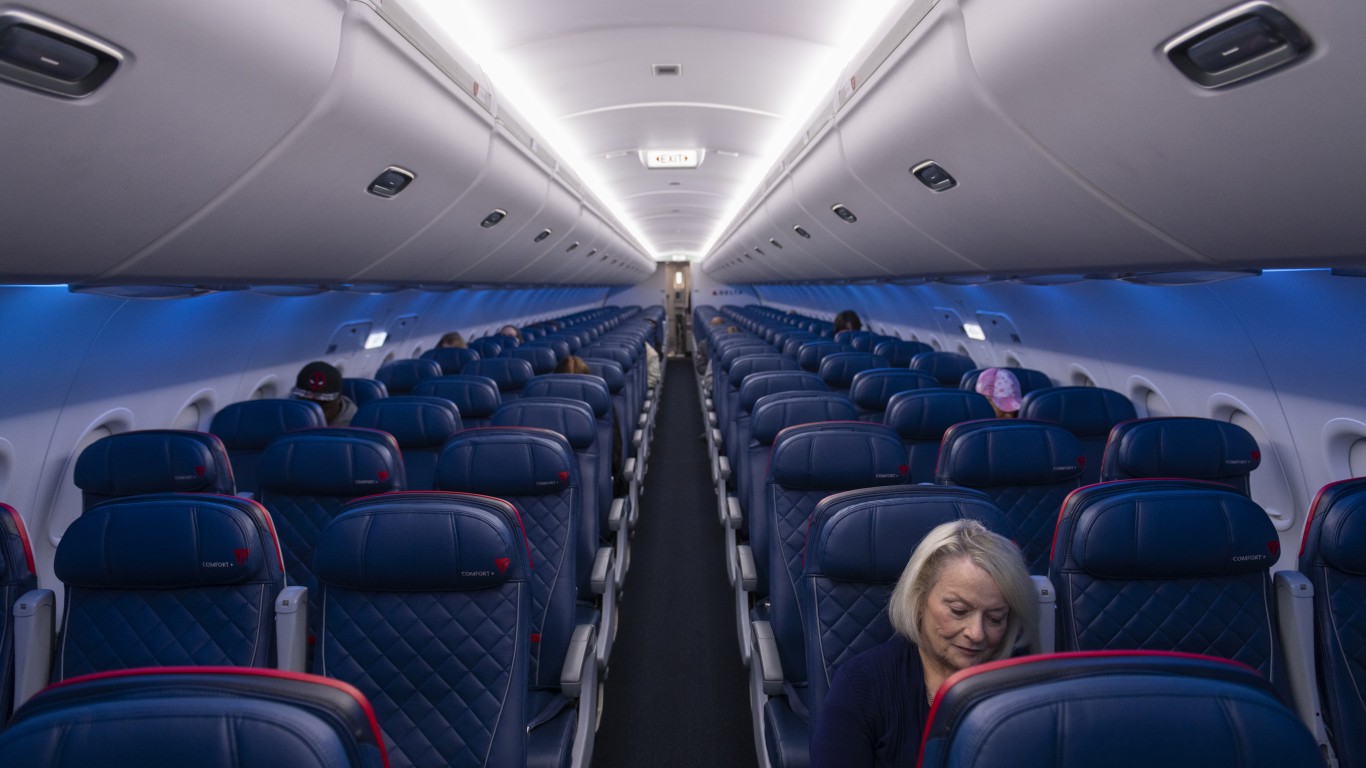
The impact of the COVID-19 pandemic on air travel has been emphasized by the recent quarterly earnings report from Delta Air Lines. The company noted that its quarterly capacity dropped by 85% year over year.
The decline in automobile travel, though substantial, was considerably less, according to transportation analyst Michael Sivak. Air miles traveled in the United States dropped by 50% in March and nearly 96% in April, while U.S. driving miles dropped by about 19% in March and nearly 40% in April. Sivak used data from the U.S. Bureau of Transportation Statistics to analyze air travel and from the Federal Highway Administration for road miles traveled.
Stay-at-home orders, combined with worries about contracting the infection, have kept Americans from their usual business and vacation travels this year, and the effects have weighed heavily on many sectors of the economy. Perhaps the hardest hit has been the hospitality industry, where tens of thousands of employees have been laid off or furloughed.
The oil and gas industry has been hit hard too as demand for jet fuel and gasoline has plunged. Last week, for example, U.S. refiners produced about 1.27 million barrels of jet fuel, around a third less than in the same week a year ago. Gasoline production of 8.65 million barrels was 6% lower than a year ago.
Using a four-week average calculation, gasoline production has declined by 12% year over year, while jet fuel production has dropped by nearly 60%.
In his analysis, Sivak notes that air miles traveled is measured by passenger distance traveled, while auto travel is measured by vehicle miles traveled. The number of people in a motor vehicle may have increased or decreased and that could affect the occupant distance traveled.
Similarly, driving miles are measured not only for personal vehicles but include buses used for public transport and trucks used to carry freight. Flying miles do not include freight or public transport. Sivak comments that the inclusion of buses and trucks is unlikely to have affected the comparison substantially.
Airline travel bookings were down by about 75% year over year at the end of June. A survey by DataPenguin cited in Travel Pulse indicates that about a third of Americans “definitely” plan to fly again before the end of the year. Those plans, however, may be crushed again, unless the spike in COVID-19 infections can be brought under control and the virus’s spread can be reduced significantly over the next month or two.
Many states also have adopted restrictions on travel, and some require that visitors self-quarantine for up to 14 days.








 Top Gaining Stocks
 Top Losing Stocks