


 Amidst the effort of US Airways Group Inc. (NYSE: LCC) to buy AMR, the parent of American Airlines, out of Chapter 11 and Delta Air Line Inc.’s (NYSE: DAL) purchase of 49% of Virgin Atlantic for $360 million, two domestic airlines have decided to sit on the M&A sidelines as their rivals grow through deal after deal. Southwest Airlines Co. (NYSE: LUV) and JetBlue Airways Corp. (NASDAQ: JBLU) have elected to go it alone. Each must believe that bigger is hardly better.
The recent AMR and Virgin Atlantic activities are part of a trend among U.S. airlines that has gone on for three years. Delta bought Northwest. United bought Continental, resulting in a new firm called United Continental Holdings Inc. (NYSE: UAL).
The consolidation has not been limited to America. British Airways is part of International Airlines Group that also owns Iberia. And Air France is part of Air France-KLM. Cross-border mergers have built carriers with scale similar to their U.S. counterparts.
The theory behind these consolidations is that they save money. Due in part by high fuel prices, airline managements believe that combinations allow for employee cuts, fewer routes flown and more leverage with suppliers, which include manufacturers Boeing Co. (NYSE: BA) and Airbus.
But the drawbacks of consolidation may trump the advantages. Reservation systems and the IT that supports them are not common carrier to carrier. Putting two such systems together is immensely complex and often disrupts the ability of consumers to do business with carriers. Layoffs hurt worker moral and unions walk out, disrupting flight schedules. Fewer routes add to customer dissatisfaction, at least for frequent travelers.
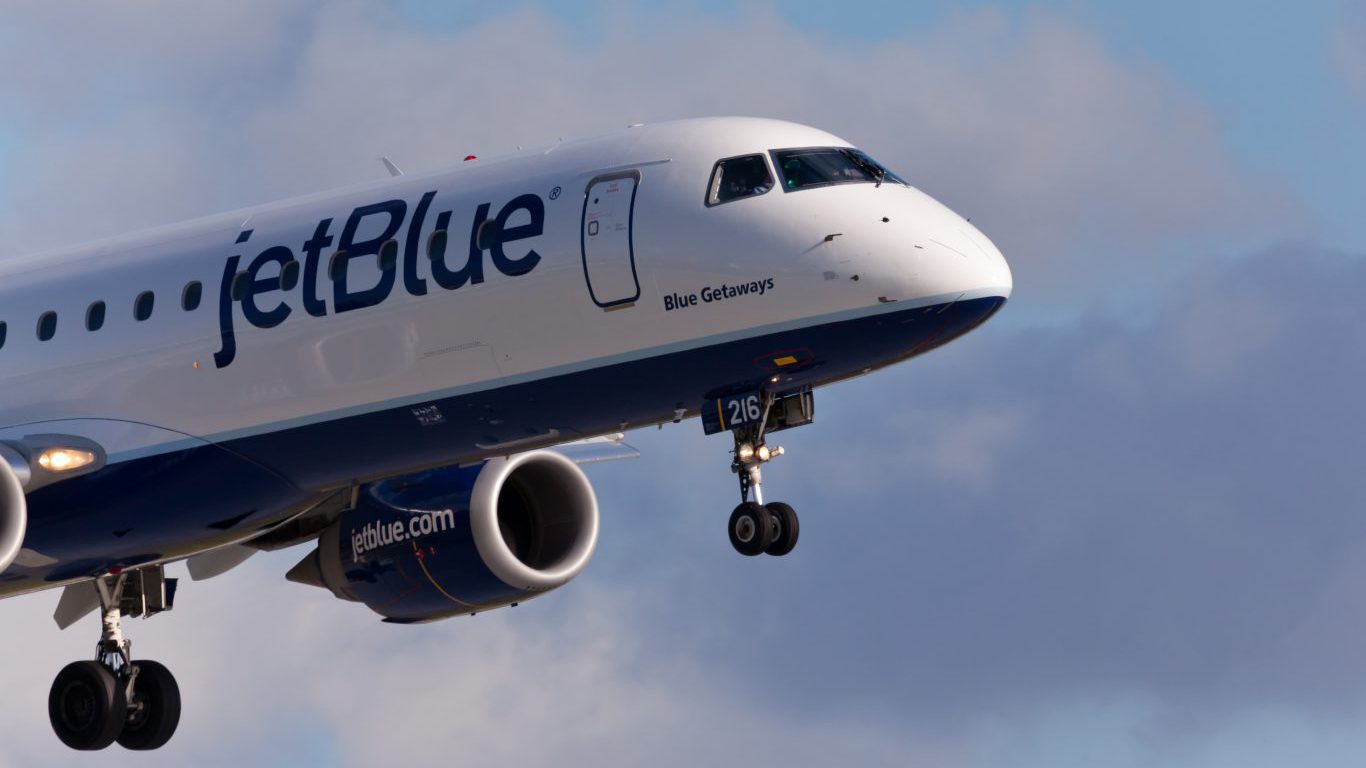
Against a growing number of giants, Southwest and JetBlue believe they can defend their turfs, even if they lack the leverage of size. Perhaps their managements have gambled that poor customer service among large carriers will send each of the two airlines business. Maybe they believe that they control a relatively small number of routes, but most of which are among the most profitable in the industry. Or, perhaps they believe that their customer-centric philosophies would be irreparably damaged by large marriages. So far, sailing into the wind has not hurt either at all.
Douglas A. McIntyre








 Top Gaining Stocks
 Top Losing Stocks