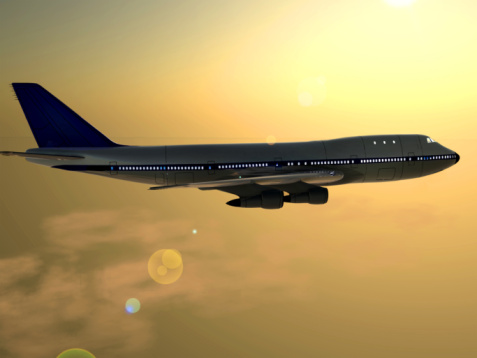
U.S. Airways, American Airlines and Poor Customer Service

Photo of Douglas A. McIntyre
By Douglas A. McIntyre Published
This post may contain links from our sponsors and affiliates, and Flywheel Publishing may receive compensation for actions taken through them.

Airline mergers are messy for employees, aircraft builders, airports and especially customers. The likely merger of U.S. Airways Group Inc. (NYSE: LCC) and bankrupt AMR, parent of American Airlines, will cause another round of the poor customer service and the high fees people have come to expect as airline marriage rates surge.

Consumers need look no further than the merger between Northwest and Delta, which created the new and bigger Delta Air Lines Inc. (NYSE: DAL), or the link up between United and Continental that created United Continental Holdings Inc. (NYSE: UAL). Each of the new conglomerates has been marked by rough transitions in reservation operations, layoffs of workers and disgruntled employees, and disruptions of routes.

Large carriers already get dismal marks on most consumer surveys. And all the largest airlines charge fees for everything from bags to meals — charges that were unthinkable a generation ago.

The theory behind airline mergers is that they create economies of scale. Back office operations can be chopped in half. Airport gates, most of which are expensive, can be consolidated. Planes can be taken out of service, and some duplicate routes can be cut. Staff reductions save employee expenses. The Delta, United and probable American mergers have each been set in turn to create the largest airline in the world. The size of an American tie up with U.S. Airways will create the largest one of all.

The airlines know that they can risk poor service as they consolidate because consumers have no other choices for transportation. Mergers often mean that many routes are exclusive to the merged company. Passengers can drive, walk or take a bus, each of which is unrealistic when distances are great enough.

The federal government reviews the mergers to make sure that they do not create a monopoly. In the case of recent major airline mergers in the United States, the deals have sailed through the scrutiny, as AMR and U.S. Airways will. The government never asks whether the customer will face poor service and higher fees. There is no federal review board for that.

Photo of Douglas A. McIntyre
About the Author Douglas A. McIntyre →

Douglas A. McIntyre is the co-founder, chief executive officer and editor in chief of 24/7 Wall St. and 24/7 Tempo. He has held these jobs since 2006.

McIntyre has written thousands of articles for 24/7 Wall St. He is an expert on corporate finance, the automotive industry, media companies and international finance. He has edited articles on national demographics, sports, personal income and travel.

His work has been quoted or mentioned in The New York Times, The Wall Street Journal, Los Angeles Times, The Washington Post, NBC News, Time, The New Yorker, HuffPost USA Today, Business Insider, Yahoo, AOL, MarketWatch, The Atlantic, Bloomberg, New York Post, Chicago Tribune, Forbes, The Guardian and many other major publications. McIntyre has been a guest on CNBC, the BBC and television and radio stations across the country.

A magna cum laude graduate of Harvard College, McIntyre also was president of The Harvard Advocate. Founded in 1866, the Advocate is the oldest college publication in the United States.

TheStreet.com, Comps.com and Edgar Online are some of the public companies for which McIntyre served on the board of directors. He was a Vicinity Corporation board member when the company was sold to Microsoft in 2002. He served on the audit committees of some of these companies.

McIntyre has been the CEO of FutureSource, a provider of trading terminals and news to commodities and futures traders. He was president of Switchboard, the online phone directory company. He served as chairman and CEO of On2 Technologies, the video compression company that provided video compression software for Adobe’s Flash. Google bought On2 in 2009.

Featured Reads

Our top personal finance-related articles today. Your wallet will thank you later.

Continue Reading

Top Gaining Stocks

CBOE Vol: 1,568,143
PSKY Vol: 12,285,993
STX Vol: 7,378,346
ORCL Vol: 26,317,675
DDOG Vol: 6,247,779

Top Losing Stocks

LKQ
LKQ Vol: 4,367,433
CLX Vol: 13,260,523
SYK Vol: 4,519,455
MHK Vol: 1,859,865
AMGN Vol: 3,818,618