


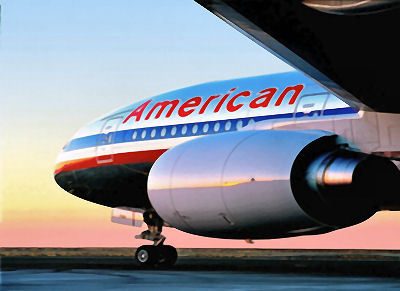
 American Airlines parent AMR (NYSE: AMR) has entered Chapter 11 and begun tense talks with its pilots. New carrier United Continental (NYSE: UAL) was granted a certificate from the FAA to begin operations as a fully integrated carrier. The fortunes of one great U.S. carrier have fallen apart. Those of a recently consolidated airline have soared. The divide between the “haves” and “have nots” in the airline industry has rarely been greater. Airline workers and customers will suffer from the situation, which may cause the industry more pain.
The bankruptcy of AMR will allow the carrier to negotiate with pilots as the Chapter 11 filing gives it new leverage. The courts may make it harder on all American unions to work for higher wages or to strike as a means to get them. Pilots, mechanics and flight crews could find that their wages actually fall as a judge decides that labor costs are so extreme that AMR cannot present a plan to emerge from bankruptcy. Poor labor relations often mean poor customer service, which will make it harder for American to recreate itself as a viable business.
United Continental is at the other end of the range of success and failure in the industry. According to the Wall Street Journal, “By granting a single operating certificate covering both carriers, FAA officials, in effect, blessed United Continental’s plan to meld the two airlines.” The expense of operating two carriers will disappear. The cost eliminations of the marriage will be completely realized, which should take the margins of the combined company higher.
What neither carrier can escape is high fuel prices and a recession that has kept customers off planes. Airlines have tried to offset these problems with higher fees for fliers and reduced services. As long as all carriers do the same, none has a service advantage. But United Continental has created the efficiency of one reservation system, one airport support system and one set of routes. The extra fees from customers will only enhance that advantage.
AMR, on the other hand, has to face the stigma of the bad PR that goes with a bankruptcy filing. The additional fees it charges customers may not be readily accepted as skittish travelers look for alternatives to traveling on a crippled carrier. American will go through years to build back its reputation. It may shed some operations costs in restructuring, but it cannot match those of the merger of two huge carriers.
United Continental has begun to see the best results of a single healthy carrier that has been able to cut operations costs through standard business practices. American is in the earliest stages of trying to get similar advantages through the legal system. It is easier to use good business practices as a means to success than it is by a Chapter 11 filing.
Douglas A. McIntyre






 Top Gaining Stocks
 Top Losing Stocks