


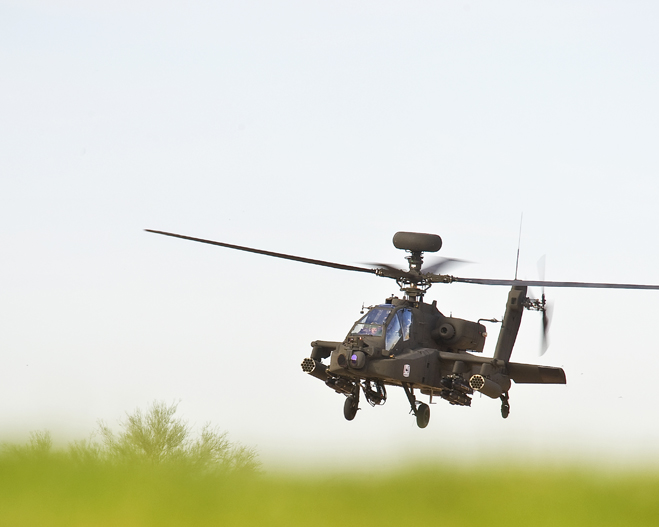
NATO members as a group are expected to spend a total $892 billion on defense in 2015, down from $942 billion in 2014 and $968 billion in 2013. The 2015 U.S. defense budget totals $598.5 billion, about two-thirds of the NATO total. The U.S. 2016 proposed defense budget currently wriggling its way through the Congress totals just over $634 billion.
NATO’s secretary general, Jens Stoltenberg, said:
[W]e need to redouble our efforts to reverse this trend. Because we are facing more challenges, and we cannot do more with less indefinitely.
Last year’s moves by Russia in Ukraine have led eastern European NATO members to beef up spending. Lithuania has boosted year-over-year spending in 2015 by nearly 30%, while Poland’s spending is up nearly 22%, Latvia is spending an additional 13%, Romania is spending 9% more, Hungary’s spending is up 7.8%, the Slovak Republic is spending 6.2% more, the Czech Republic and Estonia are each spending 5.5% more, and Croatia increased spending by 0.2%.
ALSO READ: US Government Approves Fighter Plane Sale to Lebanon
Aviation Week reported last week on the growth in Russia’s military spending:
During the last five years, a resurgent Russia has increased its defense spending by 50% and plans to modernize its conventional air, sea and land forces and, perhaps more worryingly, firm up the posture of its nuclear forces.
U.S. spending is down 2% from 2014 totals, while France and Germany are spending 1.0% and 1.3% less in 2015, respectively.
A report in Defense News identifies the biggest cheapskates as Belgium, Luxembourg, Hungary and Spain, all of which allot less than 1% of GDP to defense spending. The United Kingdom has yet to commit to meeting the 2% target next year and only meets the target in 2015 by counting about $1.6 billion in a fund administered by the Foreign Office and typically used for peacekeeping and similar missions. The U.K.’s contribution to NATO averaged about 2.5% in the late 1990s, dropping to an average of 2.4% in the years between 2005 and 2009. In 2013 the country spent 2.3% of GDP on defense, compared with 2.2% last year and 2.1% this year.
NATO defense ministers are meeting in London this week.
ALSO READ: Analyst Remains Bullish on Boeing After Paris Air Show








 Top Gaining Stocks
 Top Losing Stocks