


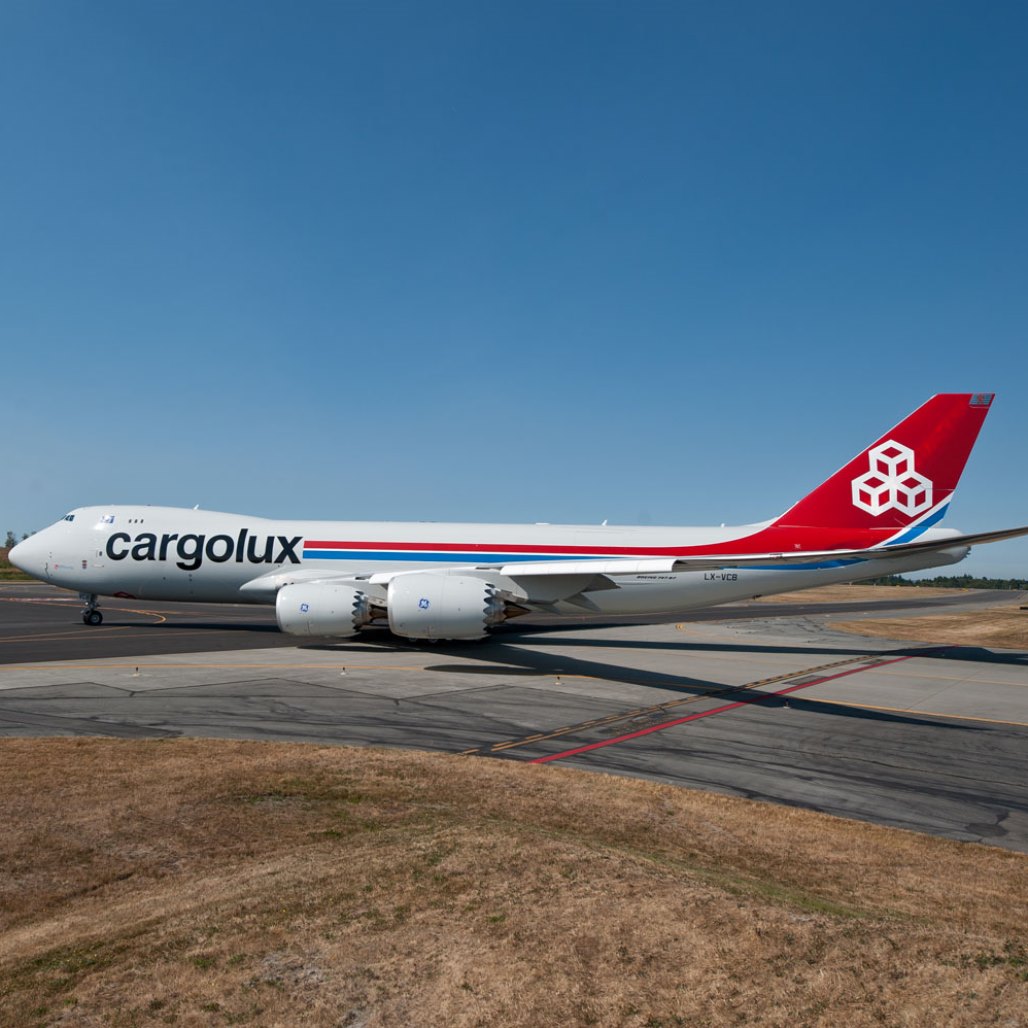
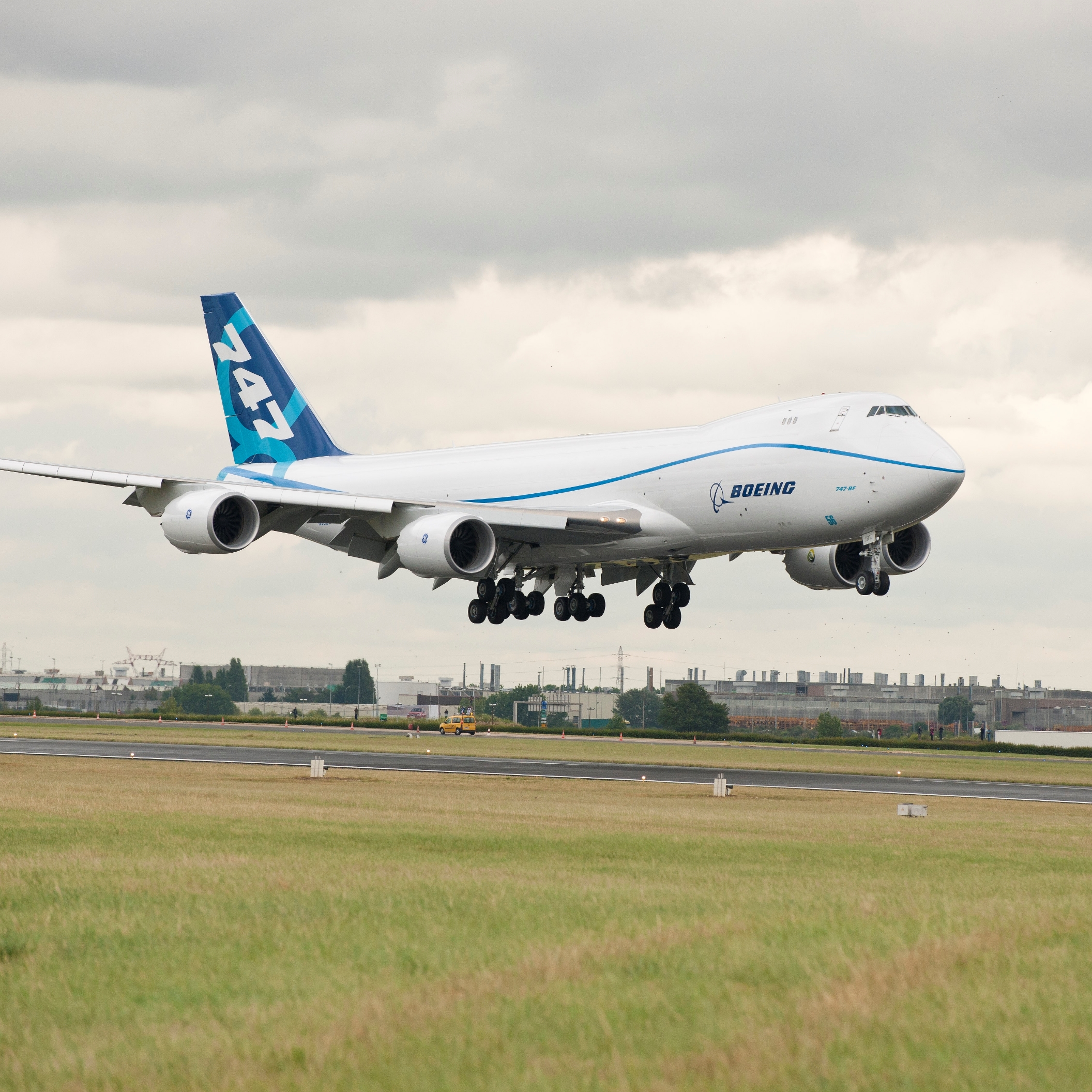
The first 747-100 from Boeing Co. (NYSE: BA) was put into service in 1970, and those first planes sold at a list price of $24 million. Adjusting for inflation, that same 747 would sell today for more than $149 million, less than half the actual price of a new 747-8 passenger jet that lists for $378.5 million, or the freighter version at $379.1 million. Boeing hasn’t got many buyers for its humpbacked plane, but price is not the problem.
Since January of 2015 Boeing has taken orders for just 10 747s, and has a total of 21 of the jumbo jets on its backlog, 10 passenger jets and 11 freighters. Beginning in September, Boeing plans to cut production of the planes from one per month to just one-half per month.
Last week Boeing lowered the number of 747s in its program accounting block from 1,574 planes to 1,555 and took a pretax charge of $1.2 billion against the program. In a filing with the U.S. Securities and Exchange Commission the company added:
If we are unable to obtain sufficient orders and/or market, production and other risks cannot be mitigated, we could record additional losses that may be material, and it is reasonably possible that we could decide to end production of the 747.
[nativounit]
Demand for new cargo planes has stalled, not primarily because cargo shipments have declined but because new planes like the 787 and Airbus A350 have increased capacity to carry cargo. This so-called belly cargo offers both the carriers and the shippers better economics.
In a July survey by the International Air Transport Association (IATA), less than 10% of airline executives surveyed expect any growth in cargo shipments in the next 12 months. Both Boeing and Airbus released their 20-year outlooks earlier this month and both were downbeat on long-term prospects for the freight market. AirCargoWorld noted the year-over-year changes to Airbus’s outlook:
While last year’s global forecast for 2015 to 2034 anticipated an increase in dedicated freighters from 1,633 in 2014 to 2,687 in 2034 – a 65 percent rise … . This time around, the European aviation giant predicted an increase from 1,560 dedicated freighters to only 2,110 – a 35 percent increase over the twenty-year period. Total new freighter deliveries of 645 units over the next two decades reflect this shift, down 159 freighters from last year’s predictions.
Boeing also scaled back its 20-year forecast for cargo planes, dropping its earlier forecast for annual growth of 4.7% to 4.2%. Partly this is due to a slowing global economy and partly to increases in belly cargo shipments. Boeing projects demand for new cargo planes at 930 over the 20-year period, sharply higher than the Airbus estimate.
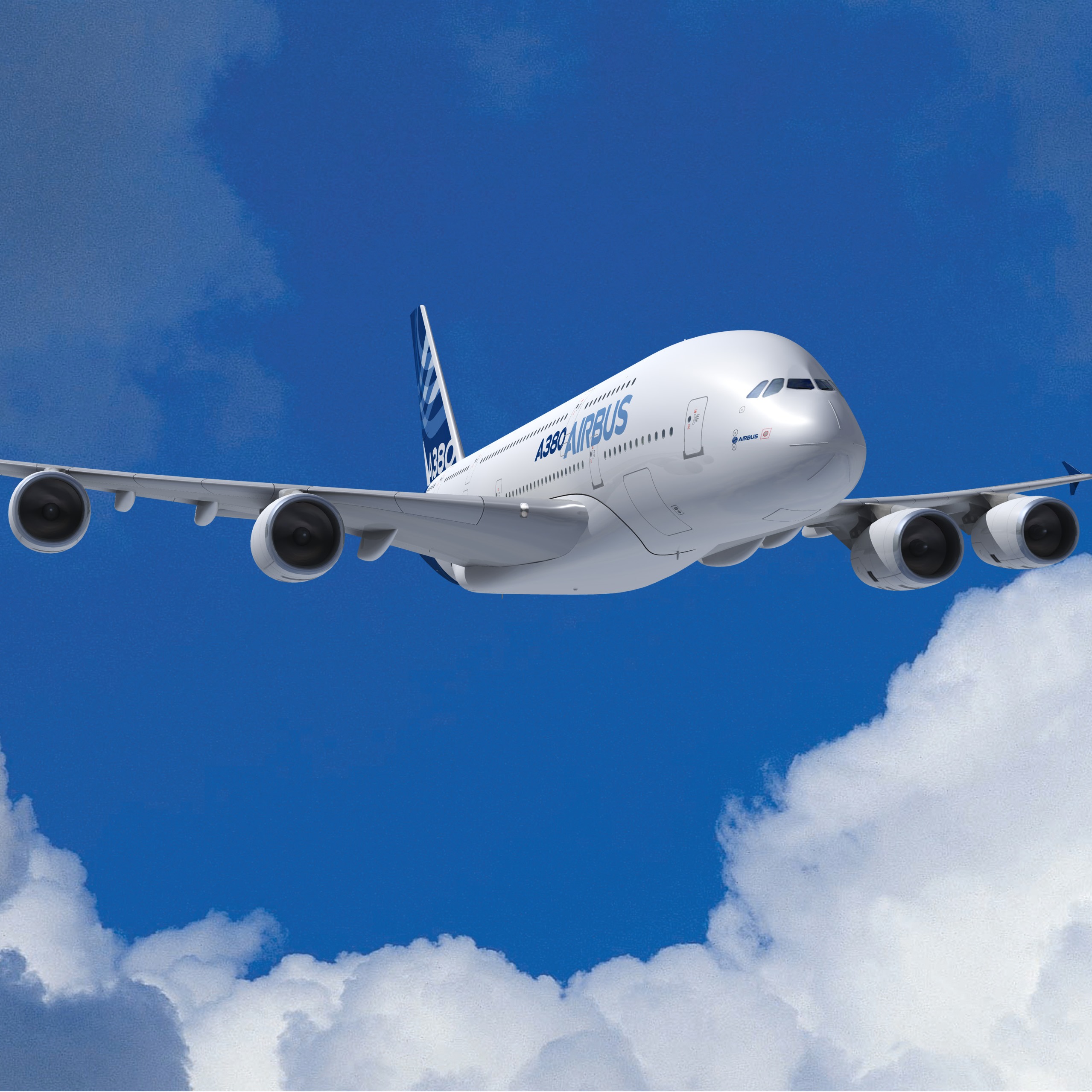
Boeing made a de facto decision several years ago to let the 747 program live its natural life when it chose not to compete directly with the larger A380 superjumbo jet from Airbus. Given the then-high cost of fuel, Boeing would have had to replace the four engines on the 747 with more fuel-efficient versions. The A380 jet, if it can be filled with 500 to 600 passengers, is more efficient than the 747 as a passenger plane, and Boeing did not see the market for these massive planes growing enough to justify the investment to compete. In effect, Boeing gave Airbus the very-large airplane market.
[wallst_email_signup]
That was probably the right decision then, and it may prove to be the right decision for a long time. Airbus took its first new orders in two years for the A380 last year. The European maker is under intense pressure from Emirates airline to put new engines on the A380 to make it even more fuel efficient. Airbus has demurred and deferred and stalled, but eventually the company probably will not give in to the temptation of taking an order from Emirates for up to 200 re-engined A380s. But one never knows — an order for 200 planes that cost more than $432 million per copy at list price is pretty tempting.
Boeing stock traded down about 2.3% in the noon hour Thursday, at $132.88 in a 52-week range of $102.10 to $150.59.






 Top Gaining Stocks
 Top Losing Stocks