China Stole OpenAI Secrets, Experts Say

Photo of Douglas A. McIntyre
By Douglas A. McIntyre Published

Quick Read

  • China Steals Open AI Secrets

  • China Could Pass US In AI Development

  • What Happens To The US’s Billions of Dollars Invested?

This post may contain links from our sponsors and affiliates, and Flywheel Publishing may receive compensation for actions taken through them.

It reads this way. From Reuters, which quoted a letter to the U.S. House Select Committee on Strategic Competition, “We have observed accounts associated with DeepSeek employees developing methods to circumvent OpenAI’s access restrictions and access models through obfuscated third-party routers and other ways that mask their source.” From Bloomberg, “OpenAI has warned US lawmakers that its Chinese rival DeepSeek is using unfair and increasingly sophisticated methods to extract results from leading US AI models to train the next generation of its breakthrough R1 chatbot, according to a memo reviewed by Bloomberg News.”

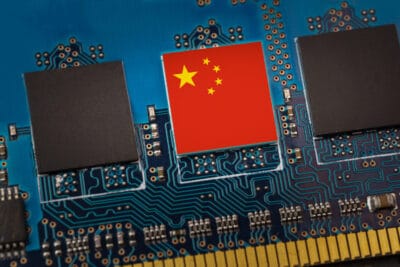
The Chinese are gaining an advantage by stealing from US AI leaders. OpenAI said it had started an investigation as part of a partnership with Microsoft (NASDAQ: MSFT | MSFT Price Prediction). It is not the first time the serious issue has been raised. OpenAI expressed similar anxiety in a letter seen by The New York Times late last year.

China has been accused of stealing US tech secrets for years. Sometimes, it uses other methods. The process has been outright piracy. In 2011, Microsoft’s then-CEO, Steve Ballmer, said the company was losing 95% of its potential revenue in China due to theft. That was well into the billions of dollars.

The AI theft gives China a substantial edge. China also does not have to spend months of development to create the most advanced AI technology. No wonder outside observers believe these China’s AI development costs are as much as 80% lower than those in the US. This may also contribute to the conclusion that China needs less powerful chips.

There is a growing worry that AI developed by large or well-funded companies in China will leapfrog that in the US. Some portion of the hundreds of billions of dollars to be invested in US data centers is also at risk. The global dominance of US AI products is facing increasing competition from China. Add to the theft the fact that China has much more electricity to run data centers than the US does. China also does not face the roadblocks posed by federal and local government concerns about data center and AI proliferation.

China could steal its way to becoming more than No.2 in the global AI race.

Photo of Douglas A. McIntyre
About the Author Douglas A. McIntyre →

Douglas A. McIntyre is the co-founder, chief executive officer and editor in chief of 24/7 Wall St. and 24/7 Tempo. He has held these jobs since 2006.

McIntyre has written thousands of articles for 24/7 Wall St. He is an expert on corporate finance, the automotive industry, media companies and international finance. He has edited articles on national demographics, sports, personal income and travel.

His work has been quoted or mentioned in The New York Times, The Wall Street Journal, Los Angeles Times, The Washington Post, NBC News, Time, The New Yorker, HuffPost USA Today, Business Insider, Yahoo, AOL, MarketWatch, The Atlantic, Bloomberg, New York Post, Chicago Tribune, Forbes, The Guardian and many other major publications. McIntyre has been a guest on CNBC, the BBC and television and radio stations across the country.

A magna cum laude graduate of Harvard College, McIntyre also was president of The Harvard Advocate. Founded in 1866, the Advocate is the oldest college publication in the United States.

TheStreet.com, Comps.com and Edgar Online are some of the public companies for which McIntyre served on the board of directors. He was a Vicinity Corporation board member when the company was sold to Microsoft in 2002. He served on the audit committees of some of these companies.

McIntyre has been the CEO of FutureSource, a provider of trading terminals and news to commodities and futures traders. He was president of Switchboard, the online phone directory company. He served as chairman and CEO of On2 Technologies, the video compression company that provided video compression software for Adobe’s Flash. Google bought On2 in 2009.

Featured Reads

Our top personal finance-related articles today. Your wallet will thank you later.

Continue Reading

Top Gaining Stocks

CBOE Vol: 1,568,143
PSKY Vol: 12,285,993
STX Vol: 7,378,346
ORCL Vol: 26,317,675
DDOG Vol: 6,247,779

Top Losing Stocks

LKQ
LKQ Vol: 4,367,433
CLX Vol: 13,260,523
SYK Vol: 4,519,455
MHK Vol: 1,859,865
AMGN Vol: 3,818,618