


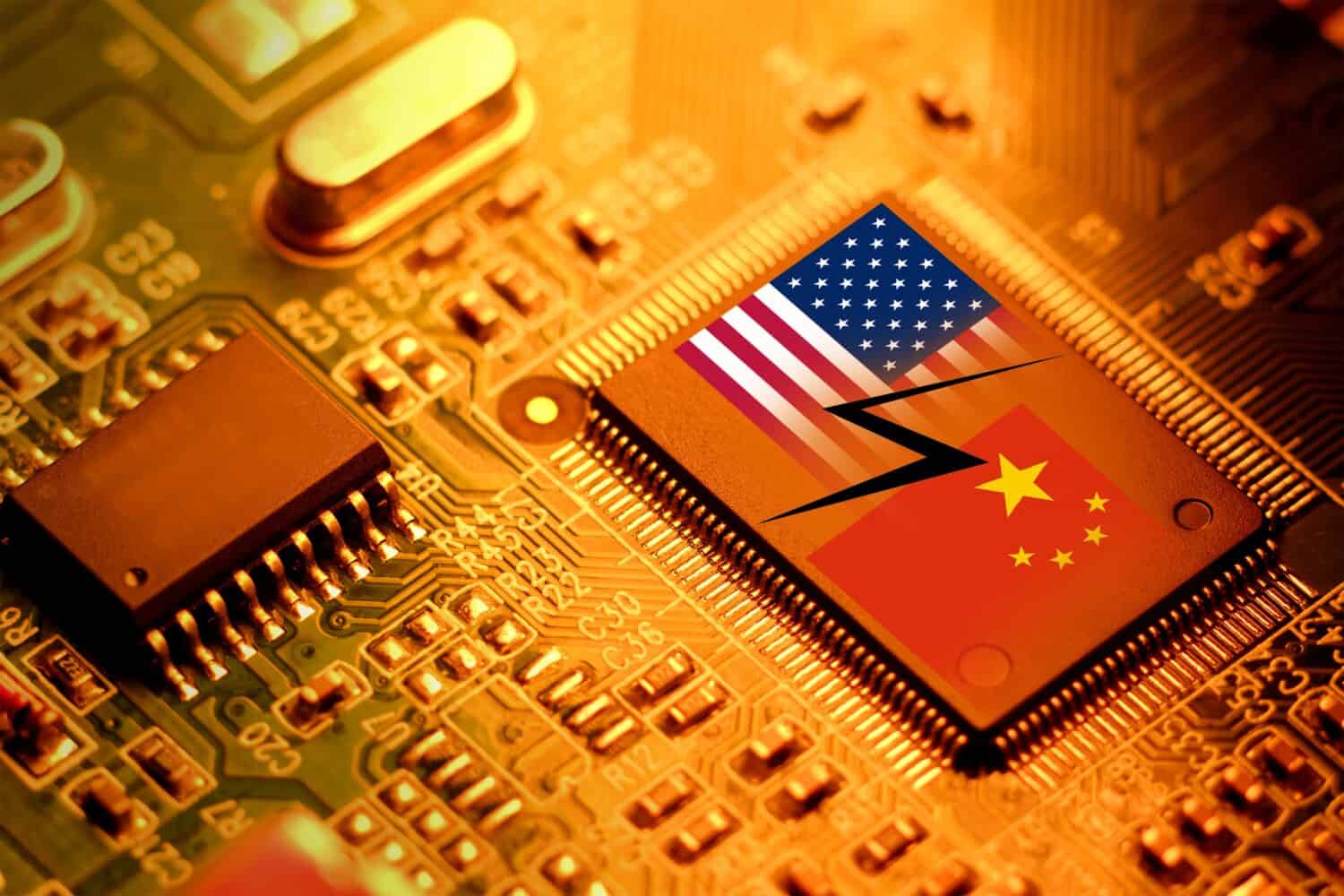
There is no chance we are in an AI bubble, according to the heads of companies like Nvidia (NASDAQ: NVDA | NVDA Price Prediction), Alphabet (NASDAQ: GOOG), and OpenAI. If the US is completely at the center of the AI universe, that might be true. But, it isn’t
The Semafor headline reads “China’s AI industry gears up for pivotal week.” Some tech industry analysts and some journalists agree
What does China have? Perhaps another surprise on the scale of DeepSeek’s AI models was released in January. As his company’s stock collapsed amid anxiety that the US lacked a clear AI lead, Nvidia CEO Jensen Huang said its R1 reasoning model was “fantastic” and “genuinely a gift to the world’s AI industry”. He also said that to be successful, it needed more computing power. Perhaps he was hinting at the need for Nvidia chips.
The DeepSeek promise was, and is, that it was developed at a small fraction of the cost of the software AI market leaders, which are in America. Chinese companies have not had another large product release since then.
However, the pace of Chinese AI model releases could change. The South China Post reported, ‘A ‘stealth’ model has emerged, while advancements by Alibaba’s Qwen-3.5 and Zhipu’s GLM-5 aim to spur domestic competition following releases by US heavyweights.’ No one outside of China knows how Chinese advances compare to US releases.
There is also the issue of advanced chips. It has long been believed that Nvidia’s Blackwell chips are state-of-the-art. There are rumors that some of these have been made available to the Chinese, even if they are offshore in places like Singapore. China may have access to Nvidia’s second-most powerful chip, the H200. However, the future of that arrangement is tied to the US-China trade war.
Another issue is whether China has developed state-of-the-art AI chips on its own. One of these is Huawei’s Ascend 910C. It is generally believed that this is not comparable to US products. But no one knows how fast that could change. (China has a habit of “borrowing” America’s best technology.)
China’s largest threat to the US may be something as simple as electricity. As AI data centers in America look for places to build, energy is a major consideration. More recently, there has been a fight in some parts of the country where data centers are unavailable. Jensen Huang has an opinion about this. China has twice the electricity capacity of the US. The lead is growing quickly. Where China cannot excel in technology, it may excel in energy infrastructure.
If there is a single threat to the US AI sector, it does not live in America.









 Top Gaining Stocks
 Top Losing Stocks