


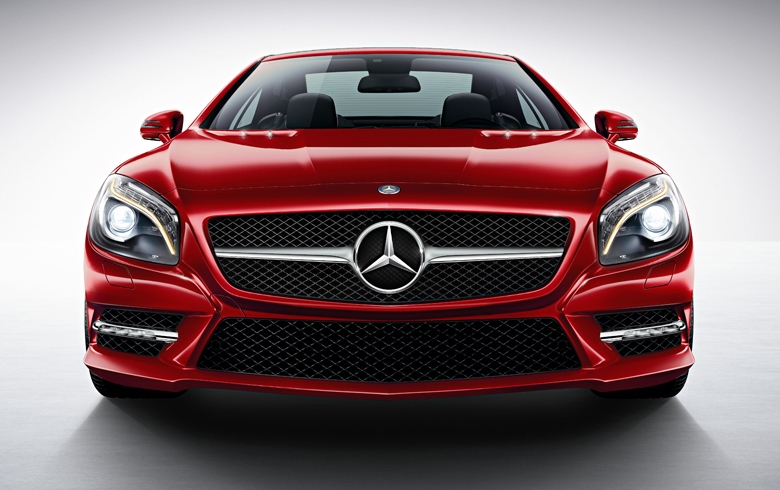
Europe continues to be a soft spot for Mercedes and most other manufacturers, because it has barely recovered from the recession. China, on the other hand, has taken up most of that slack, added by a tremendous run in U.S. sales.
Mercedes management reported:
In a volatile European market environment, Mercedes-Benz Cars performed very well and was able to increase its share of nearly all markets. In the United States, the biggest sales market, the division was more successful than ever before with sales of 81,900 units, representing growth of 7% compared to prior year. In China, Mercedes-Benz Cars continued its strong development and increased its unit sales by 13% to 68,100 vehicles.
ALSO READ: States With the Highest Gas Prices
Rivals, particularly BMW and Audi, have done well, but not enough to erode Mercedes sales. And that strength powered earnings from the car division higher for the period:
Due to the higher-value model mix resulting from the worldwide availability of the S-Class, revenue increased at a higher rate than unit sales, by 9% to €17.8 billion. The Mercedes-Benz Cars division’s second-quarter EBIT of €1,409 million was significantly higher than the prior-year figure of €1,041 million.
Mercedes has had no problem raising prices of many of its cars, a sign that luxury car buyers are not terribly price sensitive.
What helped Mercedes keep its position in the luxury car market? Decades of globally building a quality brand. In a recent survey of global brand value, Interbrand put the value of the Mercedes brand at $31.9 billion, just behind much larger Toyota Motor Corp. (NYSE: TM) with a brand value of $35.3 billion. Toyota sells an extremely large multiple of what Mercedes does.
Mercedes sales will almost certainly remain strong. It has assured itself a spot at the top of the automotive business by a long history of brand building that cannot be matched in duration or success.






 Top Gaining Stocks
 Top Losing Stocks