


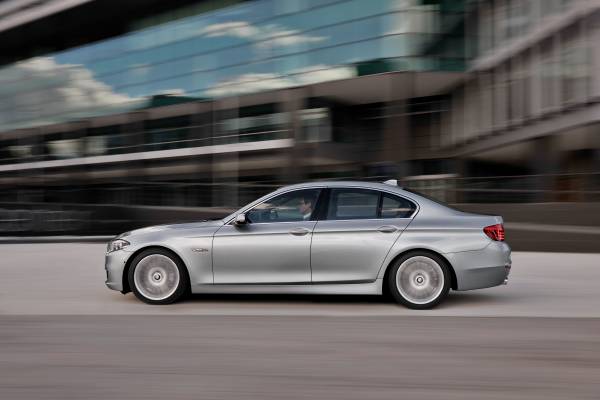
When the rich go shopping, they typically go for top-of-the-line goods, and in the auto world that includes a very few nameplates for the super-rich (Ferrari, Rolls-Royce, Maybach, you get the idea) and more choices for those who are only very wealthy. The cars of choice come from German makers Mercedes-Benz, BMW and Audi, all three of which are having a banner year so far in 2014.
For the month of July, the U.S. sales leader was Mercedes-Benz, which sold 29,406 units to bring total sales for 2014 to 192,513. Month-over-month sales are up 2.4%, year-over-year sales are up 15%, and year-to-date sales are up 8.8%. The U.S. data come from Kelley Blue Book.
BMW sold 26,409 units in the United States in July and has delivered 183,791 vehicles so far this year. Month-over-month sales are down 12.6%, but year-over-year sales for July are up 9.8% and year-to-date sales are up 11.7%.
Audi sold 14,616 cars in July, down 13.3% from June, but up 11.9% year-over-year for July and up 13.3% for the year-to-date. Audi has sold a total of 98,965 units in the United States so far this year.
ALSO READ: Cadillac Has Another Bad Month in July
Internationally the story is a bit different. Audi outsold BMW for the first time ever in May, selling 151,722 units to BMW’s 137,010. Even Mercedes-Benz sold more units than BMW in May, sending 145,587 cars out the door. BMW held on to a slim lead in year-to-date (through June) sales with 886,347, compared with 869,350 for Audi and 783,520 for Mercedes.
In the United States, new models sell better than old ones. Mercedes-Benz has been updating its compact models, putting pressure on BMW and Audi to do the same. All three seem to be concentrating on the lower end of their price range, hoping to expand their market and get drivers used to the idea of driving one of their cars and gradually moving them up the ladder to the more expensive models. That was a tried and true model for U.S. carmakers in the past, but with new cars lasting much longer these days and with drivers holding on to those cars for longer, the new twist is to expand at the lower end rather than the top end.
Audi is expected to introduce 17 new or updated vehicles this year, and Mercedes-Benz plans to roll out 30 by the end of the decade. One thing all this competition is doing is pushing down margins as new car prices are being discounted by about 20% in order to attract buyers. Chasing volume rather than profits is a slippery slope, though, and we ought to watch for the first signs that one of these carmakers is about to stop playing the game.








 Top Gaining Stocks
 Top Losing Stocks