


When Ford Motor Co. (NYSE: F | F Price Prediction) reported third-quarter earnings Wednesday afternoon, the company noted a $2.7 billion charge related to shutting down its Argo joint venture with Volkswagen to develop a self-driving car. VW reports earnings Friday, and it would be a big surprise if the German automaker didn’t take a write-down for its investment in Argo. Both companies invested about $1 billion in cash in Argo in 2019.
Doug Field, whom Ford hired from Apple last year, told Bloomberg that achieving full self-driving capability is “harder than putting a man on the moon.” Ford CEO Jim Farley commented Wednesday that “profitable, fully autonomous vehicles at scale are a long way off.”
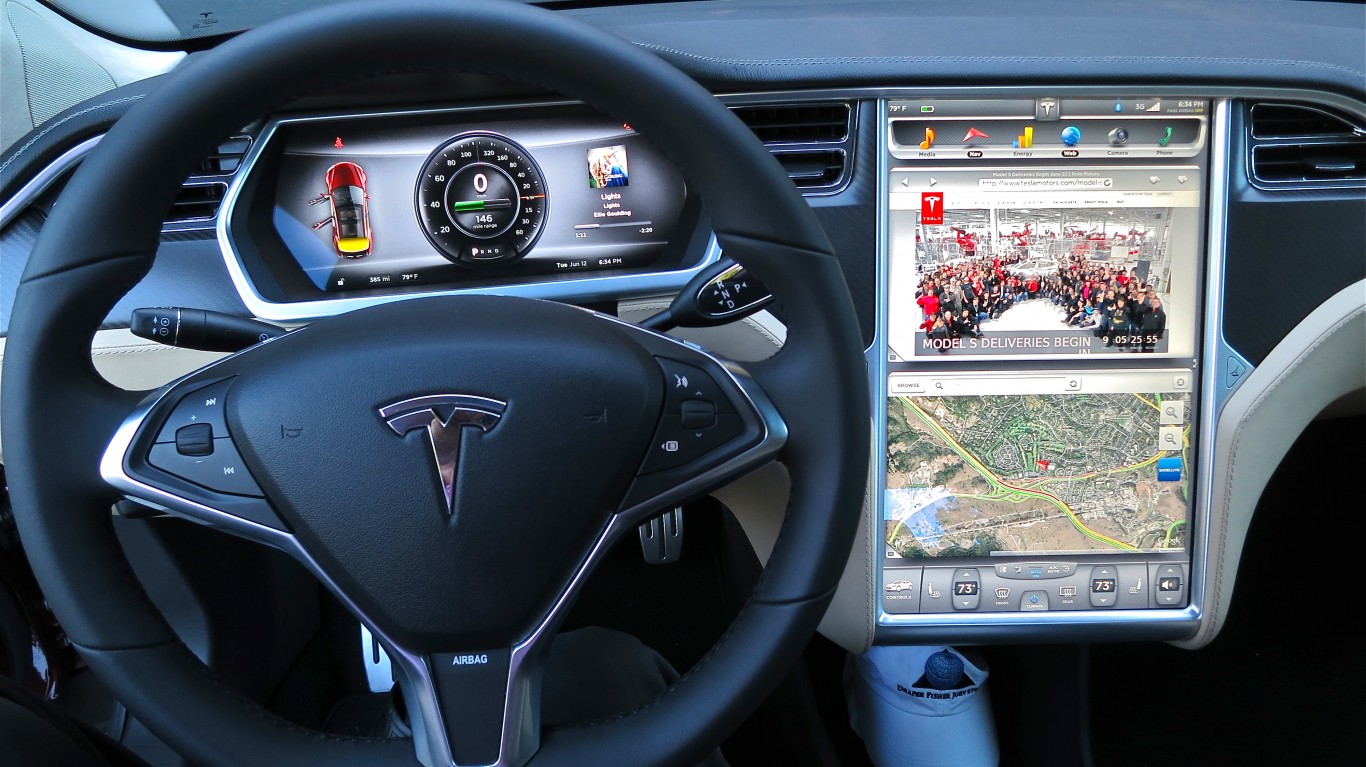
Advanced driver-assistance systems (ADAS), the technical name for self-driving vehicles, have taken two different approaches to the problem. The primary proponent of a camera-based system is Tesla Inc. (NASDAQ: TSLA). Since first offering its Full Self Driving (FSD) system in 2019 for $5,000, FDS now costs $15,000 in the United States. Tesla’s basic AutoPilot (a misnomer if ever there was one) is standard equipment on all the company’s vehicles. An enhanced version was introduced in June as a $6,000 option.
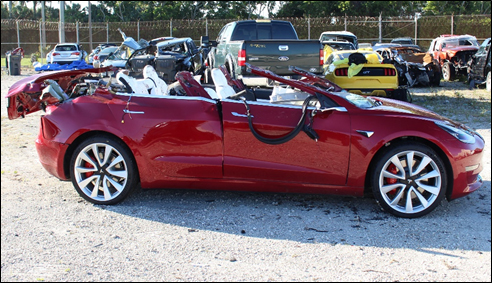
In an exclusive report published Tuesday, Reuters cited unnamed sources who said the U.S. Department of Justice has launched an investigation into Tesla’s AutoPilot system.
[nativounit]
The California legislature passed a law in August aimed specifically claims that vehicles are self-driving when they are not. It is now illegal to make untrue and misleading statements about a vehicle’s self-driving capabilities. The new legislation could even force Tesla to change the names of its self-driving features.
Ford’s stock opened a bit lower Thursday morning and was trading with a small gain just before noon. Tesla was trading essentially flat, and GM, like Ford, traded up slightly.
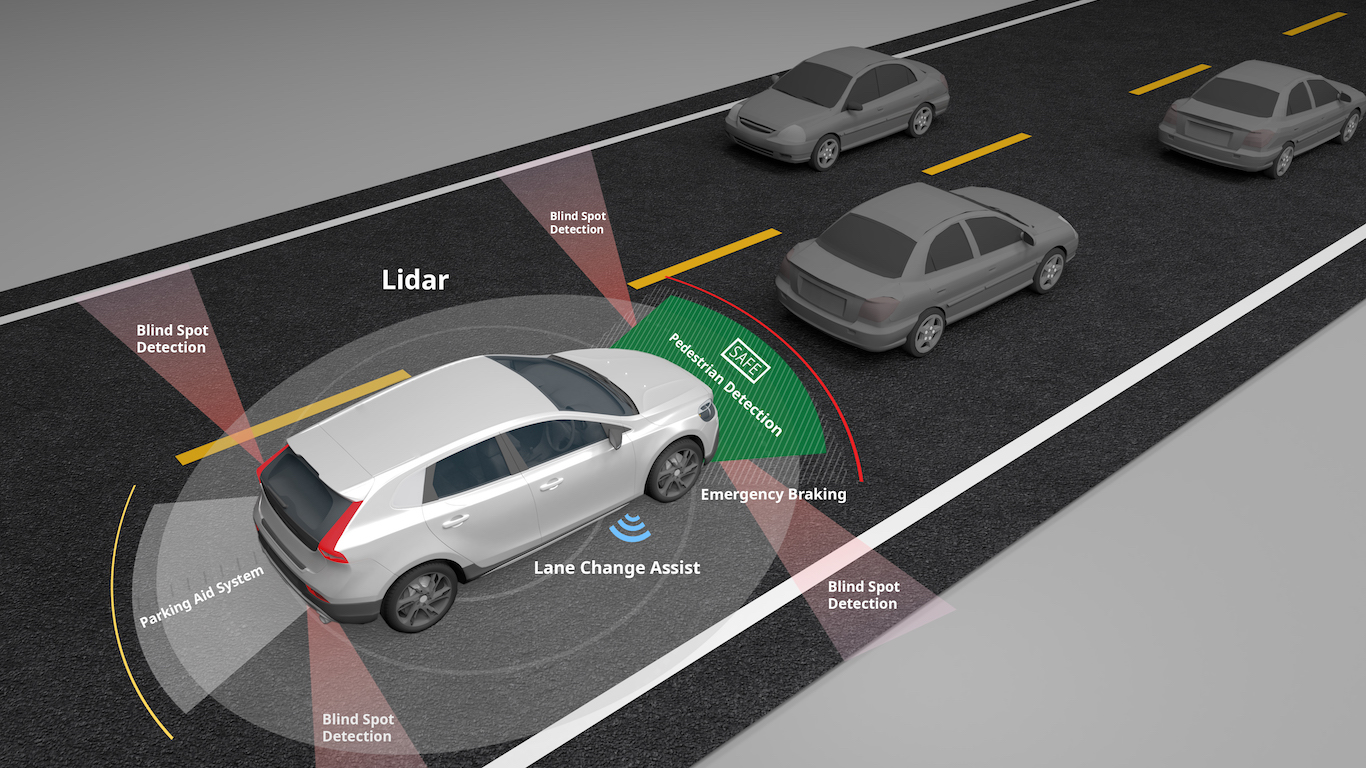
The alternatives to camera-based autonomous driving systems use lidar (light detection and ranging) technology. This is the system used by Mobileye Global Inc. (NASDAQ: MBLY), Velodyne Lidar Inc. (NASDAQ: VLDR) and Luminar Technologies Inc. (NASDAQ: LAZR).
[wallst_email_signup]
In January of this year, analysts at Jefferies initiated coverage on two companies that make either camera chips or lidar systems for self-driving systems. Camera supplier Ambarella Inc. (NASDAQ: AMBA) was initiated with a Buy rating and a 12-month price target of $170. Lidar maker Luminar also was started with a Buy rating and a price target of $20.
Ambarella traded at around $56.30 Thursday morning, and Luminar traded at around $7.30.
[recirclink id=1173023]
While the market for fully autonomous vehicles may be huge (up to $1.6 trillion, according to a McKinsey estimate) by the end of the decade, remember that it took a dozen years between the time that the Soviet Union put the first man into space and NASA put the first man on the moon. Google’s Waymo autonomous driving unit has been working on self-driving vehicles since 2009. That is 13 years and counting.






 Top Gaining Stocks
 Top Losing Stocks