Ford’s EV Future Hit by UAW

Photo of Douglas A. McIntyre
By Douglas A. McIntyre Published
This post may contain links from our sponsors and affiliates, and Flywheel Publishing may receive compensation for actions taken through them.
Ford’s EV Future Hit by UAW

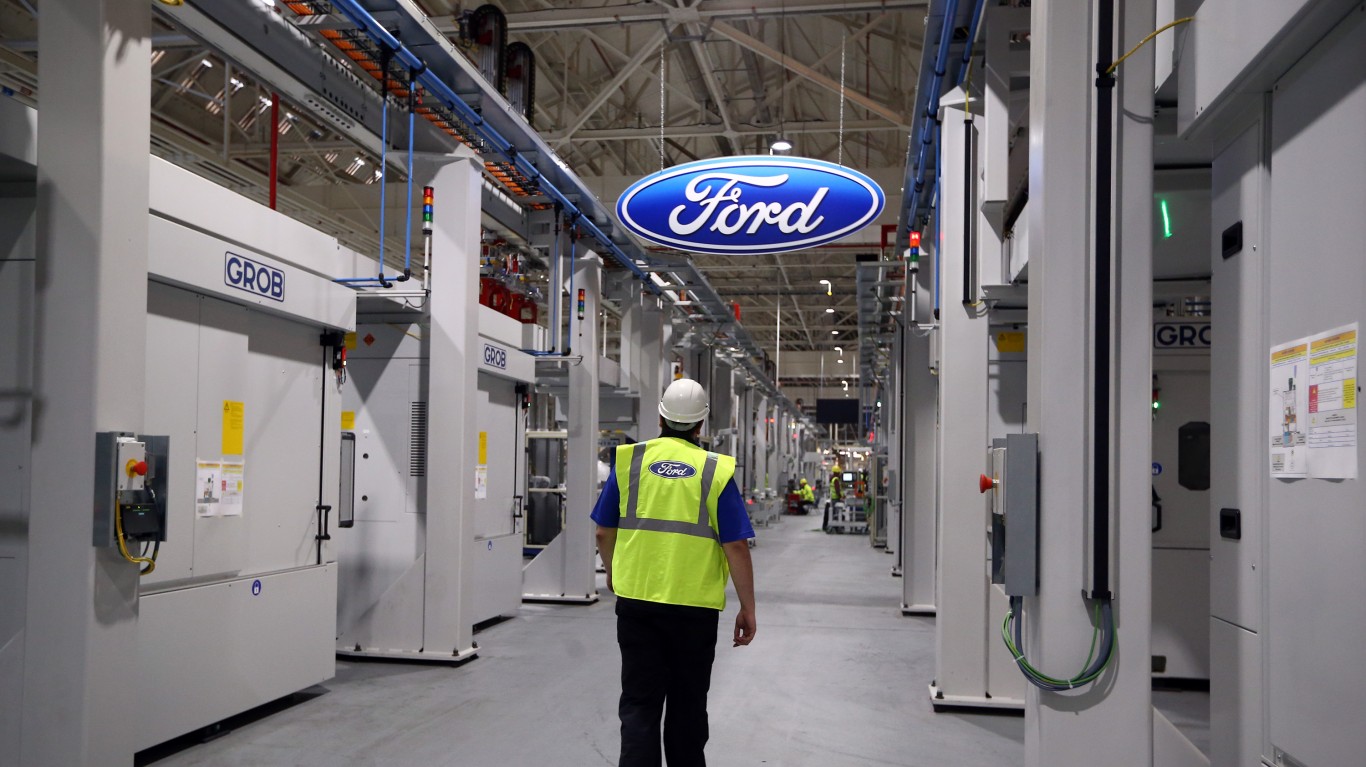
© Bill Pugliano / Getty Images

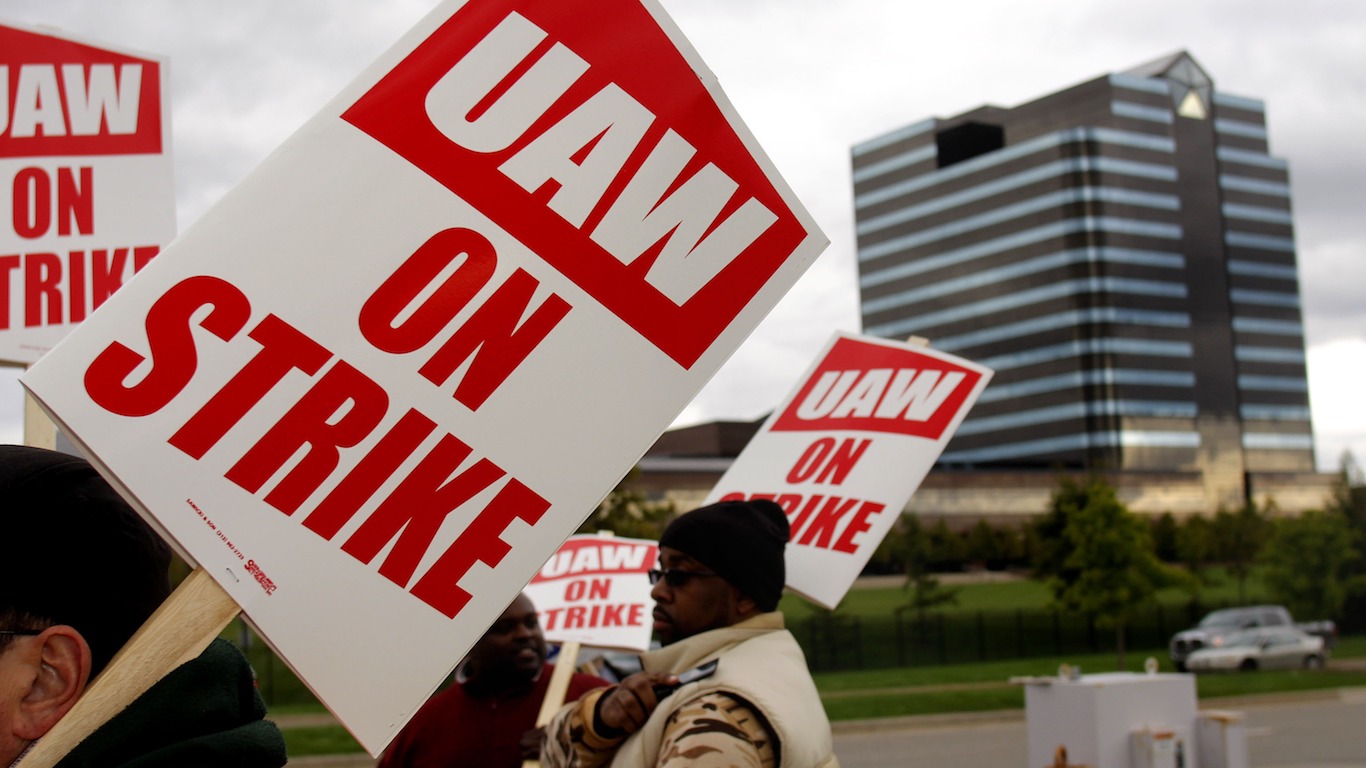
The United Auto Workers (UAW), angered that it could not get the concessions it wanted from American car companies, took a step to escalate its war with them. It struck Ford’s largest plant. The UAW made the move because the Kentucky location is among Ford’s most profitable plants. No surprise, Ford says the move was “irresponsible.”

What is clear is that the strike will badly damage sales of Ford’s legacy gasoline-powered products. These are over 95% of Ford’s sales. The strike has damaged Ford’s future. If the UAW gets its way, that will worsen as the UAW’s higher compensation hits margins. (These are America’s 17 favorite pickups.)

It is less obvious that the strike compromises Ford’s move into electric vehicles (EVs), which it assumes is the company’s future. Its management believes most cars sold at the decade’s end will be EVs. That may not be true for many reasons. Americans worry about their range on a single charge and the number of EV charging stations.

However, the anxiety of many drivers would still leave enough of a market to sell millions of EVs in America. Ford has the advantage of its legacy Mustang and F-150 products, each of which has an EV version.
[nativounit]
The UAW is worried that EV plants will undermine the number of workers. The union wants job guarantees at those locations, limiting Ford’s ability to make good profits from its EV products.
[recirclink id=1315641]
The UAW’s action looks like a threat to Ford’s present. In reality, it is an attack on Ford’s future. This includes an aggressive move into EVs that has already cost it billions of dollars.


Photo of Douglas A. McIntyre
About the Author Douglas A. McIntyre →

Douglas A. McIntyre is the co-founder, chief executive officer and editor in chief of 24/7 Wall St. and 24/7 Tempo. He has held these jobs since 2006.

McIntyre has written thousands of articles for 24/7 Wall St. He is an expert on corporate finance, the automotive industry, media companies and international finance. He has edited articles on national demographics, sports, personal income and travel.

His work has been quoted or mentioned in The New York Times, The Wall Street Journal, Los Angeles Times, The Washington Post, NBC News, Time, The New Yorker, HuffPost USA Today, Business Insider, Yahoo, AOL, MarketWatch, The Atlantic, Bloomberg, New York Post, Chicago Tribune, Forbes, The Guardian and many other major publications. McIntyre has been a guest on CNBC, the BBC and television and radio stations across the country.

A magna cum laude graduate of Harvard College, McIntyre also was president of The Harvard Advocate. Founded in 1866, the Advocate is the oldest college publication in the United States.

TheStreet.com, Comps.com and Edgar Online are some of the public companies for which McIntyre served on the board of directors. He was a Vicinity Corporation board member when the company was sold to Microsoft in 2002. He served on the audit committees of some of these companies.

McIntyre has been the CEO of FutureSource, a provider of trading terminals and news to commodities and futures traders. He was president of Switchboard, the online phone directory company. He served as chairman and CEO of On2 Technologies, the video compression company that provided video compression software for Adobe’s Flash. Google bought On2 in 2009.

Featured Reads

Our top personal finance-related articles today. Your wallet will thank you later.

Continue Reading

Top Gaining Stocks

CBOE Vol: 1,568,143
PSKY Vol: 12,285,993
STX Vol: 7,378,346
ORCL Vol: 26,317,675
DDOG Vol: 6,247,779

Top Losing Stocks

LKQ
LKQ Vol: 4,367,433
CLX Vol: 13,260,523
SYK Vol: 4,519,455
MHK Vol: 1,859,865
AMGN Vol: 3,818,618