Goldman Sachs And Caveat Emptor

Photo of Douglas A. McIntyre
By Douglas A. McIntyre Published
This post may contain links from our sponsors and affiliates, and Flywheel Publishing may receive compensation for actions taken through them.

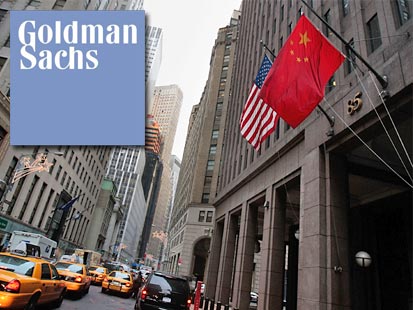
Goldman Sachs (NYSE: GS) was attacked by an executive director who left today. The reason for his departure was that he thinks Goldman is a culture of devils who love money and take advantage of gullible clients. On a moral and legal level, Greg Smith, is right to leave. Goldman has a fiduciary duty to take care of customers, and all businessmen, no matter what their businesses, should act ethically. But, on realistic level, Wall St. has been picking the pockets of clients since before the birth of J.P. Morgan. Clients should assume that bankers are part of a culture in which profits and individual gain are the first priority. Otherwise, the clients are victims of ignorance. Caveat Emptor. The bankers wants to profit from your activity.

Smith, executive director and head of the investment bank’s U.S. equity derivatives business in Europe, the Middle East and Africa, wrote “After almost 12 years at the firm — first as a summer intern while at Stanford, then in New York for 10 years, and now in London — I believe I have worked here long enough to understand the trajectory of its culture, its people and its identity. And I can honestly say that the environment now is as toxic and destructive as I have ever seen it.”

Bankers at virtually all other investment banks have similar motivations to those at Goldman. They may not be as savage or adroit. But, not a year goes by when some bank does not take advantage of foreclosure laws, or one of its employees tries to skirt the rules against insider trading. Put people into culture where profits and huge pay checks are at the core of employment, and those people will act accordingly.  The five banks which have settled mortgage abuse claims-Bank of America (NYSE: BAC), Wells Fargo (NYSE: WFC), JPMorgan Chase (NYSE: JPM), Citigroup (NYSE: C) and Ally Financial–obviously did not have fair practices for customers at heart. Each of the banks might argue that not of their workers profited from the mortgage abuses, but the line between carelessness and ethics can be a thin one.

People on Wall St. are greedy. So, what’s new?

Douglas A. McIntyre

Photo of Douglas A. McIntyre
About the Author Douglas A. McIntyre →

Douglas A. McIntyre is the co-founder, chief executive officer and editor in chief of 24/7 Wall St. and 24/7 Tempo. He has held these jobs since 2006.

McIntyre has written thousands of articles for 24/7 Wall St. He is an expert on corporate finance, the automotive industry, media companies and international finance. He has edited articles on national demographics, sports, personal income and travel.

His work has been quoted or mentioned in The New York Times, The Wall Street Journal, Los Angeles Times, The Washington Post, NBC News, Time, The New Yorker, HuffPost USA Today, Business Insider, Yahoo, AOL, MarketWatch, The Atlantic, Bloomberg, New York Post, Chicago Tribune, Forbes, The Guardian and many other major publications. McIntyre has been a guest on CNBC, the BBC and television and radio stations across the country.

A magna cum laude graduate of Harvard College, McIntyre also was president of The Harvard Advocate. Founded in 1866, the Advocate is the oldest college publication in the United States.

TheStreet.com, Comps.com and Edgar Online are some of the public companies for which McIntyre served on the board of directors. He was a Vicinity Corporation board member when the company was sold to Microsoft in 2002. He served on the audit committees of some of these companies.

McIntyre has been the CEO of FutureSource, a provider of trading terminals and news to commodities and futures traders. He was president of Switchboard, the online phone directory company. He served as chairman and CEO of On2 Technologies, the video compression company that provided video compression software for Adobe’s Flash. Google bought On2 in 2009.

Continue Reading

Top Gaining Stocks

CBOE Vol: 1,568,143
PSKY Vol: 12,285,993
STX Vol: 7,378,346
ORCL Vol: 26,317,675
DDOG Vol: 6,247,779

Top Losing Stocks

LKQ
LKQ Vol: 4,367,433
CLX Vol: 13,260,523
SYK Vol: 4,519,455
MHK Vol: 1,859,865
AMGN Vol: 3,818,618