


 Two things, which happened within hours of one another, will probably determine the value of bank stocks for the next several months. Optimism about bank earnings pushed up Citigroup(C) by 25% yesterday and Bank of America (BAC) up 15%. But, the shares in the company that started the bank rally, Wells Fargo (WFC), did not make any gains at all.
The market may have assumed that since Wells Fargo has already put out its good news that there was no reason for the stock to go higher. But, if anticipated earnings at other banks are expected to confirm the trend that shows financial firms are recovering, Wells Fargo should have moved up with the rest of its peers. It didn’t.
Bank analysts have begun to question the “strength” of the Wells Fargo earnings and are asking how much of the improvement in the quarterly results was due to accounting maneuvers and how much was based on actual improvements in operating results. Research firm KBW wrote that Wells Fargo may still have to raise $50 billion, much of it to cover future credit losses.
Although there may not be one reason investors can identify, skepticism moved into the prices of some bank stocks. By all rights, JPMorgan’s (JPM) shares should still be rising along with Wells Fargo’s, but they are not.
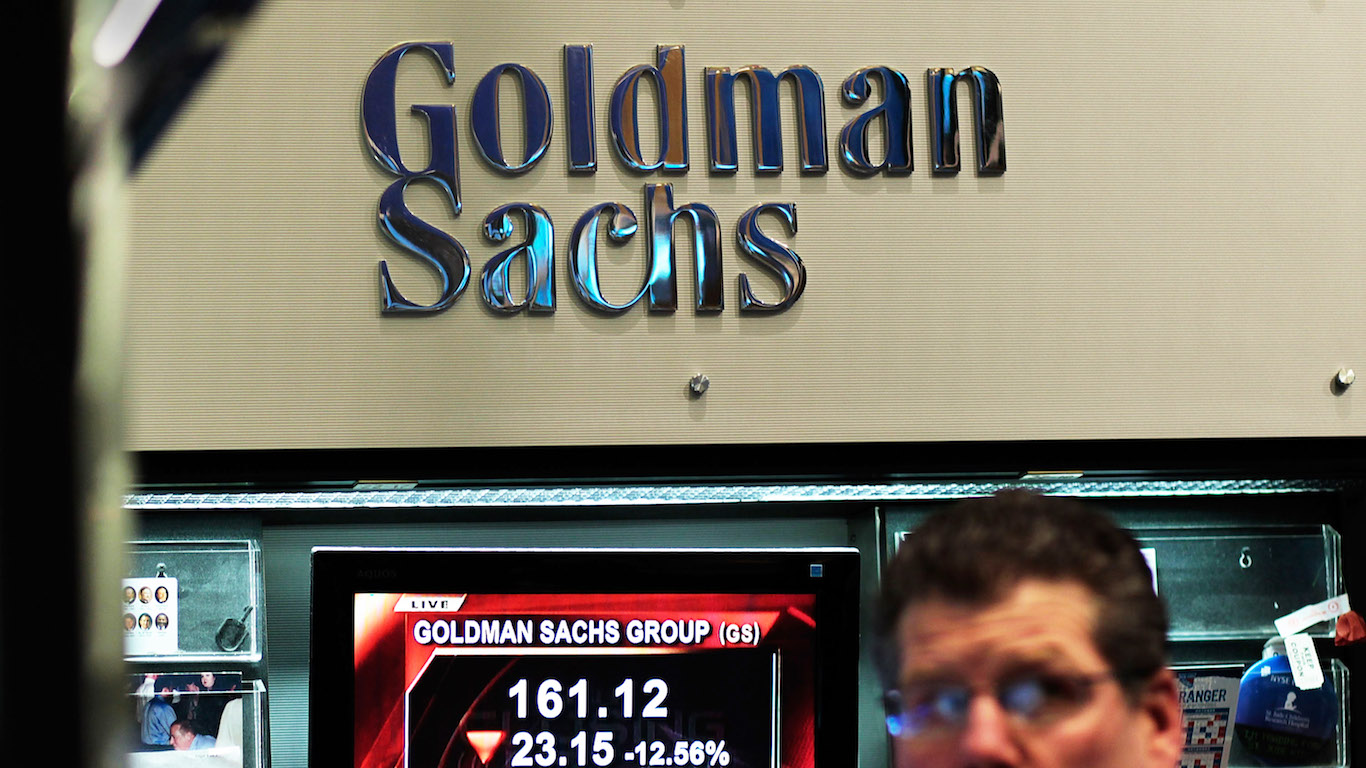
Goldman Sachs announced its earnings as the market closed, about 20 minutes after Wells Fargo stock stopped trading for the day. Goldman’s results were unexpectedly good. The company said it earned $1.81 billion, or $3.39 a share, in the first quarter as improved trading revenue outweighed asset write-downs, handily beating the $1.64 estimate of 16 analysts surveyed by Bloomberg.
While Goldman’s earnings were good, what was better was that the company said it would raise $5 billion and use that and capital on hand to pay back the $10 billion of TARP funds it got from the federal government. The “payback” is the key sign that the Goldman results are the real deal. Wells Fargo did not offer the government a check. It said it hoped to, someday. That is almost certainly a sign that the bank can’t make the payment now or it needs to keep the cash it has for estimated losses in future quarters.
Goldman set a tone for bank earnings which probably won’t be matched this earnings season. By paying the TARP funds it said that it did not have to worry about the next few quarters. It is not concerned that losses from toxic assets, consumer credit, commercial lending, or leveraged buy-outs will be a problem later this year. Goldman implied that its earnings won’t be undermined by the troubles that may affect other financial firms as the economy continues to stumble and bank loans of almost every sort default with increasing frequency.
None of the other banks are going to be able to pull off what Goldman did. This means that they still have considerable earnings risk and, even if their numbers look relatively good, they are scared to death about the future.
Douglas A. McIntyre






 Top Gaining Stocks
 Top Losing Stocks