The Disappearing Quality Car

Photo of Douglas A. McIntyre
By Douglas A. McIntyre Published
This post may contain links from our sponsors and affiliates, and Flywheel Publishing may receive compensation for actions taken through them.

There is nothing on the Toyota Motor Corp.’s (NYSE: TM) U.S. website about a recall of 2.8 million cars for steering and water pump problems. Or, if there is a note, it is carefully hidden. The same absence holds true for the Toyota corporate website. It is as if the recall had not happened at all.

But the recall has happened, and it includes Avensis, Corolla and Prius vehicles sold in Europe, Japan, and the United States. Someone designed the cars and felt certain there were no faults. Why else put them into plans and onto roads.

This is not the first large recall in Toyota’s recent history. This year, Toyota recalled 7.43 million vehicles for faulty power window switches. Huge global recalls in 2008 severely hurt Toyota’s brand. All these recalls create a very large list of defects, which numbers well over 10 million.

But the Toyota history of recalls is old news, and the problem is not unique. American car companies have suffered from similar problems. So have cars from higher end manufacturers like BMW, which recalled 45,000 of its immensely expensive 7 series sedans. A car that costs $70,000 should be recall proof, or at least come with a “money back guarantee.”

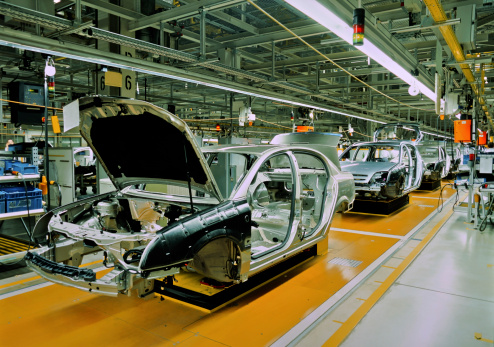
The worry that the recent spike in recalls creates is that as auto manufacturing technology races ahead, it does not create fewer defective products, and in many cases, safer ones. Robots may build cars faster and have an advantage over human-based assembly. That means the roots of these recalls are almost certainly with designers and engineers, who prepare all the details and plans for cars or light trucks long before parts are bought and the vehicle is assembled. Design factors have not improved, even if assembly has been made more modern.

Whatever the cause, even though quality ratings for many cars have gotten better most years, the consumer has to harbor a nagging worry. The new vehicle he drives off the dealer lot already may be broken, and the people who designed it will not know until after it fails.

Douglas A. McIntyre

Photo of Douglas A. McIntyre
About the Author Douglas A. McIntyre →

Douglas A. McIntyre is the co-founder, chief executive officer and editor in chief of 24/7 Wall St. and 24/7 Tempo. He has held these jobs since 2006.

McIntyre has written thousands of articles for 24/7 Wall St. He is an expert on corporate finance, the automotive industry, media companies and international finance. He has edited articles on national demographics, sports, personal income and travel.

His work has been quoted or mentioned in The New York Times, The Wall Street Journal, Los Angeles Times, The Washington Post, NBC News, Time, The New Yorker, HuffPost USA Today, Business Insider, Yahoo, AOL, MarketWatch, The Atlantic, Bloomberg, New York Post, Chicago Tribune, Forbes, The Guardian and many other major publications. McIntyre has been a guest on CNBC, the BBC and television and radio stations across the country.

A magna cum laude graduate of Harvard College, McIntyre also was president of The Harvard Advocate. Founded in 1866, the Advocate is the oldest college publication in the United States.

TheStreet.com, Comps.com and Edgar Online are some of the public companies for which McIntyre served on the board of directors. He was a Vicinity Corporation board member when the company was sold to Microsoft in 2002. He served on the audit committees of some of these companies.

McIntyre has been the CEO of FutureSource, a provider of trading terminals and news to commodities and futures traders. He was president of Switchboard, the online phone directory company. He served as chairman and CEO of On2 Technologies, the video compression company that provided video compression software for Adobe’s Flash. Google bought On2 in 2009.

Featured Reads

Our top personal finance-related articles today. Your wallet will thank you later.

Continue Reading

Top Gaining Stocks

CBOE Vol: 1,568,143
PSKY Vol: 12,285,993
STX Vol: 7,378,346
ORCL Vol: 26,317,675
DDOG Vol: 6,247,779

Top Losing Stocks

LKQ
LKQ Vol: 4,367,433
CLX Vol: 13,260,523
SYK Vol: 4,519,455
MHK Vol: 1,859,865
AMGN Vol: 3,818,618