


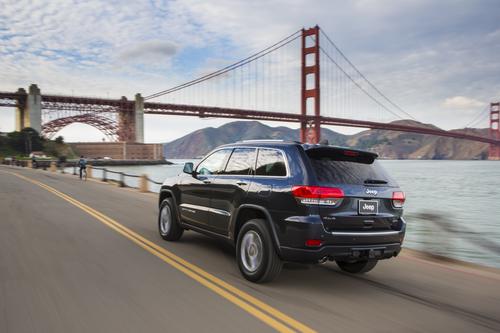
Chrysler said in a press release that barely acknowledged the issue:
Chrysler Group LLC and the National Highway Traffic Safety
Administration (NHTSA) have resolved their differences with respect to NHTSA’s request to recall 1993-2004 Jeep® Grand Cherokee and 2002-07 Jeep Liberty vehicles.As a result of the agreement, Chrysler Group will conduct a voluntary campaign with respect to the vehicles in question that, in addition to a visual inspection of the vehicle will, if necessary, provide an upgrade to the rear structure of the vehicle to better manage crash forces in low-speed impacts.
Chrysler Group’s analysis of the data confirms that these vehicles are not defective and are among the safest in the peer group. Nonetheless, Chrysler Group recognizes that this matter has raised concerns for its customers and wants to take further steps, in coordination with NHTSA, to provide additional measures to supplement the safety of its vehicles. Chrysler Group regards safety as a paramount concern and does not compromise on the safety of our customers and their families.
In other words, the cars are not broken, but Chrysler will fix them.
Once the press got a hold of the news that Chrysler would resist the NHTSA request, the fight for public opinion had ended. The media had a field day reporting on and opining about the risk the company was dodging, as well as the possible consequences. Chrysler was dressed down repeatedly for not following the protocol that every other car company follows. Government concern gave way immediately to Chrysler consumer concern. Better to be safe than sorry, but the company did not adopt that attitude soon enough.
In reality, a car company that makes a voluntary recall actually may be helping its brand. It shows humility in the face of trouble. Also, if only one car has a defect that causes injury or death, it is one too many. Car companies are at their best when they look out for the public interest.
Chrysler hoped it could get by with a plan to probably quietly look at the cars if people brought them in to dealers. That would mollify people who wanted assurance. Whether Chrysler would do anything to “fix” those cars will never be known. In all probability the answer is yes. It is too risky to turn away a concerned customer and let word of that action to get out, on top of what was already a PR nightmare.
Chrysler knew it would have to inspect the cars in question one way or another, but it kept that secret. So, why did it decide not to take what was already a bad situation and turn it into a better one?





 Top Gaining Stocks
 Top Losing Stocks