Car Companies Have Nothing to Do with Detroit Downfall

Photo of Douglas A. McIntyre
By Douglas A. McIntyre Updated Published
This post may contain links from our sponsors and affiliates, and Flywheel Publishing may receive compensation for actions taken through them.

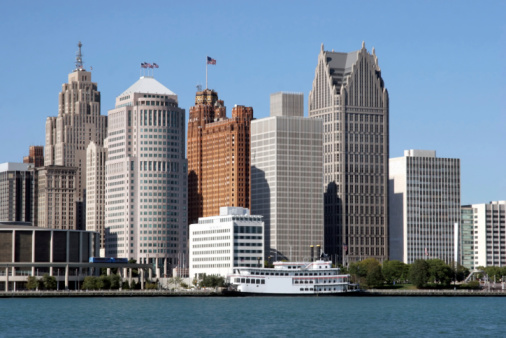
General Motors Co. (NYSE: GM) CEO Dan Akerson has not been the company’s leader long enough to speak with any authority about the history of the auto industry. Already considered naïve in many quarters for his belief that GM’s troubled Europe unit can be resurrected, he confirmed the concerns of those who worry about his intellectual firepower when he told USA Today that the GM and Chrysler bankruptcies were major triggers of the fall of Detroit to the point that the city filed for Chapter 9. The problems predate the effects of the Great Recession by decades.

Akerson said:

It’s simply a matter of macro-economics. The (auto) industry generally wasn’t doing well. Many jobs were lost as the result of the restructuring, including our own, and the tax base in large measure evaporated.

Detroit’s math does not work that way. The large damage done to the industry because of the 1970s oil embargo and deep recession that accompanied it prove only that the city and its unions did not have the sense to match municipal expenses to tax revenues when the problem first emerged, and as time went by into the 1980s and 1990s.

There is always a temptation for politicians to blame trouble on predecessors. If so, the light of that blame can be cast well back toward the 1970s. GM had a 50% share of the U.S. market the decade before. A combination of poorly built cars and Japanese competition already had started to take a chunk out of GM’s prospects. Demands by the UAW for higher and higher compensation magnified the problem. The 1970s car industry implosion only compounded those troubles.

It is notable that Chrysler CEO Sergio Marchionne, an Italian, and Ford Motor Co. (NYSE: G) CEO Alan Mulally, a former aircraft manufacturing executive, have not said anything about the fall of Detroit. They know better than to speak about something where their opinions are not valuable.

Akerson’s comments are based on a view that looks back less than a decade. That is not nearly far enough.

Photo of Douglas A. McIntyre
About the Author Douglas A. McIntyre →

Douglas A. McIntyre is the co-founder, chief executive officer and editor in chief of 24/7 Wall St. and 24/7 Tempo. He has held these jobs since 2006.

McIntyre has written thousands of articles for 24/7 Wall St. He is an expert on corporate finance, the automotive industry, media companies and international finance. He has edited articles on national demographics, sports, personal income and travel.

His work has been quoted or mentioned in The New York Times, The Wall Street Journal, Los Angeles Times, The Washington Post, NBC News, Time, The New Yorker, HuffPost USA Today, Business Insider, Yahoo, AOL, MarketWatch, The Atlantic, Bloomberg, New York Post, Chicago Tribune, Forbes, The Guardian and many other major publications. McIntyre has been a guest on CNBC, the BBC and television and radio stations across the country.

A magna cum laude graduate of Harvard College, McIntyre also was president of The Harvard Advocate. Founded in 1866, the Advocate is the oldest college publication in the United States.

TheStreet.com, Comps.com and Edgar Online are some of the public companies for which McIntyre served on the board of directors. He was a Vicinity Corporation board member when the company was sold to Microsoft in 2002. He served on the audit committees of some of these companies.

McIntyre has been the CEO of FutureSource, a provider of trading terminals and news to commodities and futures traders. He was president of Switchboard, the online phone directory company. He served as chairman and CEO of On2 Technologies, the video compression company that provided video compression software for Adobe’s Flash. Google bought On2 in 2009.

Featured Reads

Our top personal finance-related articles today. Your wallet will thank you later.

Continue Reading

Top Gaining Stocks

CBOE Vol: 1,568,143
PSKY Vol: 12,285,993
STX Vol: 7,378,346
ORCL Vol: 26,317,675
DDOG Vol: 6,247,779

Top Losing Stocks

LKQ
LKQ Vol: 4,367,433
CLX Vol: 13,260,523
SYK Vol: 4,519,455
MHK Vol: 1,859,865
AMGN Vol: 3,818,618