


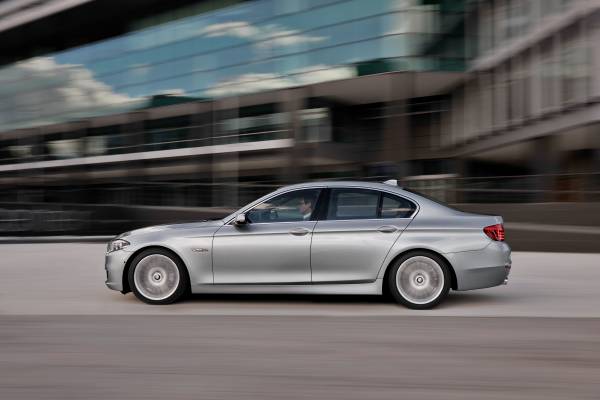
General Motors Co. (NYSE: GM) has hired former Audi and Infiniti executive Johan de Nysschen. He will become president of Cadillac. His primary credential is that he helped make Audi a true competitor to BMW and Mercedes. Audi shares something with Cadillac. It is the flagship luxury brand of one of the world’s largest manufacturers — Volkswagen.
There are several theories about why Cadillac is nowhere near the top of the luxury car sales pyramid in America. First is that the near destruction of GM as it slipped into Chapter 11 injured product development of all its brands. However, several of them have done well since the GM resurrection, so that excuse is wanting.
A closely related theory to the one that Cadillac was starved of product development investment is that it has suffered from the perception that it does not make quality cars. Recent consumer surveys show that is no longer true. However, brand images can be tough to resurrect. Cadillac may be dogged by its quality history.
ALSO READ: Lincoln and Cadillac Lose Ground in Luxury Market
The most compelling case for why Cadillac’s fortunes have been so badly damaged is that German and Japanese luxury brands took the market by storm. This has, obviously, happened before, when Japanese brands took huge chunks of the American market when Toyota Motor Corp. (NYSE: TM), Honda Motor Co. Ltd. (NYSE: HMC) and Nissan moved into the United States in the 1970s and ended up in a position of selling one of three cars and light trucks bought in the country.
Mercedes, Infiniti and Lexus, the luxury flagship of Toyota, have powerful parent companies with muscular balance sheets and inexhaustible marketing budgets. They also have unmatched engineering prowess, which has helped move them to the top of the luxury car quality tables. BMW may be a standalone company, but by most measures it sells more luxury cars worldwide than any of its competitors.
Perhaps that best way to look at how Cadillac compares to BMW and why the American company is at a disadvantage is via their model line ups. Cadillac’s is limited. It has a small, nimble and relatively inexpensive model in the ATS. Its midsized car, the CTS, is in the midst of an overhaul. Cadillac also has a hulking large sedan in the XTS, a wagon, a crossover and mega-SUV name-plated Escalade. Cadillac also has a performance line called the V-Series.
ALSO READ: 10 Cars Americans Don’t Want to Buy
BMW, on the other hand, has seven lines of cars, model numbered 2 through 7. The 2 Series is small and inexpensive. As BMW would say, however, it is still a BMW. The brand persists even if the product is inexpensive, BMW executives would argue. At the other end of the spectrum, the huge 7 Series has a monster model with a six-liter, twin-turbo V-12 engine. The base price for the model is $141,000.
BMW also has a small army of SUVs and coupes. And its performance line, called the M-series, has eight models.
Cadillac may move into a position in which the perception of its quality matches those of the imports. Its challenge, and one that will take years to overcome, is that it needs a model line at least twice the size of its current one.





 Top Gaining Stocks
 Top Losing Stocks