


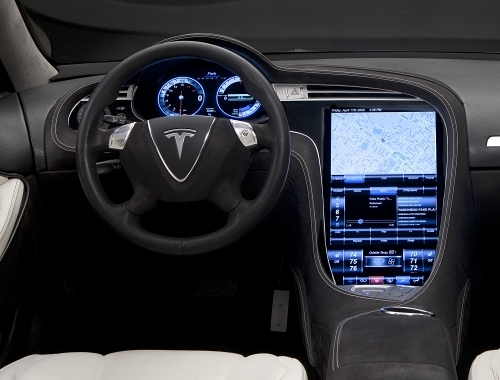
Tesla is actually a smaller company than it would seem based on the amount of media attention it gets and its $34 billion market cap. Revenue in the last reported quarter was only $769 million, on which the car company lost $61 million. However, by almost any measure it is an extremely fast growing company, particularly for a manufacturing operation. Revenue in the same period a year ago was $405 million, on which Tesla lost $31 million.
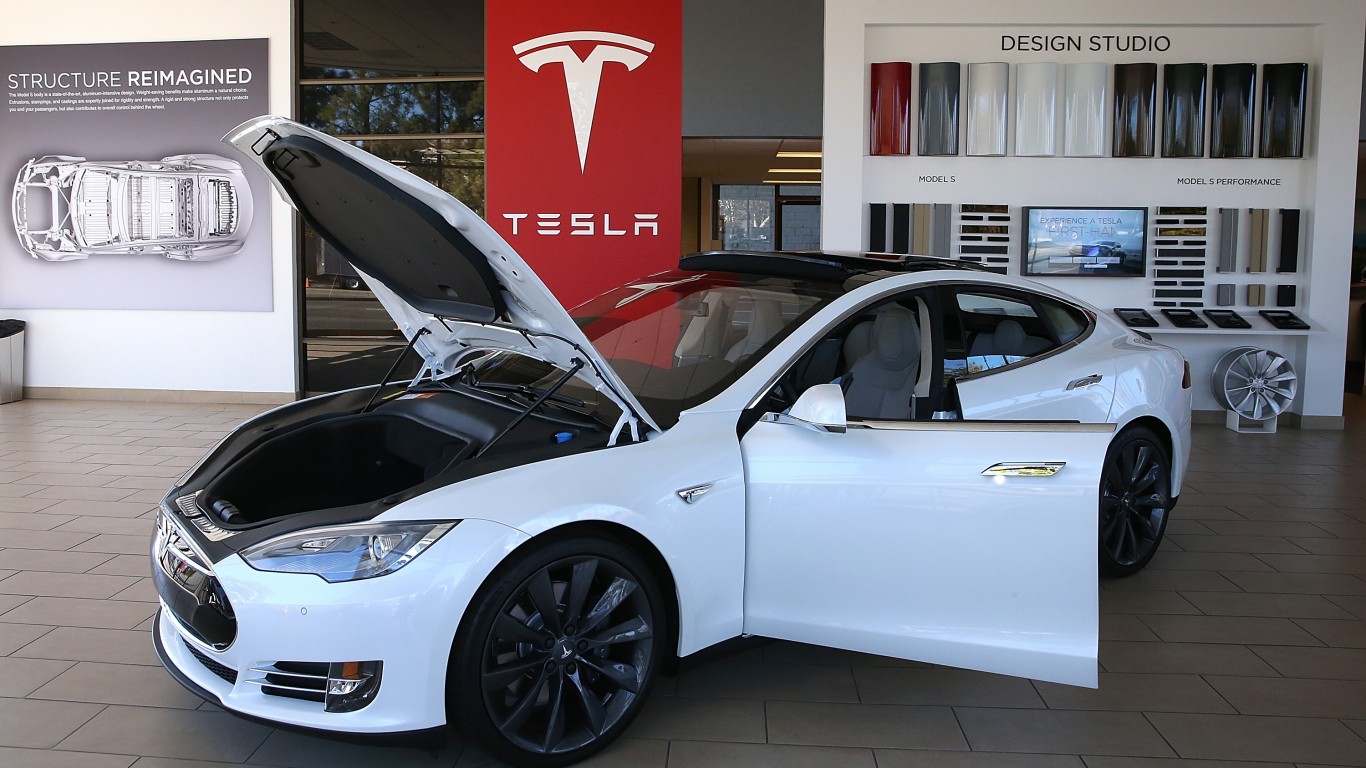
Unlike most car companies, Tesla has only one model — the Model S — although it has more in development. This keeps the amount of effort it has to make to run a complex assembly operation relatively low. There are, however, drawbacks to having few facilities and people.
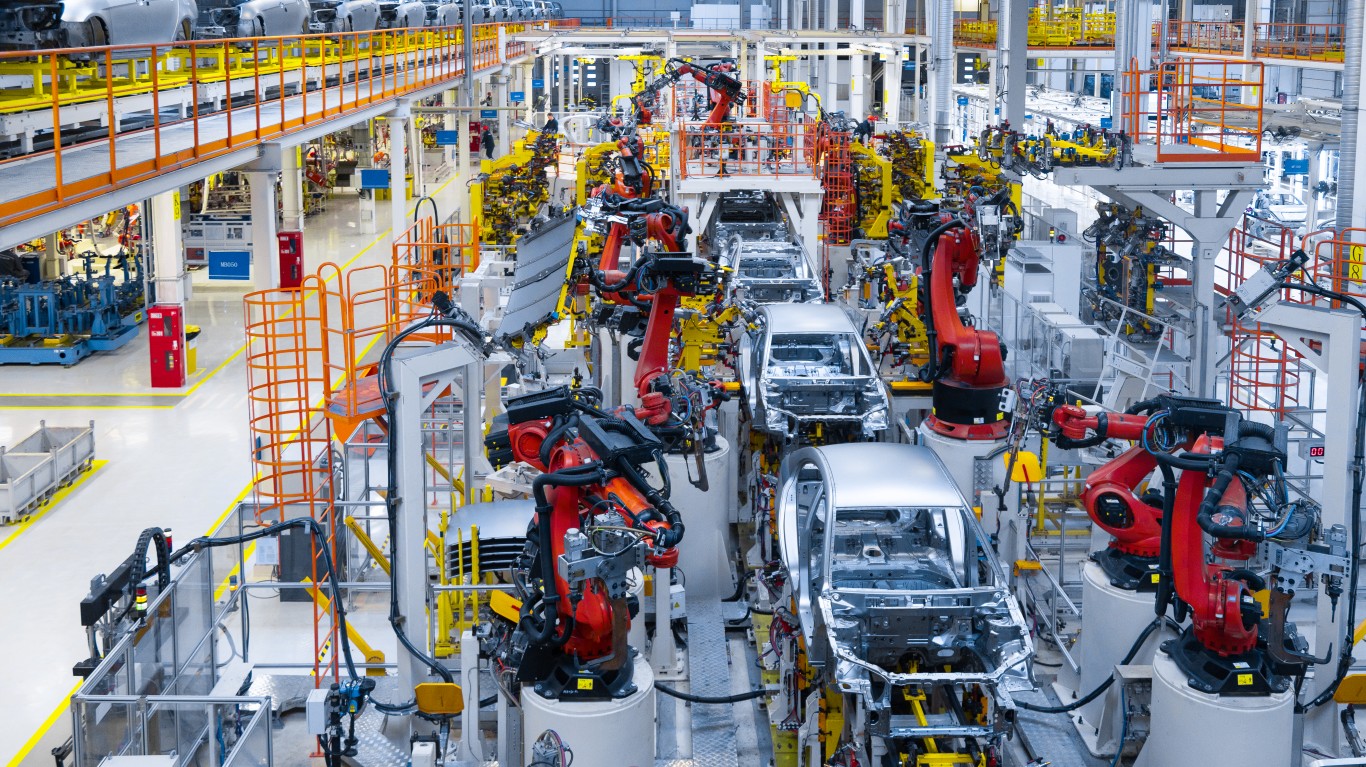
In one of its recent SEC filings, Tesla described its reliance on both outside suppliers and assembly automation, each of which allows it to operate with a modest number of factory workers:
In 2014, we expect to increase production of Model S to more than 1,000 vehicles per week by the end of the year as we expand our factory capacity and address supplier bottlenecks. Battery cell supply constrained our production during the first half of 2014; however, increased production capacity by our cell supplier has begun to reduce this critical constraint. To increase manufacturing capacity further, we recently completed a new final assembly line and added more automation to our body shop at the Fremont factory. With advancements in automation and efficiency, our new assembly line has the capacity to produce more than 1,000 vehicles per week and the flexibility to build both Model S and Model X.
READ ALSO: Why Analysts Keep Chasing Tesla Higher and Higher
Despite its rapid growth, Tesla is already looking for methods to drive up margins:
Significant cost improvements for Model S were achieved in 2013 and have continued in 2014, including part cost reductions as well as manufacturing efficiencies. We expect some of these trends to continue as we execute on our roadmap of achieving further component cost reductions and benefit from economies of scale. We therefore expect our automotive gross margin to increase from second quarter 2014 levels of almost 27% to about 28% in the fourth quarter of 2014, excluding potential zero emission vehicle (ZEV) credit sales, as we achieve further manufacturing efficiencies. If we are not able to achieve the planned cost reductions from our various cost savings and process improvement initiatives, our ability to reach our gross margin goals would be negatively affected.
Finally, Tesla does not plan to remain at its current size for long:
Operating expenses and capital expenditures have significantly increased in 2014 and will continue to do so as we continue to invest in the long-term growth of the company. For the rest of 2014, we will continue to significantly expand production capacity for Model S and Model X, continue the construction of the Gigafactory, invest in our customer support infrastructure, complete the development of Model X and start early design work on Model 3. Our R&D expenses in particular are continuing to increase as design and engineering work accelerates on Model X and overall product development but is expected to decrease as a percentage of revenue over time. R&D expenses for the third quarter of 2014 are expected to grow sequentially by approximately 30% as compared to the second quarter of 2014. Our SG&A expenses will continue to grow in absolute terms as we expand our customer and corporate infrastructure globally. SG&A expenses for the third quarter of 2014 are also expected to grow sequentially by approximately 20% as compared to the second quarter of 2014.
The period during which Tesla can operate with 6,000 employees is already over because of its aggressive expansion plans. What is a wonder is that it could have grown so quickly with so few people.





 Top Gaining Stocks
 Top Losing Stocks