


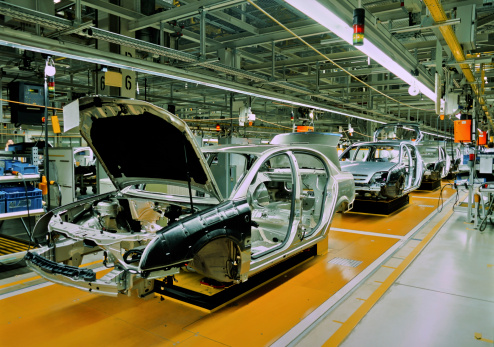
Chrysler and the UAW kicked off new contract negotiations in July, and the union has also started negotiations with Ford Motor Co. (NYSE: F) and General Motors Co. (NYSE: GM). Strike authorization votes have been taken at Ford and GM as well, but no results are available yet, according to The Detroit News. The current UAW contract with the Detroit Three expires on September 14.
One particularly thorny issue on the table this year is the two-tier wage system that pays workers hired after 2007 about half the starting pay that senior workers receive. New workers hired by the Detroit Three are paid a starting wage of $15.78 per hour and earn a maximum of $19.28 per hour, while those hired before 2007 make $28.69 per hour.
UAW contracts with the Detroit Three cover about 137,000 workers, of which about 45% of Chrysler’s 39,000 union workers earn the lower-tier wages, while 25% of Ford’s workers and 20% of GM’s are paid at the lower rate. In addition, the workers who are paid the higher rate have not had a pay increase since 2007.
The union hated the two-tier structure then and hates it now. The difference is that now they appear to have an ally in Chrysler boss Sergio Marchionne, who is quoted in the Detroit Free Press:
You should pay people the same wage for the same work and therefore anything that is dual in nature…is unsustainable in the long term. You cannot live that way.
The difficulty is that Marchionne surely wants to eliminate the higher-paid tier and the UAW wants to eliminate the lower-paid one.
The union also agreed in the previous contract talks not to strike either GM or Chrysler as the two companies worked their way through near-death experiences. Now that the auto industry is booming again, with more than 17 million new cars expected to be sold in the United States this year, the union wants to walk back some of the concessions it made when times were tough.
The strike authorization vote gives the UAW its members’ permission to use what has often been the union’s most potent weapon if negotiations falter. How much is gained by striking has to be weighed against the potential damage to the U.S. auto industry. A protracted walkout at one or all of the Detroit Three could result in market share losses to makers like Toyota that build cars more cheaply in the United States because their plants are non-union.



 Top Gaining Stocks
 Top Losing Stocks