



[cnxvideo id=”655237″ placement=”ros”]Ford Motor Co. (NYSE: F) announced this morning that it is testing fabrication of some car parts using a large-scale 3D printer made by Stratasys Ltd. (NASDAQ: SSYS). Ford is looking for a more efficient — and affordable — way to create tooling, prototype parts and low-volume components for customizing individual vehicles.
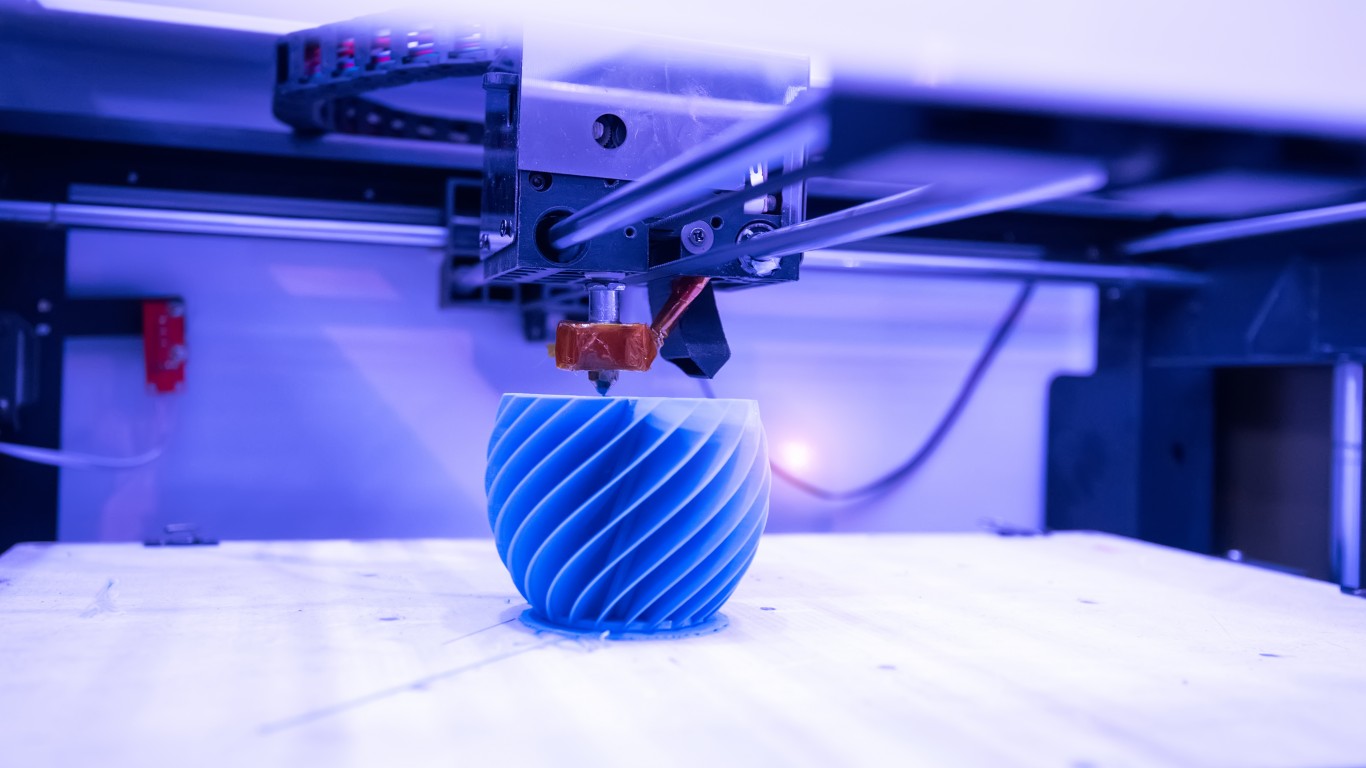
Using a new 3D printing machine from Stratasys called the Infinite Build system that accepts specifications from a computer-aided design program, the printer analyzes the design and then begins printing one layer of material at a time, stacking them into a completed three-dimensional object. The printer can even sense when its printing material supply is empty and replaces it with a full canister, allowing the device to operate unattended for hours or even days.
Ellen Lee, Ford’s technical leader for additive manufacturing research, said:
With Infinite Build technology, we can print large tools, fixtures and components, making us more nimble in design iterations. We’re excited to have early access to Stratasys’ new technology to help steer development of large-scale printing for automotive applications and requirements.
[nativounit]
3D printing has also made the news recently for building a number of small houses. A U.S. company named Apis Cor built a 409-square foot house in Russia in less than 24 hours. The construction cost was just over $10,000. In 2015, a Chinese company constructed a house from six 3D-printed modules, each of which cost about $500 per square meter. The modules were printed in a factory and assemble on site. From start to finish the project took about 10 days.
Ford said that the 3D printing technology is most cost efficient for production of low-volume parts for prototypes and specialized race car components. The company may also use the technology to make larger tooling and fixtures, as well as personalized components. Instead of waiting months for a machined prototype, a 3D-printed version can be available in days.
[wallst_email_signup]









 Top Gaining Stocks
 Top Losing Stocks