


Over the past two years, U.S. drivers have become more aware of autonomous (self-driving) vehicles. More than three-quarters (78%) have some knowledge of autonomous vehicles that a human driver may choose to drive and 64% know something about self-driving cars that do not require a human driver. Both totals are more than 20 percentage points higher than they were two years ago.
But drivers’ confidence in the safety of autonomous vehicles has fallen in the same period by nearly 20 percentage points in both those categories. The reason, according to a new survey from Cox Automotive, is that recent high-profile crashes involving self-driving cars have cast a pall over the previous excitement over driverless cars and the technology that enables them.
The survey, conducted in May, polled 1,250 U.S. drivers with the goal of determining how well they understood and accepted the mobility options that have emerged in the past three years. Drivers of all ages and locations (urban, suburban, rural) were included.
The Society for Automotive Engineers has devised an autonomy scale that runs from Level 0 (no autonomy) to Level 5 (full autonomy). Intermediate levels are based on the kinds of autonomous driving technology available. Level 1 includes cruise control, antilock brakes and lane-keeping assistance. Level 2 comprises technology to correct lane drifting and avoid forward and rear collisions. At Level 3, the vehicle itself can assume control in some conditions but requires a human driver in others. Level 4 autonomy means the vehicle can drive itself but that human drivers can choose to drive if they want to.
[nativounit]
More than half of drivers surveyed (54%) believe that technology makes people better drivers, but more than two-thirds (68%) said they would feel uncomfortable in a fully autonomous vehicle. In terms of the autonomy levels, that means drivers are comfortable with Level 2 autonomy but wary about Level 4.
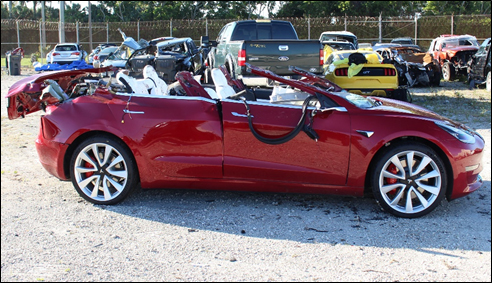
In its survey, Cox also asked who bears the responsibility for a crash involving a vehicle equipped with self-driving technology. The vehicle’s rider/owner was named by 24% of respondents, the automaker was named by 26% and the software developer by 27%. We’re not sure what this means, but here are the results of a report from November 2017 on the most frequently occurring types of car crashes:
- Falling asleep at the wheel: 7% of all crashes and 21% of fatal crashes
- Loss of vehicle control: 11% of all crashes
- Blind left turns: 12% of all crashes
- Rear-end collisions: 23% to 30% of all crashes
- Drifting out of the lane: 30% of all crashes
Technology is tackling all these to one degree or another. The problem may partially be that managing consumers’ expectations can be tricky. Tesla’s Autopilot technology, for example, implies by its name alone that it is more capable of operating the vehicle than may, in fact, be the case.
The Cox study found that confidence in fully autonomous vehicles fell from 63% in 2016 to 45% this year. In 2016 drivers said that Level 4 autonomy was the most appealing; in 2018, Level 2 is the most appealing choice.
Karl Brauer, executive publisher of Cox’s Autotrader and Kelley Blue Book, commented:
As awareness around the development of autonomous technology increases, we’re seeing some dramatic shifts in consumer sentiment. People now have a deeper understanding of the complexities involved when creating a self-driving car, and that has them reconsidering their comfort level when it comes to handing over control.
What drivers say they do want are semi-autonomous features like collision alert and avoidance systems that are focused on safety. For automakers, providing these safety features will be critical to the success of autonomous technology.
Cox Automotive has a presentation of its survey results available at the firm’s website.
[recirclink id=486201]
[wallst_email_signup]






 Top Gaining Stocks
 Top Losing Stocks