How Safe Is Ford’s Dividend?

Photo of Douglas A. McIntyre
By Douglas A. McIntyre Published
This post may contain links from our sponsors and affiliates, and Flywheel Publishing may receive compensation for actions taken through them.
How Safe Is Ford’s Dividend?

© BalkansCat / iStock Editorial via Getty Images

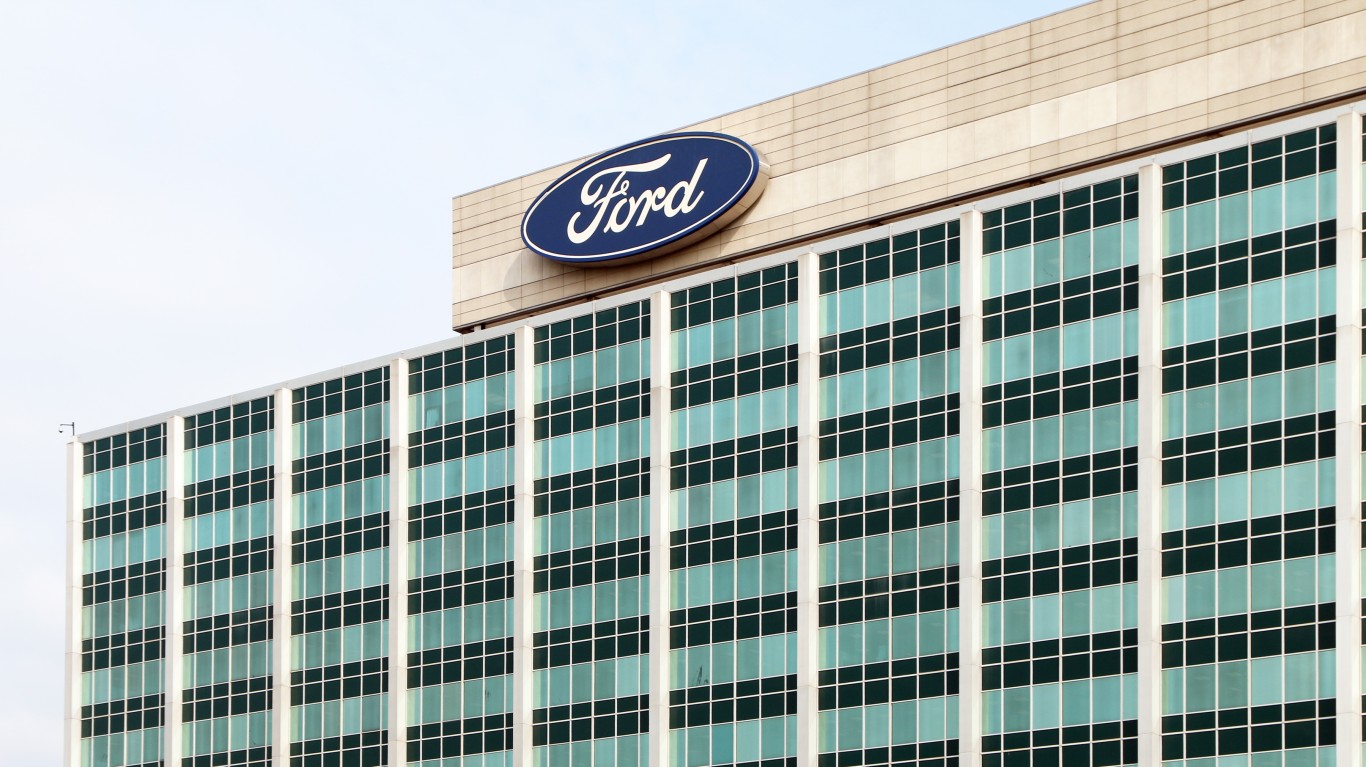
Ford Motor Co. (NYSE: F | F Price Prediction) has been one of the car company stars of the past year. Unit sales at Ford have generally outperformed expectations and been better than the balance of the industry. Some models, particularly the new F-150 Lightning electric vehicle (EV), are expected to be nothing short of home runs.

Ford, however, faces two substantial hurdles. One is the cost of going electric. Ford’s most recent estimate for its push into the EV business is $50 billion. According to Reuters, this is what the company believes it needs to make Ford an EV leader, and it will be invested through 2026. Even for a company of Ford’s size, that is remarkably expensive.

Ford also will face the challenge of a recession. Usually, new car sales tumble in an economic downturn. The average age of an American car on the road is 12 years. If the economy turns bad, many people will try to stretch that. Ford EV investment will walk into the jaws of a downshift in GDP growth.

Perhaps these two reasons have been the cause of a 45% drop in Ford’s stock this year.
[nativounit]
Ford can brag that it was able to reinstate its dividend as a sign of financial health. Today, it is $0.40 per share, which delivers a yield of 3.54%. Typically, high earnings allow companies to lift dividends, or they can dip into their cash reserves.
[wallst_email_signup]
Ford announced in October the return of its dividend. It was cut, to some extent, because of the COVID-19 pandemic. Bloomberg took the view that it was reinstated because the Ford family counts on the money to live well — very well in some cases.
[recirclink id=1150005]
Dividend cuts because of diseases are rare, perhaps rare enough not to have happened in the past century. A tough economy is nearly always the cause. The tough economy already has started.


Photo of Douglas A. McIntyre
About the Author Douglas A. McIntyre →

Douglas A. McIntyre is the co-founder, chief executive officer and editor in chief of 24/7 Wall St. and 24/7 Tempo. He has held these jobs since 2006.

McIntyre has written thousands of articles for 24/7 Wall St. He is an expert on corporate finance, the automotive industry, media companies and international finance. He has edited articles on national demographics, sports, personal income and travel.

His work has been quoted or mentioned in The New York Times, The Wall Street Journal, Los Angeles Times, The Washington Post, NBC News, Time, The New Yorker, HuffPost USA Today, Business Insider, Yahoo, AOL, MarketWatch, The Atlantic, Bloomberg, New York Post, Chicago Tribune, Forbes, The Guardian and many other major publications. McIntyre has been a guest on CNBC, the BBC and television and radio stations across the country.

A magna cum laude graduate of Harvard College, McIntyre also was president of The Harvard Advocate. Founded in 1866, the Advocate is the oldest college publication in the United States.

TheStreet.com, Comps.com and Edgar Online are some of the public companies for which McIntyre served on the board of directors. He was a Vicinity Corporation board member when the company was sold to Microsoft in 2002. He served on the audit committees of some of these companies.

McIntyre has been the CEO of FutureSource, a provider of trading terminals and news to commodities and futures traders. He was president of Switchboard, the online phone directory company. He served as chairman and CEO of On2 Technologies, the video compression company that provided video compression software for Adobe’s Flash. Google bought On2 in 2009.

Continue Reading

Top Gaining Stocks

CBOE Vol: 1,568,143
PSKY Vol: 12,285,993
STX Vol: 7,378,346
ORCL Vol: 26,317,675
DDOG Vol: 6,247,779

Top Losing Stocks

LKQ
LKQ Vol: 4,367,433
CLX Vol: 13,260,523
SYK Vol: 4,519,455
MHK Vol: 1,859,865
AMGN Vol: 3,818,618