


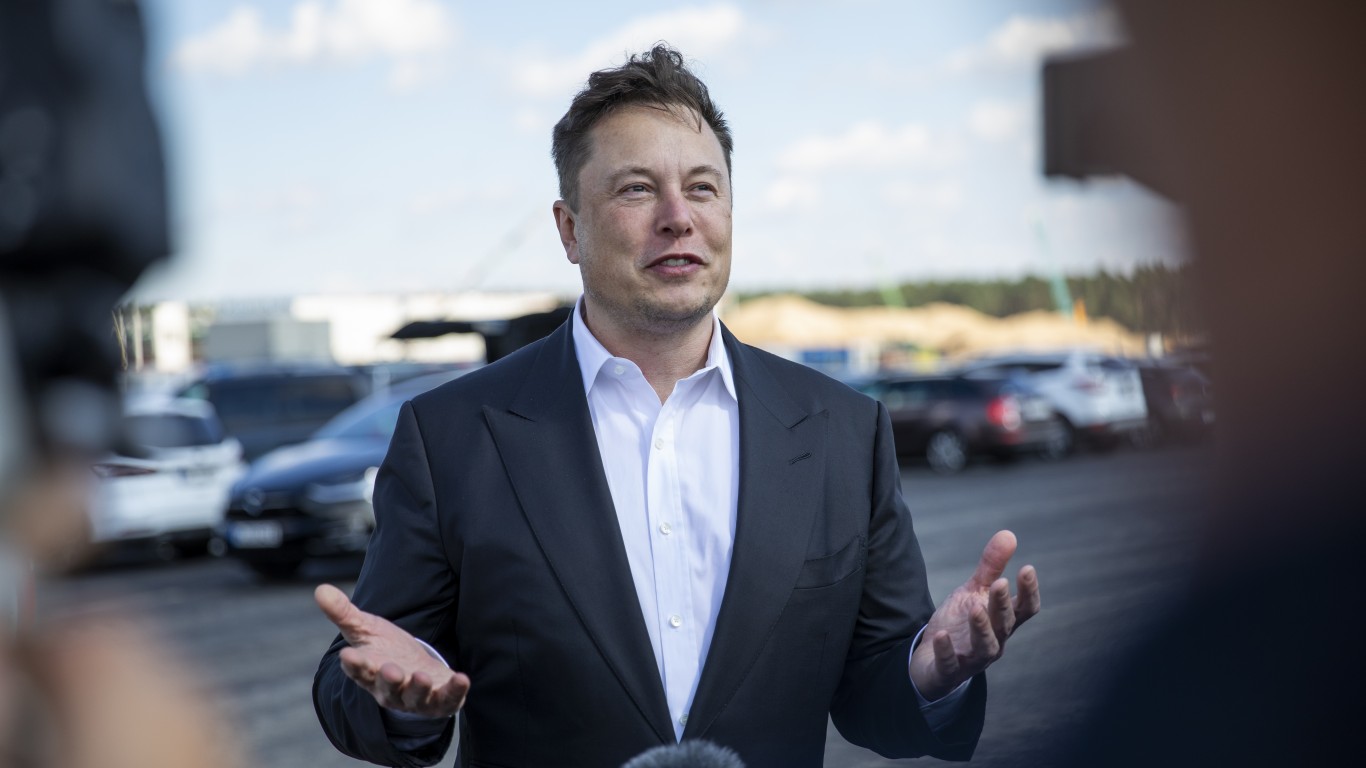
When is agreeing not to compete on price okay? Tesla CEO Elon Musk would probably answer, “Whenever I say so.”
On Thursday morning in Shanghai, Tesla and 16 other China-based conventional and NEV (new electric vehicle) makers signed an agreement to avoid “abnormal pricing” in China’s EV marketplace. If this sounds like the beginning of another Organization of the Petroleum Exporting Companies, aka OPEC, that’s because it is. (These 19 companies were caught manipulating the American free market.)
[in-text-ad]
According to a Bloomberg report, here are the non-binding items the 17 companies agreed to:
Adhere to industry rules and regulations, regulate marketing activities, maintain fair competition and not disrupt fair competition with abnormal pricing
Pay attention to marketing and publicity methods, not exaggerate or use false publicity to attract attention or gain new customers
Put quality first, improve lives with high-quality products and services
Promote core socialist values, actively fulfill social responsibilities, and take on the heavy responsibility of maintaining steady growth, strengthening confidence and preventing risks
[nativounit]
Abnormal pricing, in this case, means prices that are too low. The Chinese government, and the Chinese EV makers, want to put a stop to a price war that Tesla started late last year when it reduced prices in an effort to boost sales. The company has fooled around with pricing in the United States and Europe as well, hoping to make up in volume what it loses in margins.
Why has the great egalitarian and owner of Twitter (which now allows virtually every nut case a forum in which to speak their truth) agreed to “promote core socialist values” and “adhere to industry rules and regulations” promulgated by a socialist government that has long tried to squelch free speech?
[wallst_email_signup]
The obvious reason is money. Tesla has invested billions in China, and it knew going in that it would have to play by China’s rules, just like Apple and other U.S. and European companies have to do in order to gain access to China’s massive workforce or huge market or both.
The EV cartel begins its life just as China’s auto brands are forecast to take a greater than 50% market share in the world’s largest auto market for the first time ever. Reuters reported Wednesday that auto industry analysts at AlixPartners forecast China’s total auto sales to rise by 3% year over year in 2023 to 24.9 million units. By 2030, sales in China will reach 30.6 million units, more than half of which will be EVs.
[recirclink id=1257308]
While the cartel agreement is positioned as a non-binding, gentleman’s agreement, it was developed by the China Association of Automobile Manufacturers at the direction of the country’s Ministry of Industry and Information Technology, according to a Chinese Communist Party official cited by Bloomberg. Tesla was the only non-Chinese company included in the agreement.
Does anyone really expect the Chinese government to ignore a market move (like lowering prices) that threatens to undermine whatever the government chooses to declare a core socialist value? When that time comes (and it surely will), what does a committed egalitarian do? He does what he is told, or he goes home.








 Top Gaining Stocks
 Top Losing Stocks