


U.S. House Speaker Nancy Pelosi’s visit to Taiwan on Tuesday raised more than just eyebrows. The Chinese government was practically apoplectic, and the rage continued even after she left. South Asian news agency ANI reported Wednesday morning that China flew 27 fighter jets into Taiwan’s air defense zone.
The imminent danger is that Chinese President Xi Jinping might use the occasion of Pelosi’s visit to make a grab for Taiwan, making good on its long-standing claim to the island.
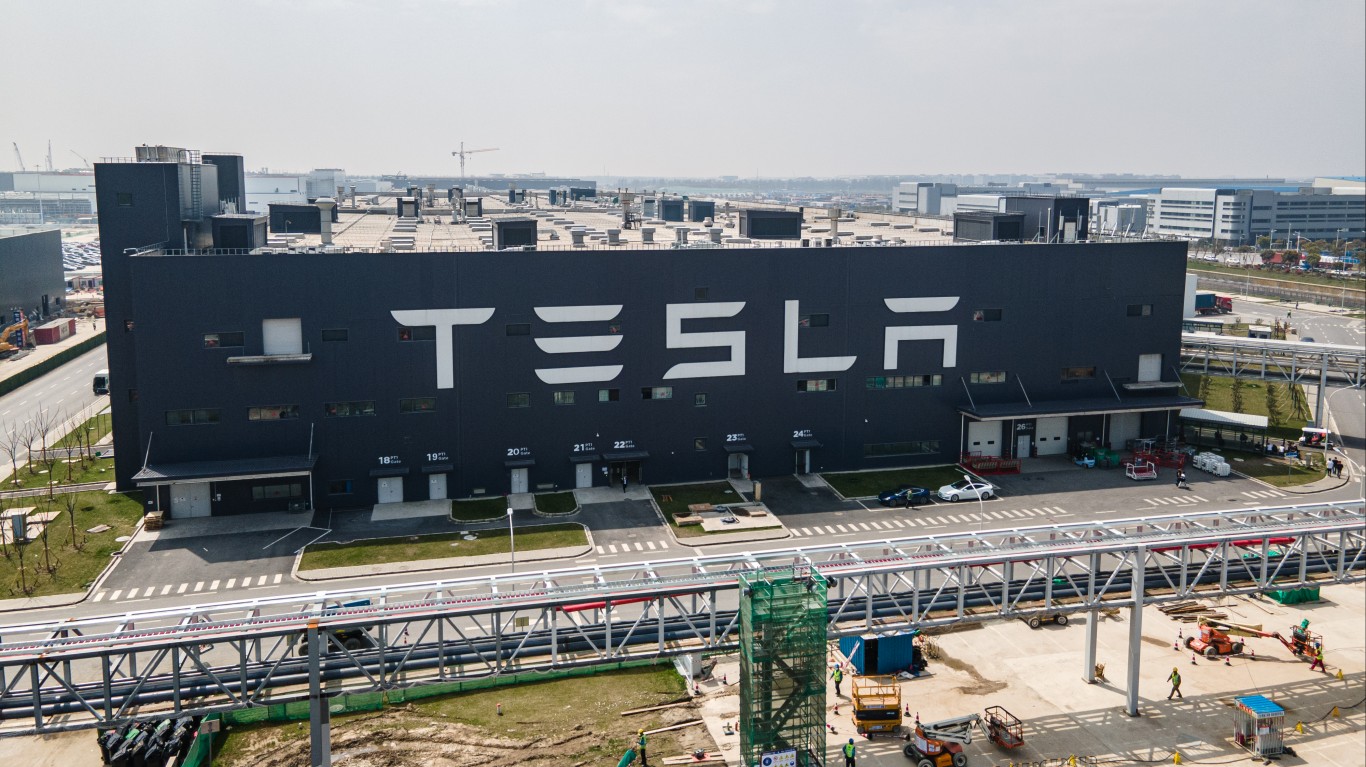
If China chooses to take a page out of the U.S. playbook for how to react to a geopolitical threat, it could wreak havoc on the U.S. and global economies. As a source for many of the world’s most in-demand raw materials, China could cut production and exports, impose export taxes, or redirect its anger to foreign companies with operations in China. Companies like Tesla Inc. (NASDAQ: TSLA | TSLA Price Prediction).
Morgan Stanley equity analyst Adam Jonas issued a research update late Tuesday outlining the high risks to Tesla if China should decide to cut production or impose high export taxes on lithium, the critical component not only of Tesla’s auto batteries but the company’s energy storage solutions.
[nativounit]
Jonas estimates that Tesla accounts for more than 30% of its revenues and 50% or more of its profitability from China’s domestic market for Tesla vehicles. Worse, perhaps, China supplies 50% to 75% of global demand for the raw materials that go into batteries.
Pelosi’s visit already has caused Chinese battery-making giant CATL to delay the announcement of a new battery plant in the United States or Mexico to supply batteries to Tesla and Ford. According to Bloomberg, the Chinese battery maker has not said that it would cancel its plans for a North American plant.
According to U.S. Geological Survey estimates, China produced 26 million tons of lithium in 2021, just over 25% of global production. The USGS estimates Chinese lithium reserves total 9.2 billion tons (41.8%) of global reserves, totaling 22 billion tons. U.S. reserves of 750 million tons represent about 3.4% of global reserves.
[recirclink id=1158500]
There are upside risks as well, though. In his research update, Jonas cites Morgan Stanley’s 2017 estimate that $2.7 trillion in infrastructure spending will be needed by 2040, with 39% of the spend directed at the auto industry, 30% at utilities, 24% at capital goods and 7% at metals and mining. War and inflation have added to the “acceleration and urgency to rethink our energy infrastructure on a global scale.”
That is a big opportunity for Tesla in a world where “the West will need to become more self-sufficient in the provision of EV batteries from up-stream materials to battery manufacturing and [intellectual property].” An even bigger opportunity exists according to Jonas: “Re-architecting the global renewable energy infrastructure and supply chain will require as much as 20 to 40 TWh of battery capacity and $10 to $20 trillion of accumulated capex spend through 2040.”
He also noted that “Tesla’s path to vertical integration across the battery value chain positions it favorably as global battery installation demand accelerates.” He believes that “Tesla’s role in building-out US and W. European renewable energy infrastructure is underappreciated.”
[wallst_email_signup]
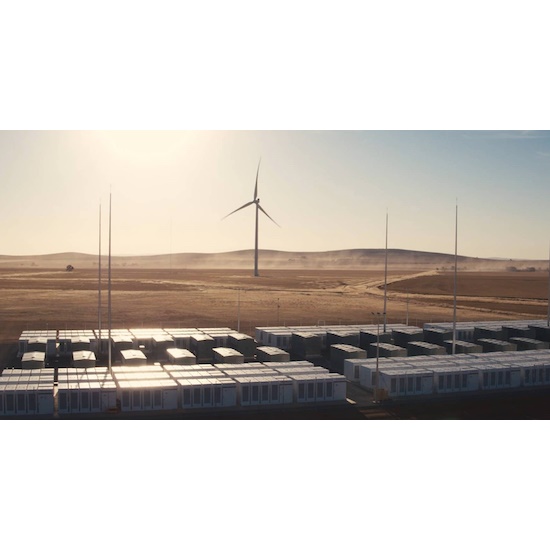
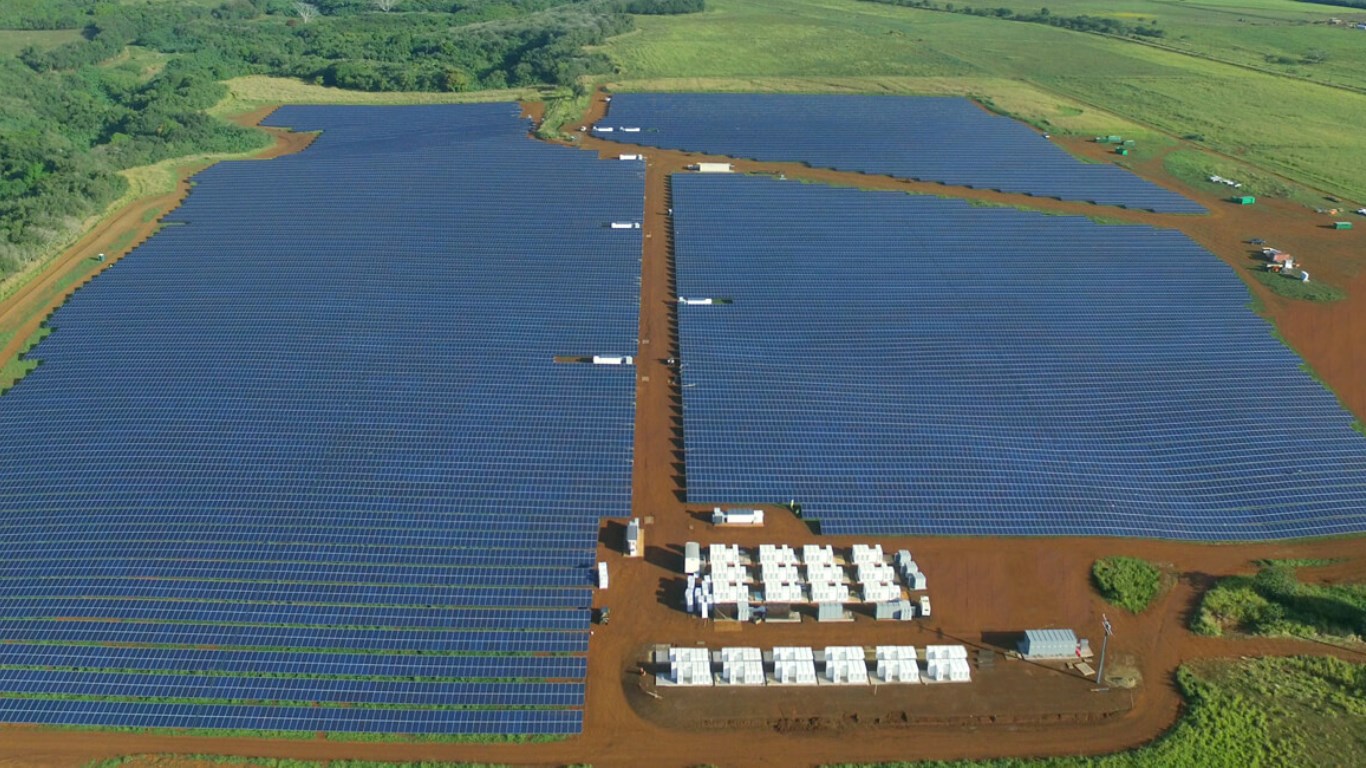
Tesla “is a renewable energy on-shore infrastructure powerhouse,” Jonas said. He goes on:
For those that argue … that Tesla is overvalued as an automotive company, there is merit to that argument. But the company may be substantially undervalued in other ways that deserve exploration. We believe events over the past 6 weeks and catalysts over the next 6 months will materially shift the narrative around what Tesla does, the markets they address, the growth profile and the global/strategic implications of the ecosystem on which they sit atop.
Last month, Morgan Stanley lowered its price target on Tesla from $1,200 to $1,150 per share. That has not been changed, nor has the bank’s Overweight rating on the company. At a recent price of around $920, the upside potential based on Morgan Stanley’s price target is about 25%. Shares are trading up about 2% in the noon hour Wednesday.











 Top Gaining Stocks
 Top Losing Stocks