


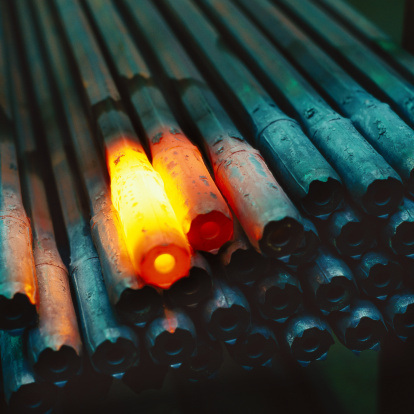
The authors, Rabah Arezki and Akito Matsumoto, begin by stating what should by now be pretty clear to most observers:
[T]he downward pressure on prices result broadly from the abundant production capacity resulting from the era of high prices that is now coming on line and being faced with lower demand levels from both emerging markets and advanced economies. There are importan[t] nuances however in the relative strength and nature of those forces [on metals and oil].
The price of metals is largely determined by demand, and lower investment in China has cut that demand dramatically in the past few years. While the price of oil also is subject to demand pressure, supply plays a bigger role than demand in the authors’ view.
That is not to imply that supply doesn’t matter in metals markets. Iron ore supply, for example is nearly three times higher than it was just a decade ago, and aluminum production is about 67% higher.
ALSO READ: 10 States Burning the Most Coal
The authors also say that futures markets “clearly point to continued low prices” for metals. China’s industrial production fluctuations account for about 60% of the variance in metals prices:
Recent further falls in Chinese industrial production could justify further metal price declines, especially considering the intended rebalancing that is shifting away from investment toward consumption. The change in the composition in China’s growth may disproportionately affect metals compared to oil for reasons including the decline in the construction sector and the rising demand for transportation from the growing middle class.
They conclude:
All in all, the balance between weaker demand and steady increase in supply suggests that the metals market is likely to see a continued glut and a “low for long” price scenario. If this turns out to be true, there is a risk that investment will continue to falter and lead to a sharp increase in prices down the road.












 Top Gaining Stocks
 Top Losing Stocks