


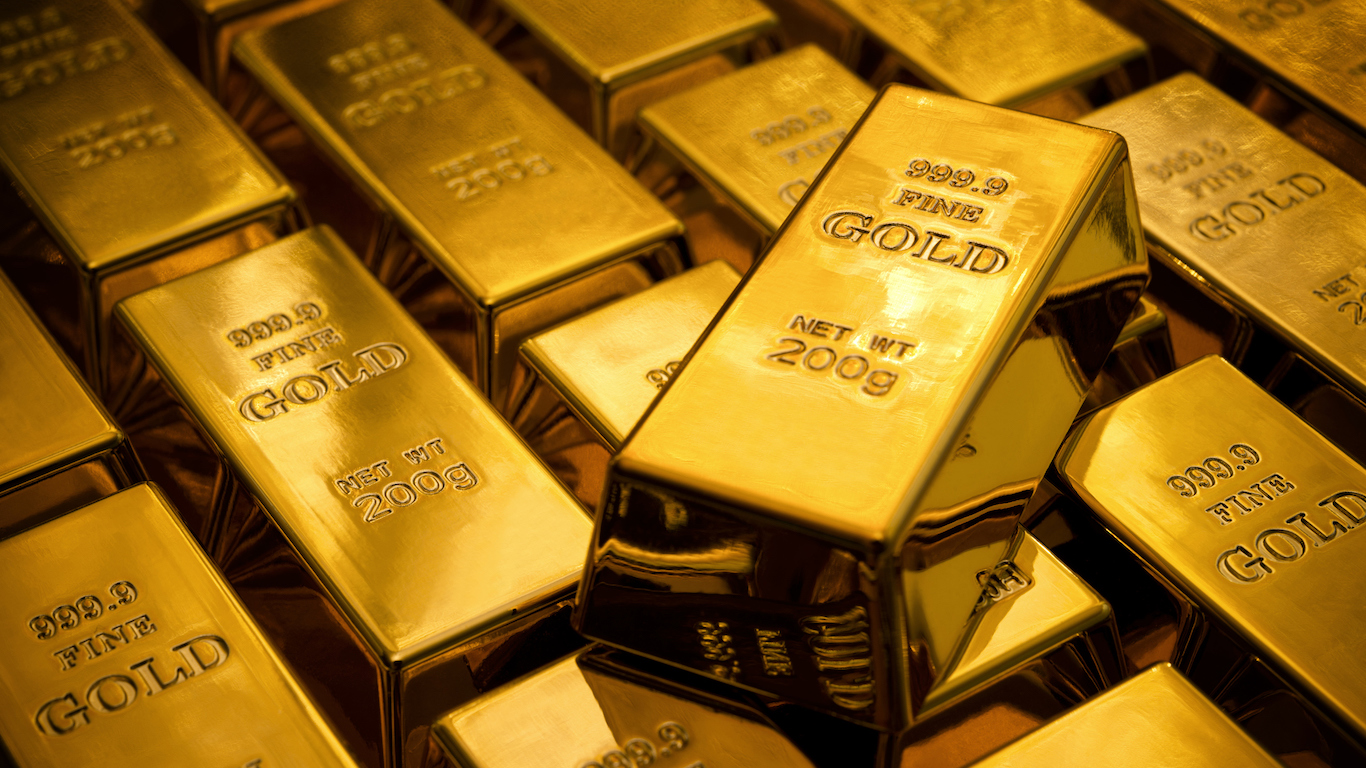
Over the past 12 months, the euro has added about 7% compared to the dollar. The weaker dollar, combined with a stuttering global economy, has pushed the price of gold up by nearly 40% during the same period.
The yellow metal’s historical role as a safe haven in times of uncertainty has been exaggerated by the COVID-19 pandemic. Gold closed above $2,020 an ounce on Tuesday, a record high.
Total global holdings of gold-backed exchange-traded funds (ETFs) rose to an all-time high of 3,621 metric tons (tonnes) in June, according to a report from the World Gold Council. Flows into the ETFs rose to a record 734 tonnes in the first half of 2020, while central bank purchases fell by 39% year over year to 233 tonnes.
Top acquirers by weight were the SPDR Gold Shares (NYSEARCA: GLD | GLD Price Prediction), adding 285.6 tonnes ($15.6 billion) for an increase of nearly 36% in assets under management. The iShares Gold Trust (NYSEARCA: IAU) added 95.8 tonnes ($5.2 billion), representing nearly 30% of assets under management. Combined, these two funds alone accounted for two-thirds of global inflows in June.
The World Gold Council has attributed the record flow of gold into ETFs to central banks’ “massive liquidity injections” and near-zero interest rates. For investors worried about the value of fiat currencies as governments toss around trillions of dollars, pounds and euros, gold offers some peace of mind against myriad threats, including inflation and ultra-low bond rates. As the U.S. dollar weakens, buying gold in euros or another currency becomes cheaper. That drives up demand for the yellow metal and prices inevitably rise.
How long gold’s bull run will last is the big question. The short answer may be something like, “Until the pandemic shows signs that it is no longer spreading at geometric rates.” As long as world economies, particularly the U.S. economy, continue to remain hostage to the coronavirus, they cannot begin a permanent recovery.
Once COVID-19 is brought under control, the global economy can sort out the rest of its problems, like geopolitical risk and monetary policy. Until then, however, gold is likely to continue its surge.
For more adventurous investors, there are gold-mining stocks and ETFs that are sharing in the benefits of the run-up in gold prices.
Gold futures added about 1.6% Wednesday morning to trade at around $2,053 an ounce.








 Top Gaining Stocks
 Top Losing Stocks