


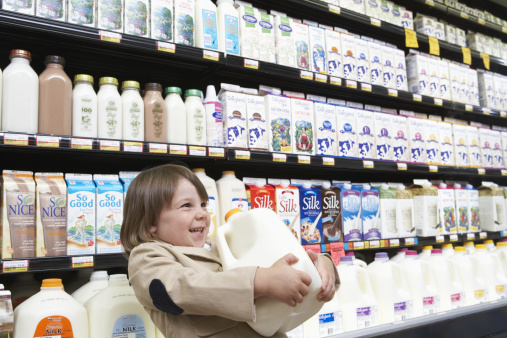
Most of the reason that milk prices have reached nearly $25 per 100 gallons (the way the dairy industry measures prices) is the persistent drought, across almost a third of the country, that has affected many farmers. Most of these farmers are excited by the high prices. The farmers get a chance to make significant profits. As one farmer told The Seattle Times:
I can’t speak for other farmers, but we are now able to start digging out of a hole. I do see a lot of optimism (among farmers). This gives many a chance to do maintenance on things that had been put off.
If the same farmer could speak for consumers, he would have something less pleasant to say.
Four dollar milk prices probably don’t do much damage to consumer spending the way $4 gas prices do. But when combined with near record highs for beef and many vegetables, the cost to feed a family altogether begins to become a painful part of a household budget, particularly for households with poor families who can barely buy enough food at all.
ALSO READ: The 10 Fastest Growing Food Prices
The price of milk and other food is a not large enough part of the economy to trigger high inflation, at least as the federal government measures it. The prices of most other things people buy have not gone up enough. That could change if food prices continue to soar. And, without wage increases, inflation of food prices will begin to pinch more and more people — moving up through lower class income homes to ones that are middle class.
Milk at $4 might look like nothing more than a symbol of higher food prices. For some Americans, it is worse than that.









 Top Gaining Stocks
 Top Losing Stocks