



Would you drink vodka made from grain grown near the site of one of the planet’s worst nuclear disasters? The English trade publication The Spirits Business reports that that might soon be an option.
[nativounit]
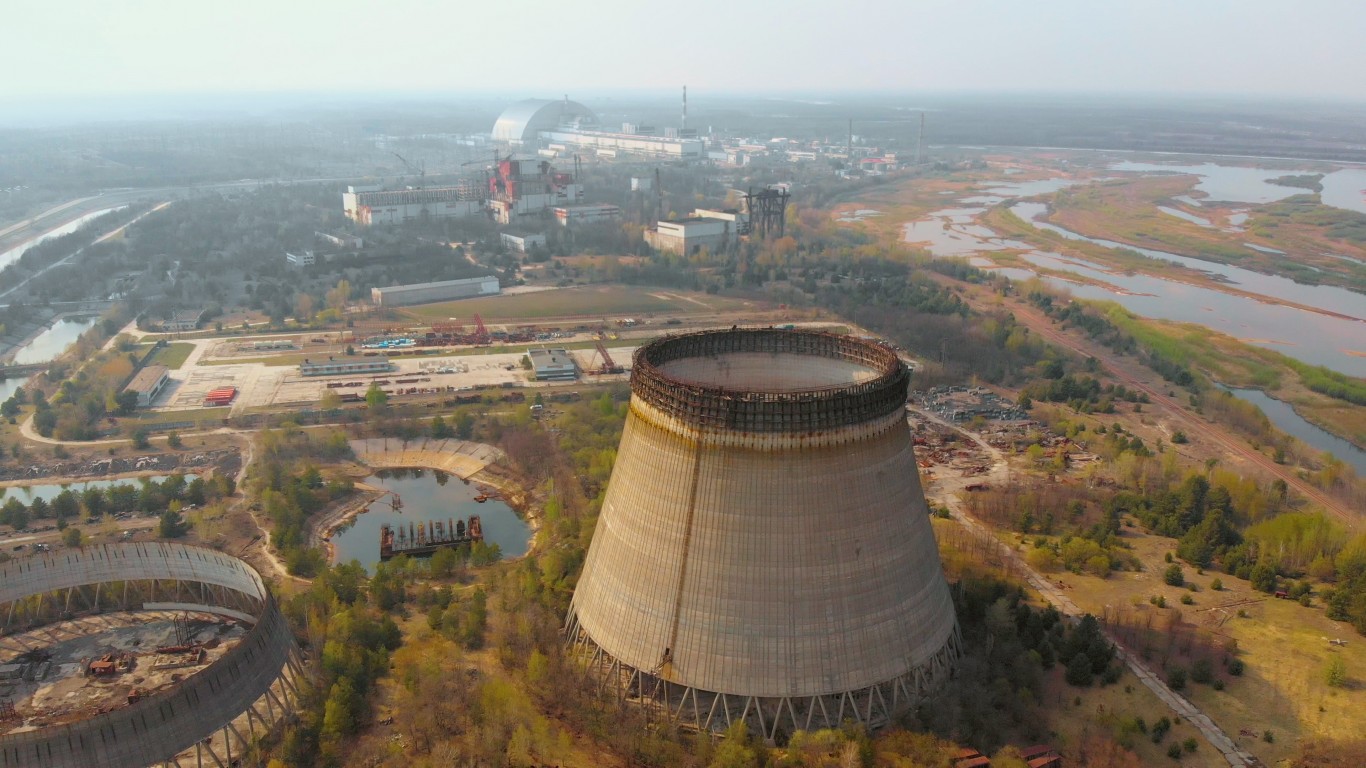
Following the accident that destroyed one of the nuclear reactors at the Chernobyl Power Complex in 1986 in Ukraine, releasing radioactive material into the atmosphere, a human exclusion zone covering more than a million acres was established around the site. About 300,000 residents of the area were permanently evacuated.
Large areas of Ukraine as well as parts of Russia and Belarus were contaminated, and if more reactors had failed, the results could have been catastrophic around the globe. A nuclear disaster like Chernobyl is one of many potential disasters that could wipe humanity off the Earth. Here are 19 other disasters that could end the world.
Now, a professor of environmental science at England’s University of Portsmouth, Jim Smith, and a team of fellow scientists have determined that crops grown in the exclusion zone are largely free from radioactivity, and they’ve decided to put that fact to good use to benefit communities affected by the disaster.
[recirclink id=468898]
Smith and his associates have established The Chernobyl Spirit Company to produce and sell a new vodka — actually a vodka-like grain spirit — called Atomik, made with locally grown wheat. Oleg Nasvit, first deputy head of the State Agency of Ukraine for Exclusion Zone Management told The Spirits Business that Atomik is “high quality moonshine — it isn’t typical of a more highly purified vodka, but has the flavor of the grain from our original Ukrainian distillation methods.”
Analysis of Chernobyl grain did find slight levels of radioactivity, but after distillation it had disappeared. The alcohol was diluted with groundwater from a deep aquifer about six miles from the reactor, said to be completely free of contamination.
Smith hopes to begin small-scale production of Atomik later this year, and has committed 75% of any profits to aid the economic recovery of those living in and around the exclusion zone. Vodka from Chernobyl grain is not the only beverage that has been making the headlines recently. With a growing level of environmental awareness comes a new way to make gin in a way that actually fights climate change.
[wallst_email_signup]









 Top Gaining Stocks
 Top Losing Stocks