


As the temperature in the Arctic soared above 100 degrees Fahrenheit last year, ocean levels rise, drought affects city water supplies and helps create vast wildfires, and some cities became barely habitable because of heat and floods, a number of the world’s largest nations have agreed to efforts to slow or stop increases in the world’s surface temperature. The Paris Agreement, signed by almost every nation, binds them to actions that will keep the temperature from rising more than 2 degrees Celsius above pre-industrial temperatures. Some scientists believe that actions that are too slow make that impossible.
Fossil fuels usually are considered the primary culprit behind rising temperatures. While this is partially true, it is not the entire story. Producing some of the most popular foods and beverages in the world is extremely damaging to the environment.
To find the food with the worst environmental impact, 24/7 Wall St. reviewed data from “Reducing food’s environmental impacts through producers and consumers,” published in Science magazine in 2018. Foods are ranked by greenhouse gas emissions in kilograms of carbon dioxide equivalents per kilogram of food product.
Impacts from food production include water use and water pollution, depletion of natural resources, greenhouse gas emissions and environmental pollutants.
[nativounit]
Rice, for example, provides 20% of the world’s calories intake, according to the Food and Agriculture Organization of the United Nations. Brown rice also has certain beneficial nutrients, according to Cleveland Clinic. But rice production generates methane emissions and uses a lot of water during its production. Microbes in flooded rice paddies produce methane, and some of that is emitted into the atmosphere. Per nutritional unit, 1,000 kcal, rice has a much lower environmental impact.
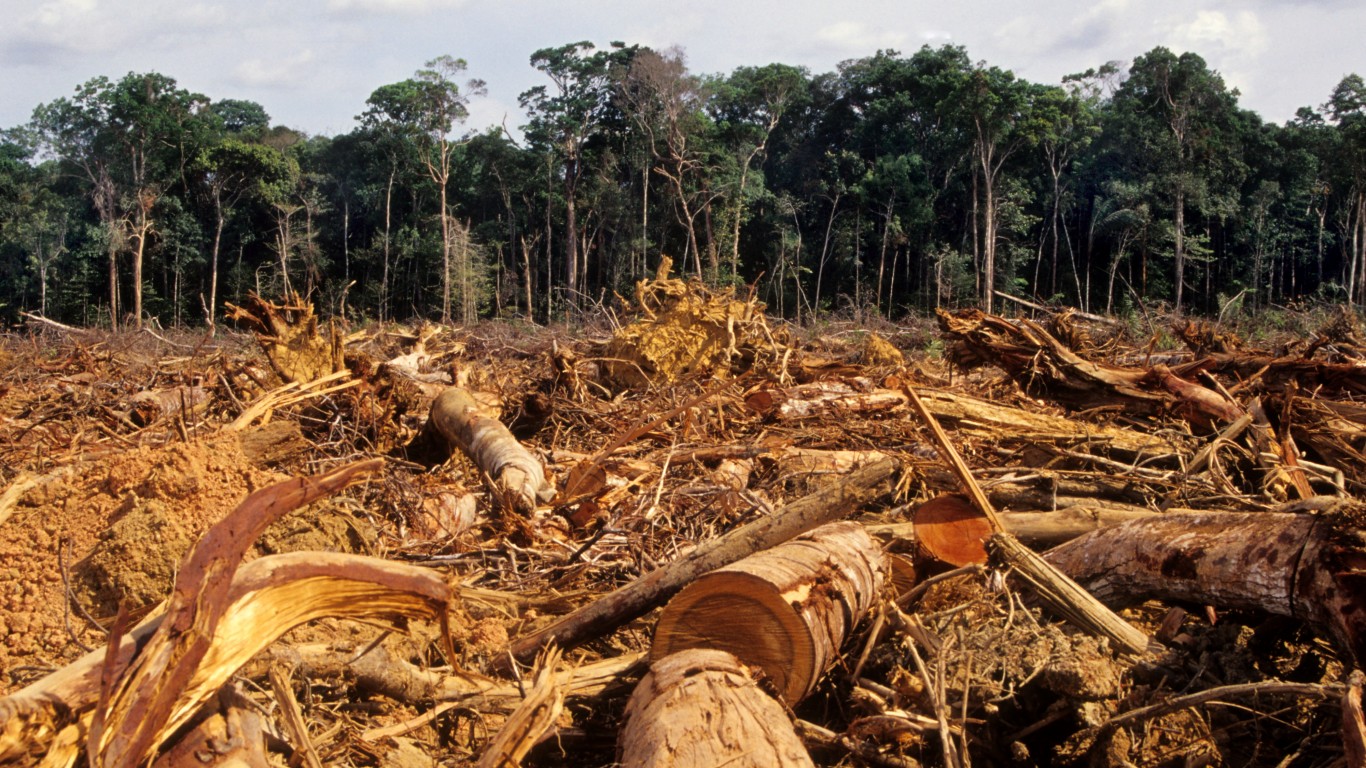
Dark chocolate contains antioxidants, and tofu is a source of iron and calcium. However, the production of both products often causes deforestation. According to World Wildlife Magazine, the practice of cocoa farmers clearing tropical forests to plant new cocoa trees rather than reusing the same land in West Africa is responsible for 70% of the country’s illegal deforestation.
Olive oil is an essential part of the Mediterranean diet and is good for heart health. However, its production can cause negative environmental impacts such as depletion of resources, degradation of land and waste generation.
The production of nutrient-rich eggs hurts the environment via the emission of greenhouse gasses and the contamination of soil and water.
Aquaculture, including crustacean and fish farms, have helped address food insecurity in areas where the population is growing rapidly. The negative environmental impacts include nutrient buildup when there is a concentration of fish in one area. This can lead to excessive levels of fish waste that deplete the water of oxygen, creating algae blooms. Another pollutant of water is plastic.
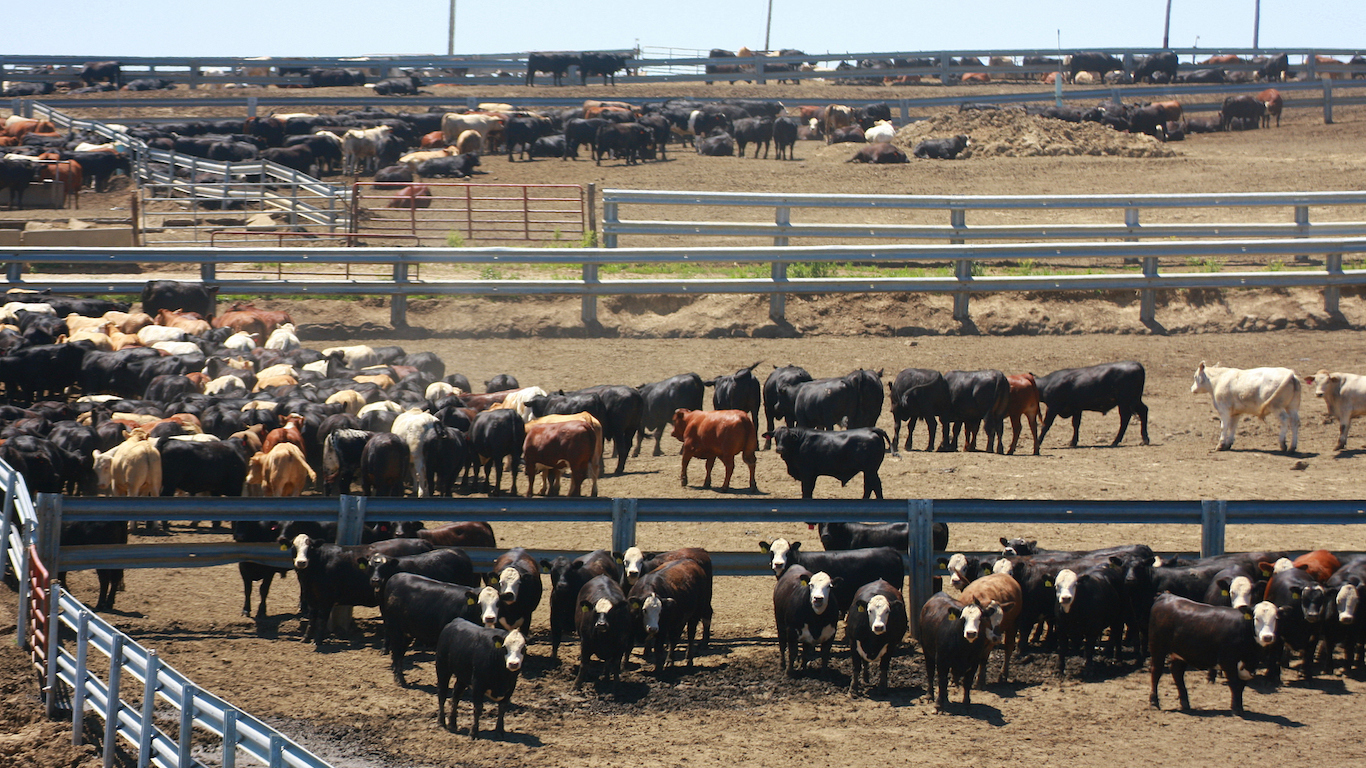
The food with the worst environmental impact is bovine meat (beef herds). Here are the details:
- GHG emissions in kg of CO2 equivalents per 1 kg of food: 99.5
- GHG emissions in kg of CO2 equivalents per nutritional unit: 49.9 per 100 g protein (the highest)
- Land use in square meters per 1 kg of food: 326.2 (second highest)
- Freshwater withdrawal in liters per 1 kg of food: 1,451.2 (11th highest)
The study covered only 43 food products and data is for 2013. Foods are ranked by greenhouse gas emissions in kilograms of carbon dioxide equivalents per kilogram of food product. We also added from the research GHG emissions per nutritional unit as noted (100 grams of protein, 1,000 kilocalories and so on). Land use is the area occupied to produce 1 kilogram of product in meters squared a year. Freshwater withdrawals include several sources and are measured in liters per 1 kilogram of food product.
Click here to see all the foods with the most environmental impact.
[wallst_email_signup]








 Top Gaining Stocks
 Top Losing Stocks