


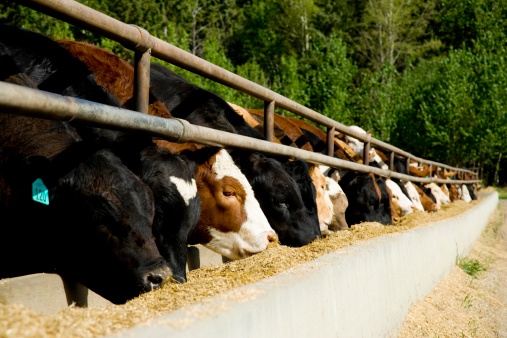
In its latest report on U.S. greenhouse gas emissions, the U.S. Environmental Protection Agency (EPA) said U.S. cattle emitted 143 million metric tons of methane in 2011 and a slightly better 141 million metric tons in 2012. Methane is 23-times more potent than carbon dioxide as a greenhouse gas.
Enteric fermentation from ruminant animals is the largest anthropogenic source of methane in the U.S. What the EPA calls natural gas systems are the second largest source, emitting 127 million metric tons a year in 2012.
In 2006, the United Nations Food and Agriculture Organization released a report on environmental issues related to livestock which recommended cutting in half the “environmental costs” of livestock, which includes greenhouse gas emissions and land and water degradation. Here’s what the UN had to say:
When emissions from land use and land use change are included, the livestock sector accounts for 9% of CO2 deriving from human-related activities, but produces a much larger share of even more harmful greenhouse gases. It generates 65% of human-related nitrous oxide, which has 296 times the Global Warming Potential (GWP) of CO2. Most of this comes from manure.
And it accounts for respectively 37% of all human-induced methane (23 times as warming as CO2), which is largely produced by the digestive system of ruminants, and 64 per cent of ammonia, which contributes significantly to acid rain.
And as emerging nations get richer, their people tend to eat more meat which will increase the burping and farting livestock population. The UN projected meat production to grow from 229 million metric tons in 1999/2001 to 465 million metric tons by 2050, and milk output to rise from 580 million metric tons to 1,043 million.
The good news in the U.S. is that we are emitting greenhouse gases at roughly the same level we were in the early 1990s. That’s largely due to fuel-switching from coal to natural gas for electricity generation and reduced emissions at oil and gas well sites.
It may also be possible to reduce the amount of methane produced by livestock by feeding them something called “oil cake,” which is a by-product of extracting oil from rapeseed. A study in Europe indicated a reduction of as much as 13% in methane releases from livestock fed on oil cake.








 Top Gaining Stocks
 Top Losing Stocks